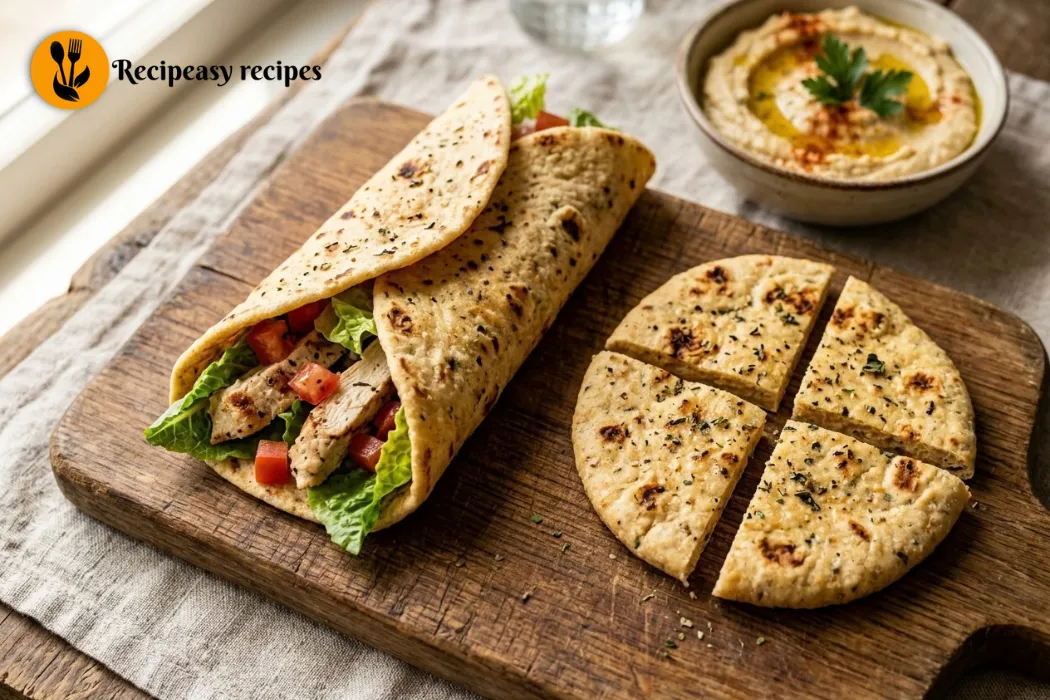
Cottage Cheese Flatbread
If you want a soft, high-protein flatbread without flour or yeast, this Cottage Cheese Flatbread is the one to try. It’s made with just a few simple ingredients and comes together in a blender in about five minutes.
Since there’s no dough to knead or rise, it’s one of the easiest breads you can make at home.
What Is Cottage Cheese Flatbread?
This flatbread is made by blending cottage cheese with eggs and a little seasoning. Then you spread the batter on a baking sheet and bake it until it’s set and golden.
Once baked, it turns into a soft, tender sheet that you can fold, slice, or tear. You can use it like a wrap, a pizza base, or a side for dipping.
Also, it’s worth knowing what to expect. It doesn’t taste or chew like a yeast bread. Instead, it’s soft, a little eggy, and mildly savory. That’s a good thing, since it works with almost any filling.
Plus, this is a great high-protein flatbread for anyone who wants a lighter option. The cottage cheese and eggs do all the work, so there’s no flour needed.
What You’ll Need
This 3 ingredient cottage cheese flatbread keeps things simple. Here’s the full list.
- 1 cup cottage cheese
- 2 large eggs
- 1 teaspoon Italian seasoning
- 1/4 teaspoon garlic powder (optional)
- A pinch of salt
- Cooking spray or oil, for the pan
Since the cottage cheese is the base, the kind you use matters. Full-fat or 2% works best. Fat-free versions can release extra water, which makes the flatbread soggy.
Also, check the liquid in the container. If there’s extra liquid sitting on top, pour it off before measuring. That small step helps the flatbread bake up firm instead of wet.
How to Make Cottage Cheese Flatbread
This simple cottage cheese flatbread recipe has just a few steps. Here’s how it goes.
Step 1: Preheat the oven.
Heat your oven to 375°F. Then line a baking sheet with parchment paper and give it a light spray of oil.
Step 2: Blend the batter.
Add the cottage cheese, eggs, Italian seasoning, garlic powder, and salt to a blender. Blend until completely smooth, about 30 to 45 seconds. The batter will be thin and runny, and that’s normal.
Step 3: Pour onto the pan.
Pour the batter onto the center of the parchment paper. Then use a spatula to spread it into a rectangle or circle, about 1/4 inch thick.
Step 4: Even it out.
Check for thin spots and fill them in. Since thin areas brown faster, an even layer gives you a better bake.
Step 5: Bake.
Bake for 30 to 35 minutes. The flatbread is done when the center is set, and the edges turn golden brown.
Step 6: Cool before peeling.
Let it cool on the pan for about 5 minutes. Then gently peel it off the parchment. It firms up as it cools, so it’s easier to handle once it’s slightly cooler.
Step 7: Slice and serve.
Cut it into squares, strips, or wedges, depending on how you plan to use it.
Tips for the Best Flatbread
Since smooth batter makes a smooth flatbread, blend for the full time. Any leftover curds will show up as bumps in the finished bread.
Also, don’t skip the parchment paper. This batter is wet and sticky, and parchment is what lets you lift the flatbread off the pan in one piece.
For the best texture, keep the layer even. If one corner is thicker than the rest, that part may stay soft while the thin edges brown too much.
Additionally, resist the urge to bake it too long. If the flatbread gets very brown, it can turn dry and crisp. Pull it out as soon as the edges are golden.
Finally, let it cool a bit before folding. Warm flatbread is soft and fragile, so it tears more easily. A short rest makes it much easier to roll or fold.
Ways to Use It
This flatbread is more flexible than it looks. Here are a few easy ideas.
As a wrap: Fill it with chicken, lettuce, tomato, and a drizzle of ranch. Then fold it in half or roll it up.
As a pizza base: Bake it first, then top it with marinara and mozzarella. Return it to the oven for 5 to 8 minutes, until the cheese melts.
As a sandwich: Cut it into squares and use two pieces as the “bread” for a turkey and cheese sandwich.
As a side: Slice it into strips and serve it with soup, salad, or a dip like hummus.
For breakfast: Fold it around scrambled eggs and a little cheese for a quick breakfast wrap.
Since it has a mild flavor, it works with sweet toppings too. Try a thin layer of nut butter and sliced banana for a simple snack.
Easy Flavor Variations
Once you’ve made the basic version, it’s easy to change the flavor. Here are some ideas.
- Everything bagel: Sprinkle everything bagel seasoning over the batter before baking.
- Cheesy garlic: Stir in 2 tablespoons of grated parmesan and a little extra garlic powder.
- Herby: Add chopped chives, parsley, or dried oregano.
- Spicy: Mix in a pinch of red pepper flakes or smoked paprika.
- Taco style: Swap the Italian seasoning for taco seasoning, then use it as a wrap for a quick taco night.
If you’ve tried other cottage cheese bread recipes, this one fits right in. However, it’s lighter and softer than most, and it comes together much faster.
Storing and Reheating
Once cooled, store the flatbread in an airtight container in the fridge for up to 4 days. Place a sheet of parchment between pieces so they don’t stick together.
To freeze, wrap the slices in parchment and place them in a freezer bag. They keep well for about 2 months. Thaw them in the fridge overnight, or warm them straight from frozen.
When it’s time to reheat, a dry skillet over medium heat works best. Warm each piece for about 1 minute per side. This brings back a little crispness and softens the center. You can also use a toaster oven or air fryer for a few minutes.
Common Questions
Why is my flatbread soggy?
This usually means the batter was too thin, or the cottage cheese had extra liquid. Drain any liquid off the top, use full-fat or 2% cottage cheese, and bake until the center is fully set.
Why does it stick to the pan?
Skipping the parchment paper is the most common reason. Always use parchment, and give it a light spray of oil.
Can I make it without a blender?
A food processor or an immersion blender works well. A whisk won’t break down the curds, so the texture won’t be smooth.
Is it gluten-free?
The base is flourless, so it’s naturally gluten-free. However, check your seasoning labels to be safe, since some blends may contain gluten.
Can I use egg whites instead of whole eggs?
Yes, though the flatbread may be a little less rich and a bit more fragile.
Does it taste like cottage cheese?
Not really. Once blended and baked, the flavor is mild and savory. The seasoning does most of the talking.
Can I make it ahead for the week?
Yes. Bake it on the weekend, slice it, and store it in the fridge. Then reheat a piece whenever you need it.
Final Thoughts
At the end of the day, this Cottage Cheese Flatbread proves that a simple blender recipe can turn into something really useful. It’s soft, easy to customize, and a smart way to add more protein to your day. So the next time you want a quick wrap or a light pizza base, give this one a try.