
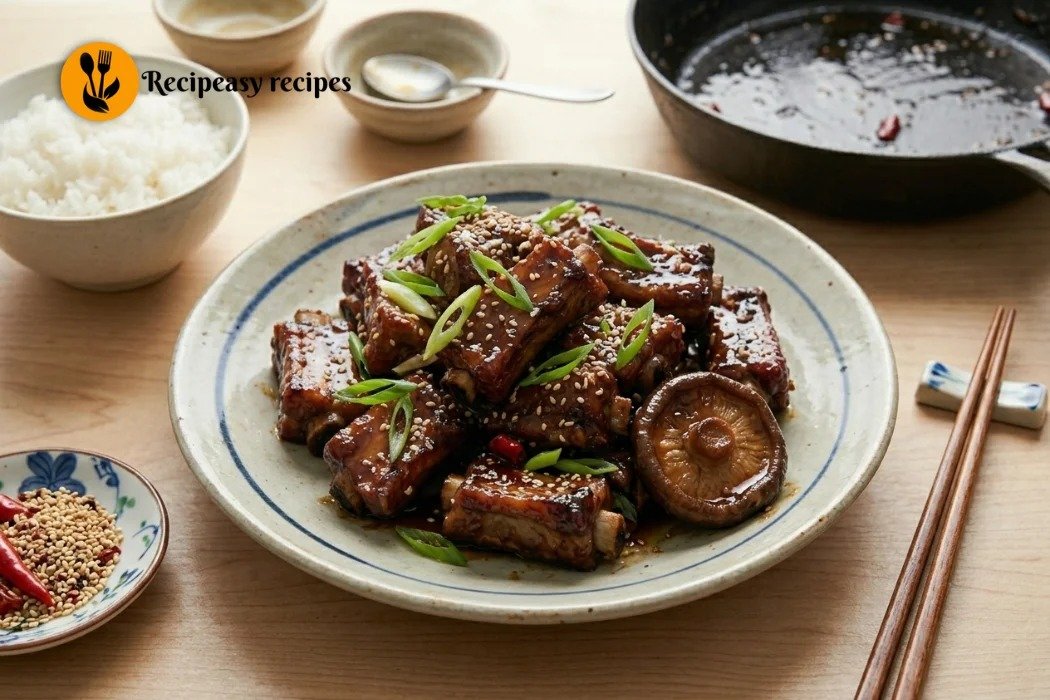
Chinese Riblets Recipe (Sticky, Sweet & Better Than Takeout)
Riblets are one of those dishes that look impressive but are actually pretty simple to make. They are small, saucy, sticky, and packed with flavor. And if you have never made them at home before, you are in for a treat.
This Chinese riblets recipe uses a handful of everyday ingredients and comes together in under an hour. No fancy equipment needed. Just a pan, a good sauce, and a little patience while they cook.
First Things First – What Are Riblets?
Riblets are just regular pork ribs that have been cut down into smaller pieces. Instead of one long rack, you get short, bite-sized chunks that are easier to cook and eat.
Because they are smaller, they absorb more flavor. The sauce gets into every little crevice. So every bite is packed with that savory, slightly sweet, sticky goodness you want from a good Chinese pork riblet recipe.
You can usually find them pre-cut at Asian grocery stores. If you cannot, just ask your butcher to cut a rack of spare ribs lengthways into 1 to 1.5 inch pieces. Most butchers will do it for free.
What Goes Into the Sauce
The sauce is really the heart of this dish. Here is what you need:
- 3 lbs pork riblets
- 4 garlic cloves, finely chopped
- 1 teaspoon fresh ginger, grated
- 1 tablespoon regular soy sauce
- 1 tablespoon dark soy sauce
- 3 tablespoons of honey
- 2 tablespoons brown sugar
- 2 tablespoons rice vinegar
- 1 tablespoon sesame oil
- 1 tablespoon Chinese cooking wine (Shaoxing wine)
- 2 to 3 tablespoons water
- 1 tablespoon cooking oil
For garnish: sesame seeds and sliced green onions
That is everything. Most of these items are easy to find at any Asian grocery store. And once you have them, you will use them in all kinds of recipes.
A Quick Note on the Soy Sauce
You need both regular soy sauce and dark soy sauce for this recipe. They are not the same thing.
Regular soy sauce gives you saltiness and depth. Dark soy sauce is thicker, slightly sweeter, and gives the riblets that beautiful deep brown color you see in restaurant dishes.
Together, they are what makes this taste like a proper sticky soy garlic pork riblets dish – not just ribs cooked in soy sauce.
If you cannot find dark soy sauce, you can use only regular soy sauce. The flavor will still be great. But the color will be lighter.
Should You Parboil First?
This step is optional. But it is worth doing if you want the most tender riblets.
Parboiling means dropping the ribs in boiling water for about 5 minutes before cooking. This removes impurities and helps loosen the muscle fibers. So by the time they finish cooking in the sauce, they are noticeably more tender and juicy.
If you are short on time, skip it. The riblets will still be good. But if you have an extra 10 minutes, do it. You will notice the difference.
How to Make It
Step 1 – Optional: Parboil the Riblets
Fill a pot with water and bring it to a boil. Drop in the riblets and let them boil for 5 minutes. Then drain and set them aside. Pat them dry with paper towels if you want a better sear.
Step 2 – Brown the Riblets
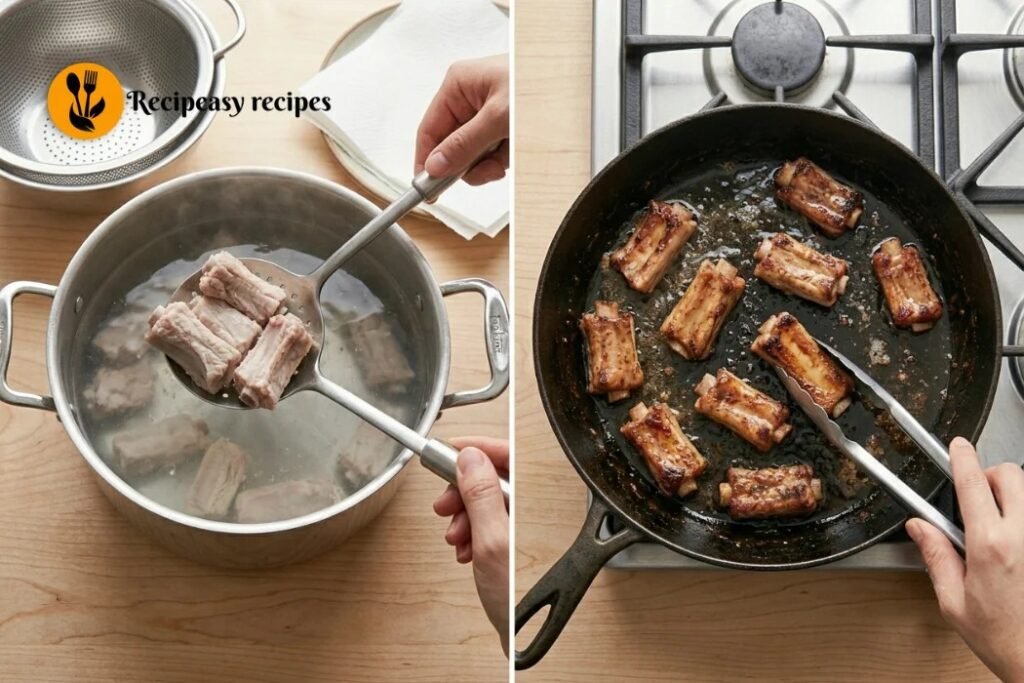
Heat your pan over medium-high heat. Add the cooking oil. Once it is hot, place the riblets in the pan. Cook them for about 6 to 7 minutes, turning them so they get a light golden color on all sides. You are not trying to cook them through here – just get some color on the outside.
Step 3 – Add the Garlic and Ginger
Push the riblets to the side of the pan. Add the garlic and ginger right into the oil. Stir them around for about 30 seconds. Just until they smell amazing. Do not let them burn.
Step 4 – Build the Sauce
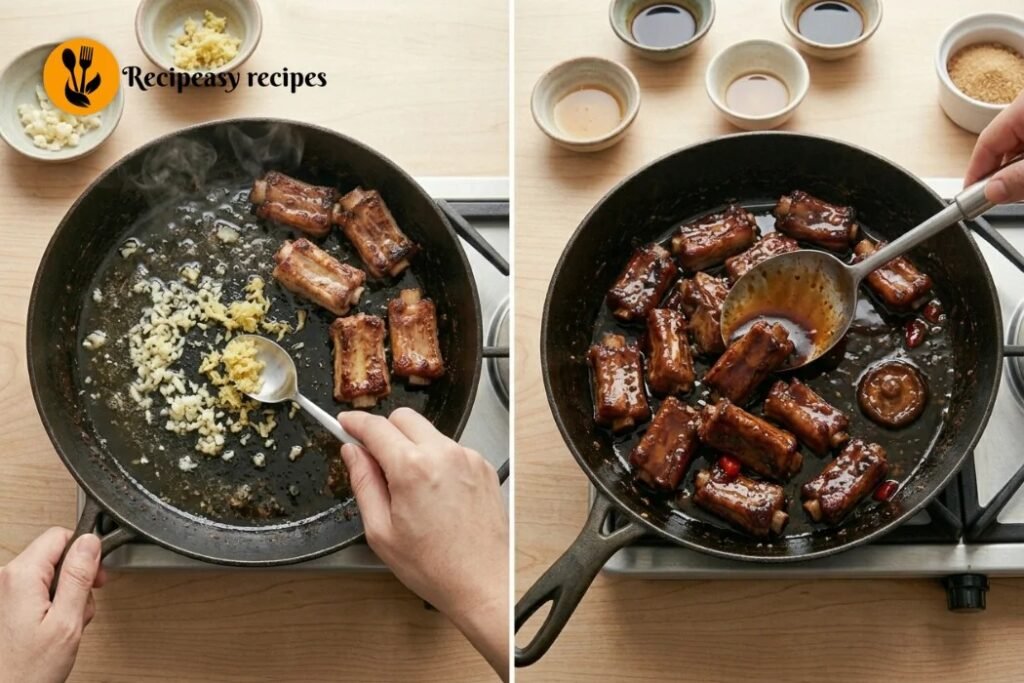
Add the regular soy sauce, dark soy sauce, honey, brown sugar, rice vinegar, sesame oil, Chinese cooking wine, and water. Stir everything together so the riblets are well coated.
Step 5 – Simmer Low and Slow
Turn the heat down to medium-low. Put a lid on the pan, leaving it slightly open. Let the riblets simmer for about 30 minutes. Stir every 10 minutes so nothing sticks to the bottom.
Step 6 – Reduce the Sauce
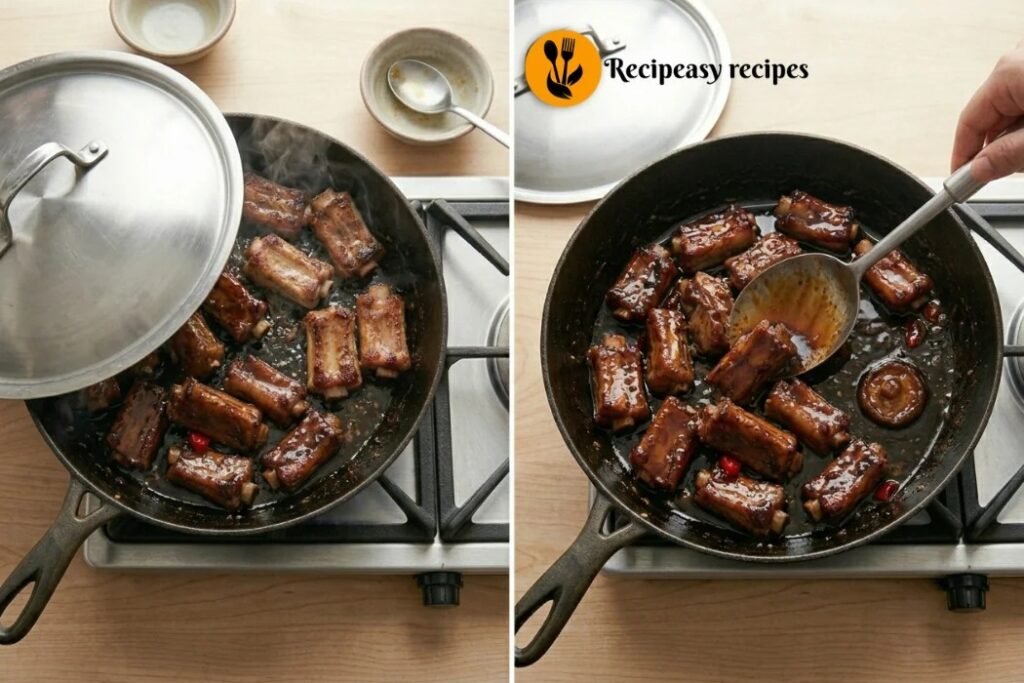
After 30 minutes, remove the lid. Turn the heat up to medium. Keep stirring occasionally and let the sauce reduce and thicken. This takes about 8 to 10 minutes. The riblets will turn a deep, glossy brown. That is exactly what you want.
Step 7 – Serve
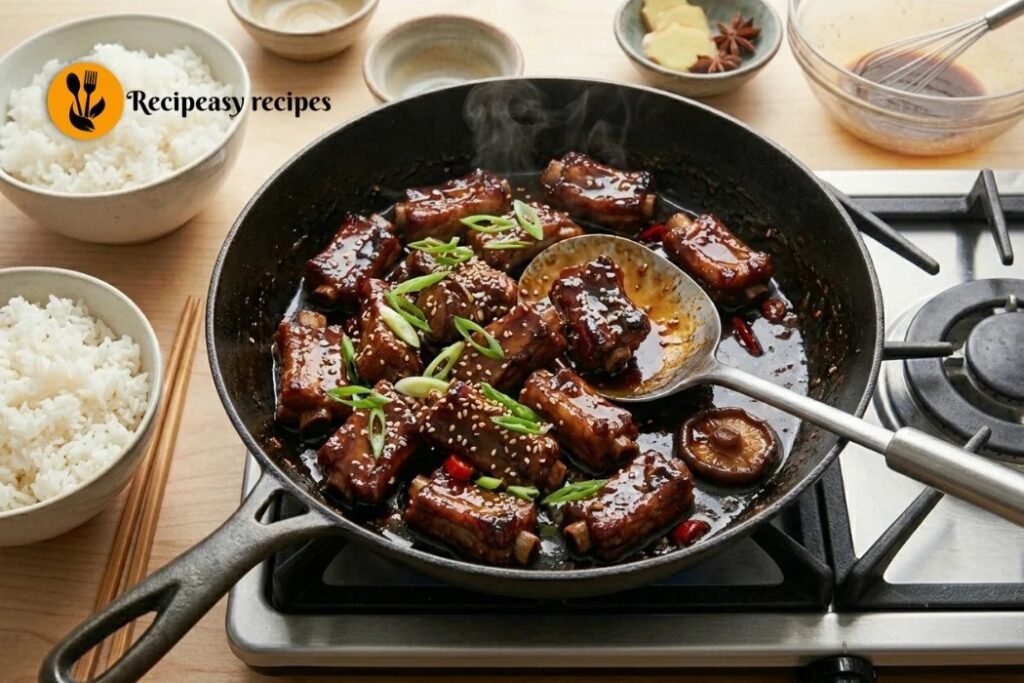
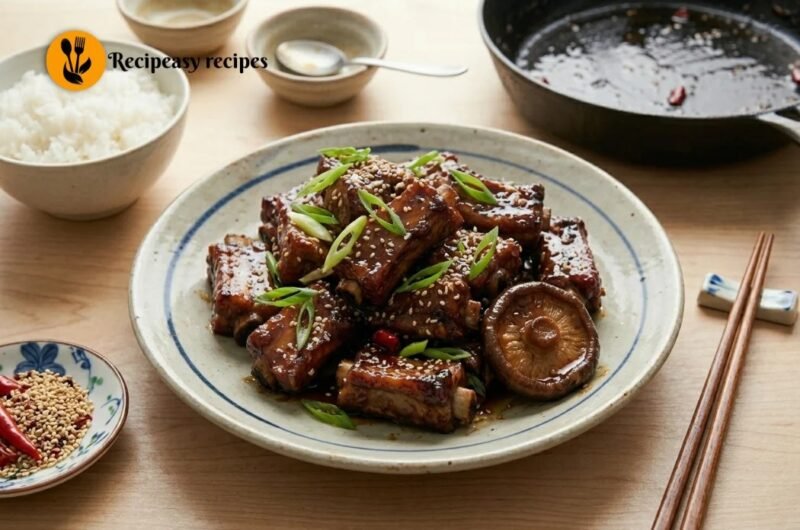
Take the pan off the heat. Plate the riblets and top them with sesame seeds and green onions. Serve immediately over rice.
Getting That Restaurant Finish at Home
If you want that true Chinese restaurant-style pork ribs look and flavor, a couple of small things make a big difference.
Get a good seat first. Do not skip browning the riblets before adding the sauce. That step adds color and locks in flavor. Without it, the ribs can turn out a little pale and flat.
Honey is the secret to the glaze. This honey-glazed Asian pork riblets finish comes from the honey caramelizing in the pan as the sauce reduces. Do not stir too fast during the last few minutes – let it bubble and cling to the meat.
High heat at the end. Turning up the heat at the finish is what gets you that sticky, glossy coating. Keep an eye on it, though – with sugar and honey in the sauce, it can burn fast.
Can You Make These in the Oven?
Yes. If you want an oven-baked Chinese riblets recipe, here is how to adapt it:
Marinate the riblets in the sauce for at least 30 minutes (or overnight in the fridge). Then place them in a baking dish and cover with foil. Bake at 325°F (165°C) for 45 minutes. Remove the foil, brush on extra sauce or marinade, and bake uncovered for another 15 to 20 minutes until they are caramelized and sticky.
The stovetop version is faster. But the oven version gives you more hands-off time if you are cooking for a group.
Tips Worth Knowing Before You Start
Spare ribs over baby back. Spare ribs have more fat and more meat than baby back ribs. That fat keeps the riblets juicy while they cook. Baby back ribs are leaner and can dry out faster.
Do not rush the simmer. The 30-minute simmer on low heat is what makes the pork tender. Cranking the heat to speed it up will leave you with tough, chewy riblets. Low and slow is the way.
Taste before serving. If the sauce needs a little more sweetness, add a pinch more sugar. Too salty? A splash of water will balance it out. This is a forgiving recipe – small adjustments work fine.
This is a great crispy Asian-style riblet option too – if you want more texture, finish them under the broiler for 3 to 4 minutes right at the end. The outside gets a little caramelized and chewy. Really good.
What to Serve It With
Steamed white rice is the classic pairing. But these riblets also work well with:
- Fried rice
- Steamed jasmine rice
- Stir-fried greens like bok choy or Chinese broccoli
- Plain noodles tossed in sesame oil
The sauce from the pan is also great drizzled over rice. So make sure you pour every last drop over the bowl.
Storing and Reheating
Leftovers keep well in a sealed container in the fridge for up to 3 days. To reheat, add the riblets to a pan with a small splash of water and warm them over medium heat. The water keeps them from drying out. Stir gently as they heat up.
They also freeze well for up to a month. Just thaw overnight in the fridge before reheating.
Why This Recipe Works Every Time
Riblets are naturally forgiving. Because they have a good ratio of meat to fat, they stay juicy even if you cook them a minute or two longer than planned. The sauce ingredients – soy, honey, sugar, vinegar, sesame – balance each other out naturally. Sweet, salty, slightly tangy, with that deep savory note underneath.
It is also a sweet and sour Chinese ribs kind of flavor in the best way. Not too sharp, not too sweet. Just well-rounded and craveable.
And it reheats the next day beautifully. So if you are making this for a weeknight dinner, plan for leftovers. You will want them.
Wrapping It Up
This Chinese riblets recipe is one of those dishes you will go back to again and again. It looks like something you ordered from a restaurant. But it comes together with simple ingredients and a pan you already have.
Try it this week. Serve it over rice. Then try not to make it every single week after that.
Chinese Riblets Recipe (Sticky, Sweet & Better Than Takeout)
Course: MainCuisine: ChineseDifficulty: Easy4
servings15
minutes45
minutes300
kcalThis Chinese Riblets Recipe features tender pork riblets simmered in a rich soy, honey, garlic, and ginger sauce until perfectly sticky and flavorful. An easy homemade dish that tastes just like restaurant-style Chinese ribs.
Ingredients
3 lbs pork riblets
4 garlic cloves, finely chopped
1 teaspoon fresh ginger, grated
1 tablespoon regular soy sauce
1 tablespoon dark soy sauce
3 tablespoons honey
2 tablespoons brown sugar
2 tablespoons rice vinegar
1 tablespoon sesame oil
1 tablespoon Chinese cooking wine
2 to 3 tablespoons of water
1 tablespoon cooking oil
Sesame seeds and green onions to garnish
Directions
- Optional: Parboil riblets in boiling water for 5 minutes. Drain and pat dry.
- Heat oil in a pan over medium-high. Sear riblets 6–7 minutes until golden on all sides.
- Add garlic and ginger. Stir for 30 seconds until fragrant.
- Add soy sauce, honey, sugar, vinegar, sesame oil, cooking wine, and water. Stir to coat.
- Reduce heat to medium-low. Cover partially. Simmer for 30 minutes, stirring every 10 minutes.
- Remove lid. Increase heat to medium. Cook 8–10 minutes until sauce thickens and riblets are glossy.
- Garnish with sesame seeds and green onions. Serve over steamed rice.
Notes
- Spare ribs work best because they stay juicy during cooking.
- Marinate overnight for even deeper flavor.
- Store leftovers in the refrigerator for up to 3 days.
- Use both regular and dark soy sauce for authentic color and flavor.
- For extra caramelization, broil the cooked riblets for 3–4 minutes before serving.

One Comment