Pork Roast Recipe (Tender, Juicy & Easy to Make)
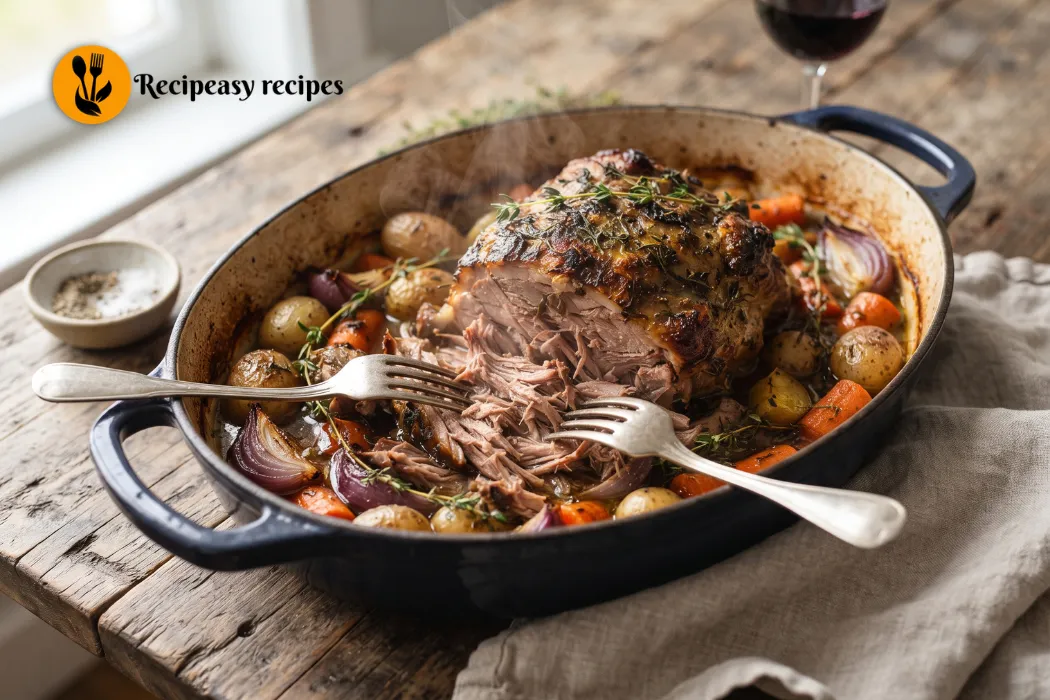
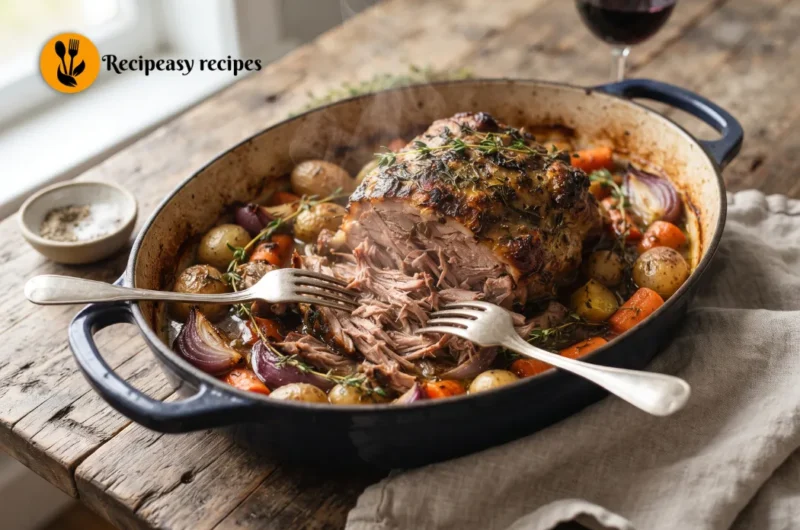
A good pork roast should be tender, flavorful, and easy to prepare. This pork roast recipe uses boneless pork shoulder seasoned with garlic, paprika, and herbs, then slowly roasted in the oven with potatoes, carrots, and onions. As the pork cooks, it becomes soft and tender, while the vegetables absorb the juices and seasoning in the pan. It’s a comforting one-pan meal for a family dinner or weekend gathering.
Everything You Need for This Pork Roast Recipe
This recipe uses boneless pork shoulder because its fat and connective tissue help the meat become tender during slow cooking. Potatoes, carrots, and onions cook alongside the pork, making this a complete meal with simple ingredients.
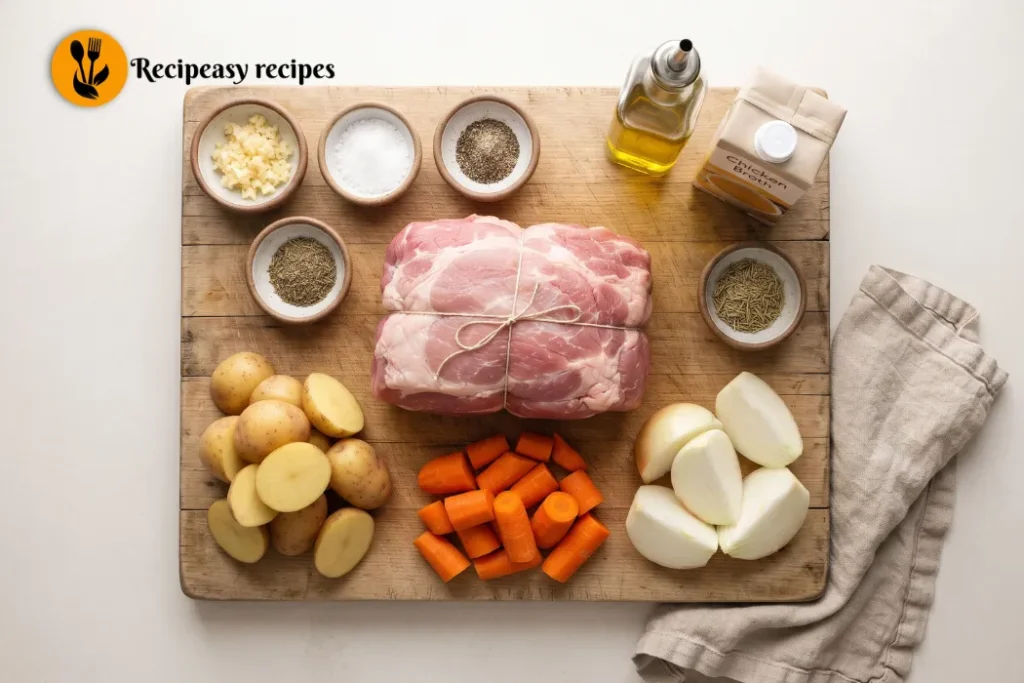
For the Pork Roast
- 3 lb boneless pork shoulder
- 2 tablespoons olive oil
- 4 garlic cloves, minced
- 1 teaspoon salt
- ½ teaspoon black pepper
- 1 teaspoon paprika
- 1 teaspoon dried thyme
- 1 teaspoon dried rosemary
- 1 cup chicken broth
For the Vegetables
- 1½ lb baby potatoes, halved
- 4 carrots, peeled and cut into chunks
- 2 medium onions, cut into wedges
- 1 tablespoon olive oil
- Salt and black pepper, to taste
How to Make This Pork Roast Recipe in the Oven
Follow these steps to prepare the pork, season it, and roast it with the vegetables.
Step 1: Prepare the Pork Shoulder
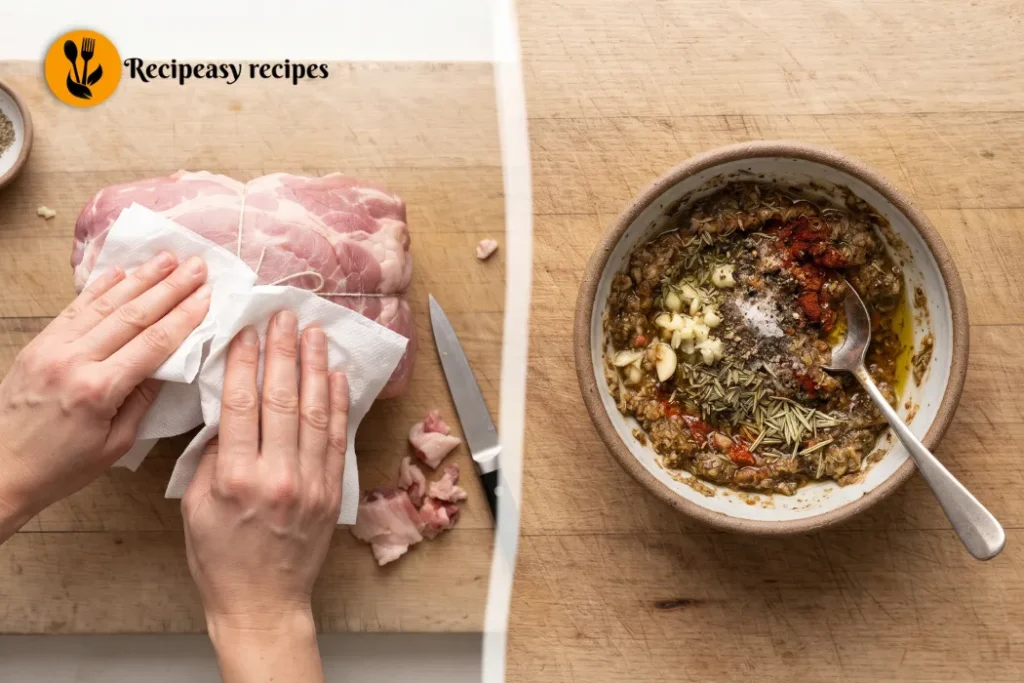
Pat the pork shoulder dry with paper towels. Trim away any thick pieces of excess fat, but leave a little fat on the meat to help keep it moist while cooking.
Step 2: Make the Garlic Herb Seasoning
Mix the olive oil, minced garlic, salt, black pepper, paprika, thyme, and rosemary in a small bowl. Stir until the ingredients form a thick seasoning mixture.
Step 3: Season the Pork
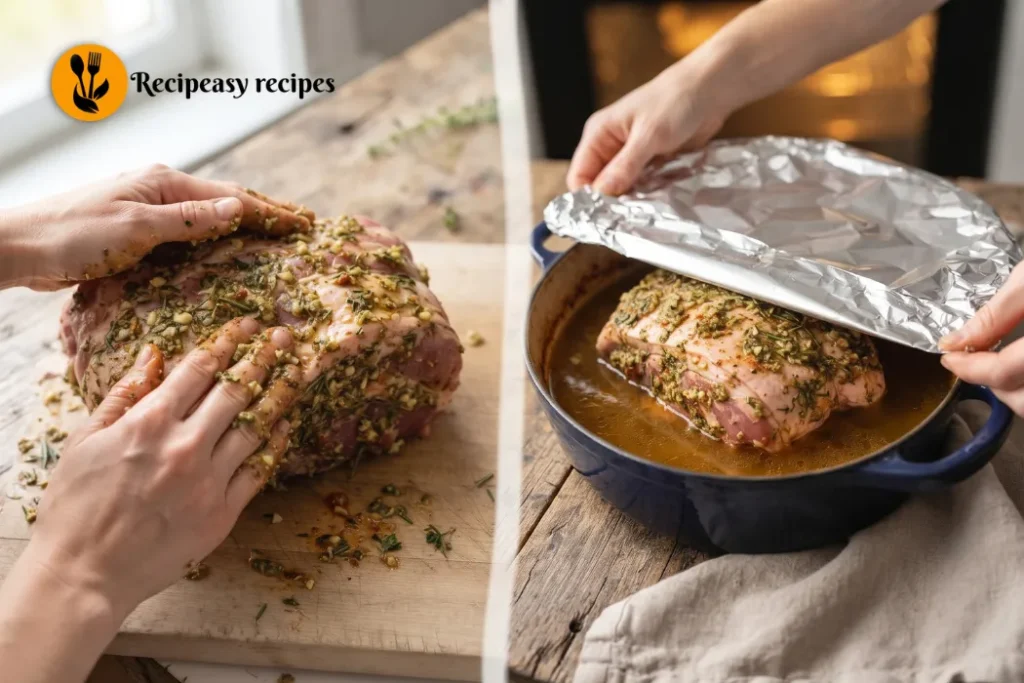
Rub the seasoning mixture over the entire pork shoulder. Let it sit for about 15 minutes while you preheat the oven to 325°F (163°C).
Step 4: Start Roasting
Place the pork in a roasting pan with the fat side facing up. Pour the chicken broth around the meat, cover the pan tightly with foil or a lid, and place it in the oven.
Roast the pork for about 2½ to 3 hours to start. The exact time depends on the roast’s size and thickness, so check its progress as it cooks. Keep the pan covered during this stage, and check that there is still some liquid in the bottom. Add a little more broth if the pan starts to look dry.
Step 5: Add the Vegetables
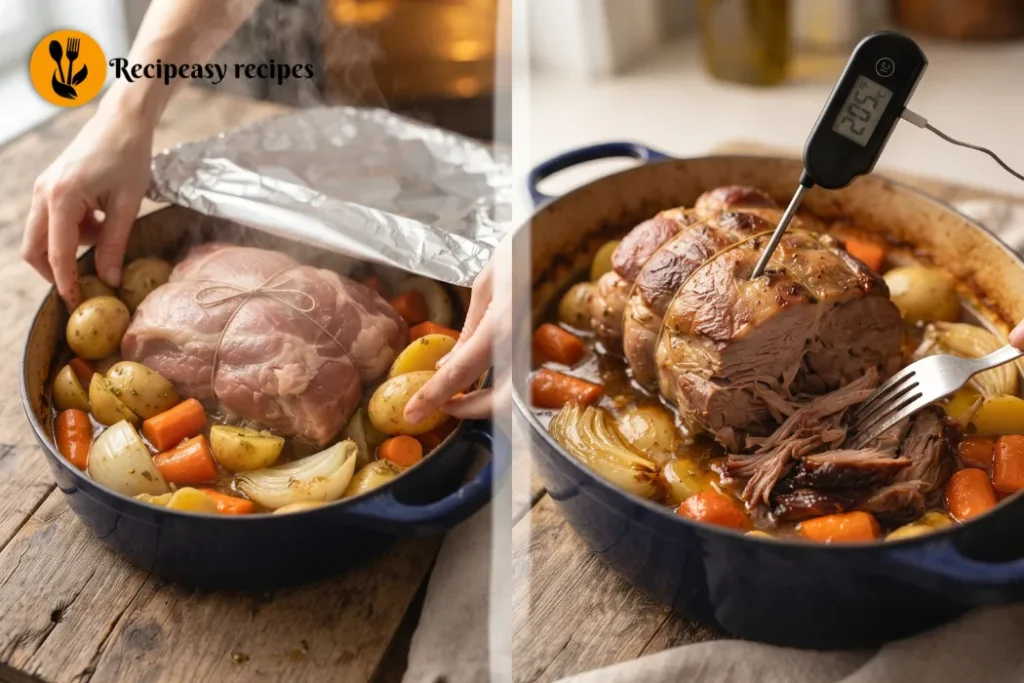
Toss the potatoes, carrots, and onions with olive oil, salt, and black pepper. Add them to the roasting pan when the pork has about 1 to 1½ hours of cooking time left.
Cover the pan again and continue roasting. Check the vegetables near the end of cooking. They should be fork-tender but still hold their shape.
Step 6: Check the Pork and Let It Rest
Check the pork with a meat thermometer. For a soft, pull-apart texture, aim for an internal temperature of around 195–205°F (91–96°C).
The exact temperature is only a guide. Tenderness matters more than reaching a specific number. Pull the meat gently with two forks. It should separate easily when it’s ready. If it still feels firm, continue cooking and check again after a little more time.
Remove the pan from the oven and let the pork rest for 15–20 minutes before slicing or shredding. Spoon some of the pan juices over the meat before serving.
Pork Roast Recipe Cooking Time and Temperature
Roast the pork shoulder at 325°F (163°C). A 3-pound roast may take around 3½ to 4½ hours in total, including the time needed to cook the vegetables. Treat this as an estimate rather than a fixed cooking time.
The roast’s thickness, shape, and tenderness all affect how long it needs to cook. Start checking before the estimated cooking time ends, and don’t remove the pork just because it has reached a certain number of hours.
It’s also important to understand the difference between food safety and the texture of pork shoulder:
- 145°F (63°C): The USDA minimum safe internal temperature for whole cuts of pork, followed by a three-minute rest.
- 195–205°F (91–96°C): A useful target range when you want pork shoulder to become soft enough to pull apart easily.
The higher temperature is for the tender, shreddable texture of pork shoulder, not the minimum food-safety requirement.
How to Get a Nicely Browned Pork Roast
Slow roasting under a cover helps the pork stay moist, but it won’t create much browning on the outside. If you want a deeper golden-brown surface, uncover the roasting pan near the end of cooking.
Once the pork becomes tender, remove the foil or lid and let it roast uncovered for about 15–20 minutes. Keep an eye on the surface so it doesn’t become too dark or dry. If the meat is already nicely browned, you can skip this step. If the vegetables are already tender, remove them before this final step and keep them warm.
Can You Make This Pork Roast Without Vegetables?
Yes. You can roast the pork shoulder on its own if you prefer to serve it with separate side dishes. Follow the same seasoning and roasting instructions, and keep the chicken broth in the pan to provide moisture.
Without vegetables in the roasting pan, you won’t need to add them partway through cooking. Continue checking the pork until it reaches the temperature and tenderness you want.
Simple Tips for a Tender Pork Roast
A few simple tips can help you get better results:
- Choose pork shoulder: This cut has enough fat and connective tissue to become tender during slow cooking.
- Leave some fat on the meat: A little fat helps keep the roast moist and adds flavor.
- Season every side: Rub the garlic and herb mixture over the whole pork shoulder for better flavor.
- Keep the pan covered: Covering the pork helps hold in moisture during slow roasting.
- Add vegetables later: Potatoes and carrots need less cooking time than the pork, so add them near the end.
- Check the tenderness: The pork should pull apart easily with two forks when it’s ready.
- Let the meat rest: Resting gives the juices time to settle before you slice or shred the pork.
Which Vegetables Go Well with Pork Roast?
Potatoes, carrots, and onions work especially well because they hold their shape during slow cooking and absorb the juices from the pork.
You can also add celery or parsnips for more variety. If you prefer softer vegetables, such as zucchini, add them during the last 20–30 minutes so they don’t become too soft.
What to Serve with Homemade Pork Roast
The pork and roasted vegetables make a filling meal on their own, but you can add a few simple sides:
- Green beans: Serve steamed or sautéed green beans for a fresh side.
- Fresh salad: A simple green salad adds a light contrast to the rich pork.
- Dinner rolls: Soft rolls are great for soaking up the pan juices.
- Mashed potatoes: Serve them instead of roasted potatoes if you want a softer side.
- Brussels sprouts: Roast or sauté them for another flavorful vegetable option.
How to Store Leftover Pork Roast
Let the leftover pork cool slightly, then place it in an airtight container and refrigerate it within two hours of cooking. Store the vegetables separately if you want to keep their texture.
- Refrigerator: Keep cooked pork in the fridge for 3–4 days.
- Freezer: Freeze the pork in airtight containers or freezer bags for 2–3 months. Add a little cooking juice to help keep it moist.
- Reheating: Warm the pork in a covered dish in the oven at 325°F until heated through. You can also reheat smaller portions in the microwave. Reheat leftovers to 165°F (74°C).
Frequently Asked Questions
1. What Is the Best Cut of Pork for a Pork Roast?
Pork shoulder is a good choice for a tender, slow-roasted meal. Its fat and connective tissue break down during long cooking, making the meat soft and easy to pull apart.
2. Should You Cover Pork Roast While Cooking?
Yes. Covering the pork helps hold in moisture during slow cooking. You can uncover it near the end if you want more browning on the outside.
3. When Should You Add Vegetables to Pork Roast?
Add potatoes, carrots, and onions when the pork has about 1 to 1½ hours of cooking time left. This gives them enough time to become tender without falling apart.
4. How Do You Keep Pork Roast from Drying Out?
Choose a cut with some fat, cook it slowly, and keep the roasting pan covered. Let the meat rest before slicing or shredding it.
5. Can You Prepare Pork Roast Ahead of Time?
Yes. You can mix the seasoning and rub it over the pork a day ahead. Cover the meat and keep it in the refrigerator until you’re ready to cook.
6. Can You Freeze Cooked Pork Roast?
Yes. Let the pork cool, divide it into portions, and store it in freezer-safe containers. Add a little cooking juice before freezing to help keep the meat moist.
Final Thoughts
This pork roast recipe is a practical option when you want to prepare a hearty meal without complicated steps. Give the pork enough time to become tender, and check it before the estimated cooking time ends because different roasts can cook at different speeds. You can also season the meat the night before to save time on cooking day.
Pork Roast Recipe (Tender, Juicy & Easy to Make)
A tender, slow-roasted pork shoulder seasoned with garlic, paprika, and herbs, served with potatoes, carrots, and onions. Everything cooks together in one roasting pan for a comforting family dinner.
4
servings20
minutes4
hours30
minutes700
kcalIngredients
For the Pork Roast
3 lb boneless pork shoulder
2 tablespoons olive oil
4 garlic cloves, minced
1 teaspoon salt
½ teaspoon black pepper
1 teaspoon paprika
1 teaspoon dried thyme
1 teaspoon dried rosemary
1 cup chicken broth
For the Vegetables
1½ lb baby potatoes, halved
4 carrots, peeled and cut into chunks
2 medium onions, cut into wedges
1 tablespoon olive oil
Salt and black pepper, to taste
Directions
- Prepare the Pork: Pat the pork shoulder dry with paper towels. Trim away thick pieces of excess fat, leaving a little fat on the meat to help keep it moist.
- Make the Seasoning: In a small bowl, mix olive oil, minced garlic, salt, black pepper, paprika, dried thyme, and dried rosemary until a thick seasoning mixture forms.
- Season the Pork: Rub the garlic herb mixture over the entire pork shoulder. Let it rest for about 15 minutes while you preheat the oven to 325°F (163°C).
- Start Roasting: Place the pork fat-side up in a roasting pan. Pour the chicken broth around the meat. Cover tightly with foil or a lid and roast for about 2½–3 hours. Check occasionally and add more broth if the pan becomes dry.
- Add the Vegetables: Toss the potatoes, carrots, and onions with olive oil, salt, and black pepper. Add them to the roasting pan when the pork has about 1–1½ hours of cooking time left. Cover again and roast until the vegetables are fork-tender.
- Check, Finish, and Rest: Check the pork with a meat thermometer. For pull-apart tenderness, aim for around 195–205°F (91–96°C), and make sure the meat separates easily with two forks. If desired, uncover and roast for another 15–20 minutes for a more browned surface. Rest the pork for 15–20 minutes before slicing or shredding. Spoon pan juices over the meat before serving.
Notes
- Pork shoulder is ideal because its fat and connective tissue break down during slow cooking.
- Keep some fat on the pork to help it stay moist.
- Cover the roasting pan during most of the cooking time.
- Add the vegetables later so they become tender without falling apart.
- The cooking time is an estimate; the size, thickness, and shape of the roast affect how long it takes.