
Absinthe Recipe: Classic Herbal Drink at Home
Absinthe recipe is one of the most fascinating and unique drinks I’ve ever tried. I still remember the first time I made it at home the aroma of herbs, the earthy green color, and that magical moment when water hit the glass and turned it into a cloudy emerald shade. It felt like creating art more than making a drink. This recipe is truly special because of its bold taste and mysterious history that stretches back hundreds of years.
The reason I fell in love with absinthe was its perfect balance of herbal flavors not too strong, yet incredibly refreshing. It’s a drink that invites curiosity. Making it at home gives you a deeper appreciation of how flavors like anise, wormwood, and fennel come together to create something so elegant. Whether you’re experimenting for the first time or refining your mixology skills, this recipe will guide you through everything you need to know about making your own absinthe.
Background and Origin of Absinthe Recipe
Absinthe originated in Switzerland during the late 18th century and quickly gained fame across Europe, especially in France. Artists, poets, and intellectuals called it “the green fairy” because of its vivid green color and supposed creative powers. Though it was banned for decades due to misunderstandings about its ingredients, modern science proved it safe when consumed responsibly. Today, absinthe is once again celebrated globally for its unique herbal taste and historic charm.
What Is Absinthe Recipe?
The absinthe recipe is a herbal alcoholic preparation traditionally made by distilling botanicals such as wormwood, fennel, anise, and other aromatic herbs. Its flavor is complex slightly bitter with sweet and spicy undertones. This drink is not meant to be consumed straight; it’s usually diluted with water using a slow drip technique that releases its cloudy “louche” effect, enhancing both aroma and texture.
Why Try Absinthe Recipe
You should try this recipe because it offers both taste and tradition in a single glass. Unlike most spirits, absinthe tells a story every sip connects you to centuries of artistry and passion. It’s an exciting recipe for anyone who enjoys experimenting with unique flavors, loves handcrafted drinks, or simply wants to experience a historic beverage the right way.
Equipment Needed
Before starting, make sure you have the right tools. Each one helps in crafting the perfect absinthe safely and effectively.
Glass jar or bottle For steeping herbs during preparation.
Fine mesh strainer or cheesecloth Helps remove solid herb pieces from your liquid.
Distillation setup (optional) Used if you’re making traditional absinthe; skip this if preparing a non-alcoholic version.
Measuring spoons To ensure precise herb proportions.
Absinthe spoon and fountain (optional) For serving the drink with style and accuracy.
Ingredients List
Here’s a detailed list of ingredients you’ll need for a traditional absinthe recipe.
Ingredients For Absinthe Recipe
750 ml high-proof neutral alcohol (or water for a non-alcoholic version)
1 tablespoon wormwood (Artemisia absinthium)
1 tablespoon green anise seeds
1 tablespoon fennel seeds
½ teaspoon hyssop
½ teaspoon lemon balm
½ teaspoon angelica root
½ teaspoon coriander seeds
½ teaspoon veronica herb (optional)
Each herb plays a role in creating absinthe’s signature character. Wormwood gives it its signature bitterness, anise adds sweetness, and fennel rounds it off with depth. The supporting herbs balance and color the drink naturally.
How to Make Absinthe Liquor:Step-by-Step Complete Guide
Follow these steps carefully to make your own absinthe at home.
Combine the Herbs:In a large glass jar, mix wormwood, fennel, anise, and all supporting herbs.
Pour the alcohol over them until fully submerged.
Steeping Process:Seal the jar tightly and store it in a cool, dark place for 5–7 days.Shake it gently once a day to ensure the flavors infuse evenly.
Strain the Mixture: After steeping, use a cheesecloth or strainer to separate the liquid from the herbs.
The liquid will appear dark green and fragrant.
Optional Distillation (For Traditional Absinthe): If you have a distillation setup, transfer your infused liquid into the distiller.Slowly heat it until you collect a clear distillate this step enhances purity and taste.
Coloring Step: To achieve the natural green hue, soak a small amount of hyssop and lemon balm in the distillate for 24 hours, then strain again.
Bottling and Resting: Pour your finished absinthe into a glass bottle.Let it rest for at least 3–4 days before serving the flavors deepen beautifully over time.
Prep Time, Cook Time & Serving Time
Preparation 10 minutes
Steeping 5–7 days
Optional Distillation 2–3 hours
Coloring 24 hours
Total Time
Around 1 week
Servings 6–8 servings
Nutrition Information of Recipe
Calories 150 kcal
Carbohydrates 2 g
Protein 0 g
Fat 0 g
Alcohol Content
45–74% ABV (depending on type)
Sugar <1 g
(For non-alcoholic absinthe, calories drop to around 20–25 kcal per serving.)
How to Serve This Recipe
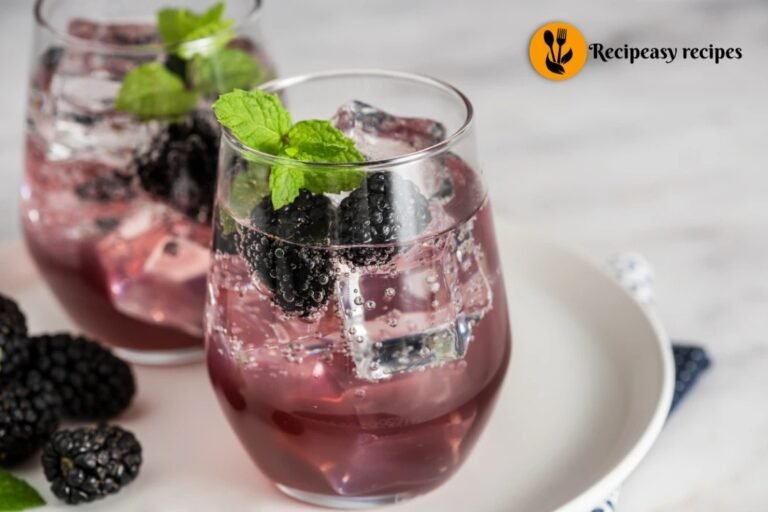
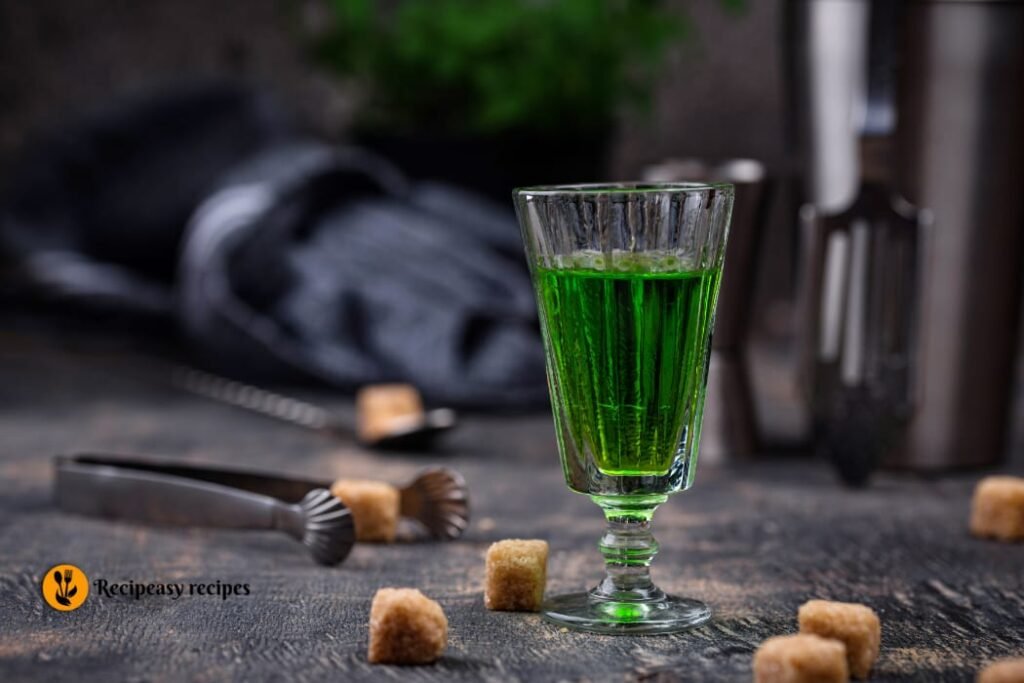
Traditionally, absinthe is served by pouring 1 part absinthe and 3–5 parts cold water over a sugar cube placed on a perforated spoon. As the water drips, the liquid turns milky — this is called the “louche effect.” For a modern twist, serve it over ice or mix it with citrus-based mocktails for a refreshing herbal taste.
Tips and Tricks
Always use fresh herbs for stronger aroma and flavor.
If making the absinthe recipe without alcohol, steep herbs in water with a hint of mint and star anise for natural flavor.
Store absinthe in a dark glass bottle to protect its color and aroma.
For smoother taste, let the mixture age for at least a week before drinking.
Benefits of This Recipe
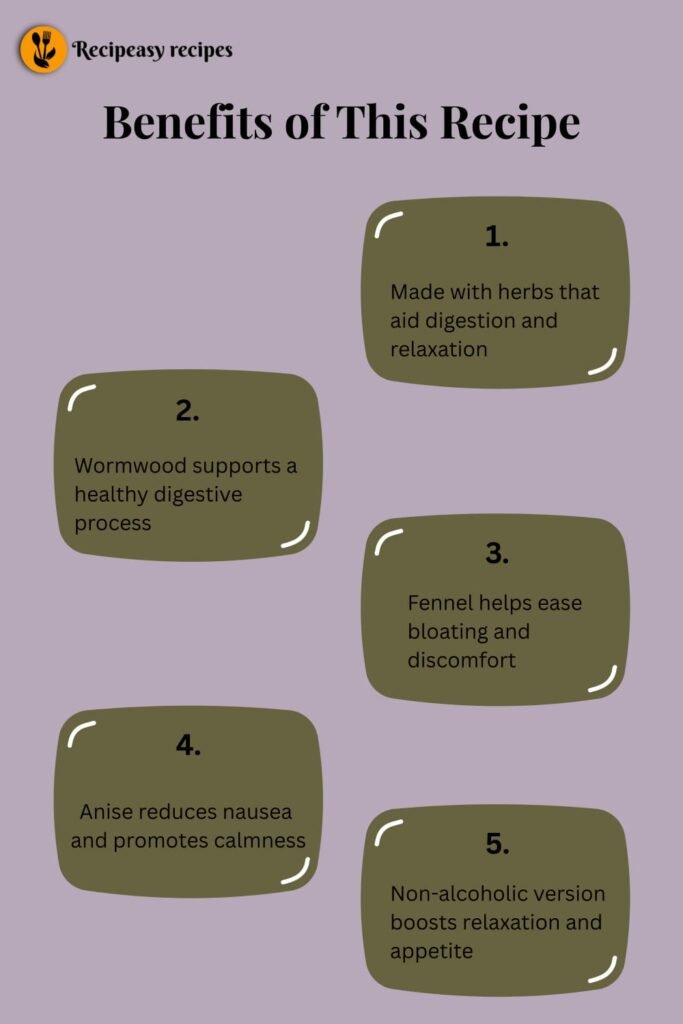
Absinthe contains herbs known for their digestive and calming properties. Wormwood supports digestion, fennel eases bloating, and anise helps reduce nausea. The non-alcoholic version, rich in herbal infusions, can also help with relaxation and appetite stimulation. When consumed moderately, absinthe offers both flavor and wellness benefits.
FAQs
1. What is the key ingredient in absinthe?
The key ingredient is wormwood (Artemisia absinthium), which gives absinthe its distinct flavor and mild bitterness.
2. Can I make legal homemade absinthe?
Yes! Homemade absinthe is legal as long as you use safe ingredients and avoid harmful chemicals like thujone in high concentrations.
3. What makes absinthe green?
The green color comes from natural herbs like hyssop and lemon balm, not artificial dyes.
4. Is there an easy absinthe recipe for beginners?
Yes simply steep wormwood, anise, and fennel in alcohol or water for a week and strain it. Skip distillation if you prefer simplicity.
5. How strong is absinthe?
Traditional absinthe ranges between 45–74% alcohol, but the non-alcoholic version is completely safe for all ages.
Conclusion
Making the absinthe recipe at home is not just about preparing a drink it’s about crafting a piece of history. This ancient, artistic beverage offers a perfect blend of herbal flavor and culture. Whether you enjoy the alcoholic or non-alcoholic version, this recipe connects you to centuries of craftsmanship in every sip.