Chicken Sinigang Recipe: Sour, Savory, and Deeply Comforting
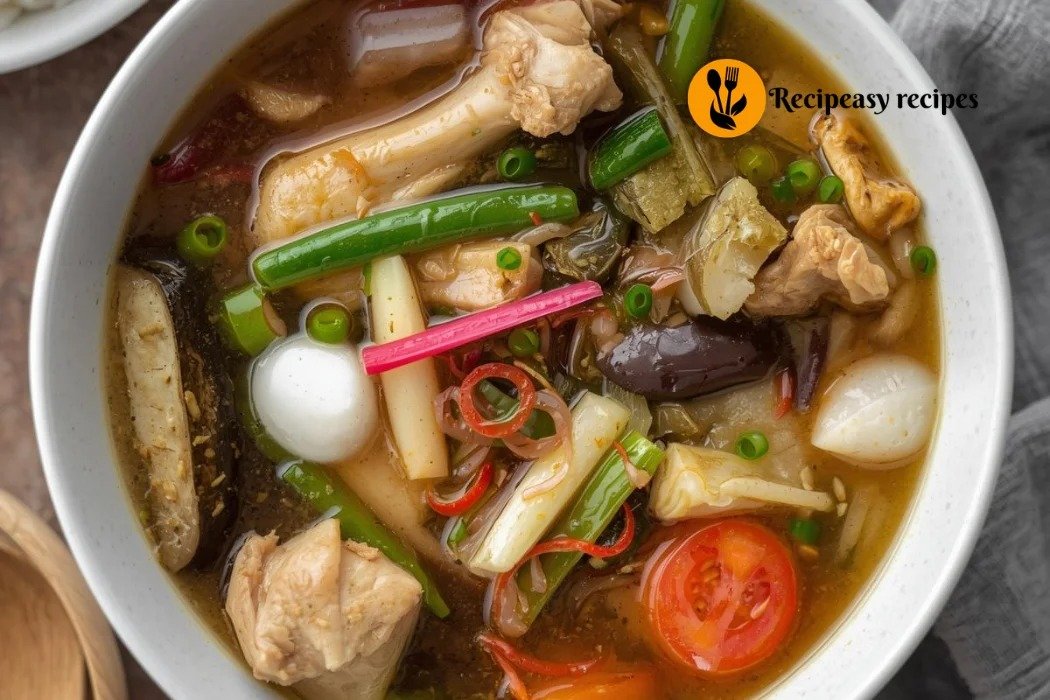
There’s something about a steaming bowl of chicken sinigang recipe that feels like a warm hug on a rainy afternoon. That tangy tamarind broth, tender chicken pieces, and soft vegetables all coming together it’s the kind of meal that Filipinos grow up craving and never stop loving.
If you’ve been searching for a version that’s approachable, straightforward, and genuinely delicious, you’re in the right place. This one keeps things simple without cutting corners on flavor.
Why This Version Works So Well
Sinigang is one of those dishes that sounds fancy but is actually quite forgiving. The broth does most of the heavy lifting, and once you understand the balance between sour and savory, you can make it your own every single time.
Using chicken instead of pork or shrimp makes it lighter and quicker to cook. The meat becomes incredibly tender in about 30 to 40 minutes, and the broth soaks into every piece beautifully. It’s also more budget-friendly, which is always a bonus for an everyday family meal.
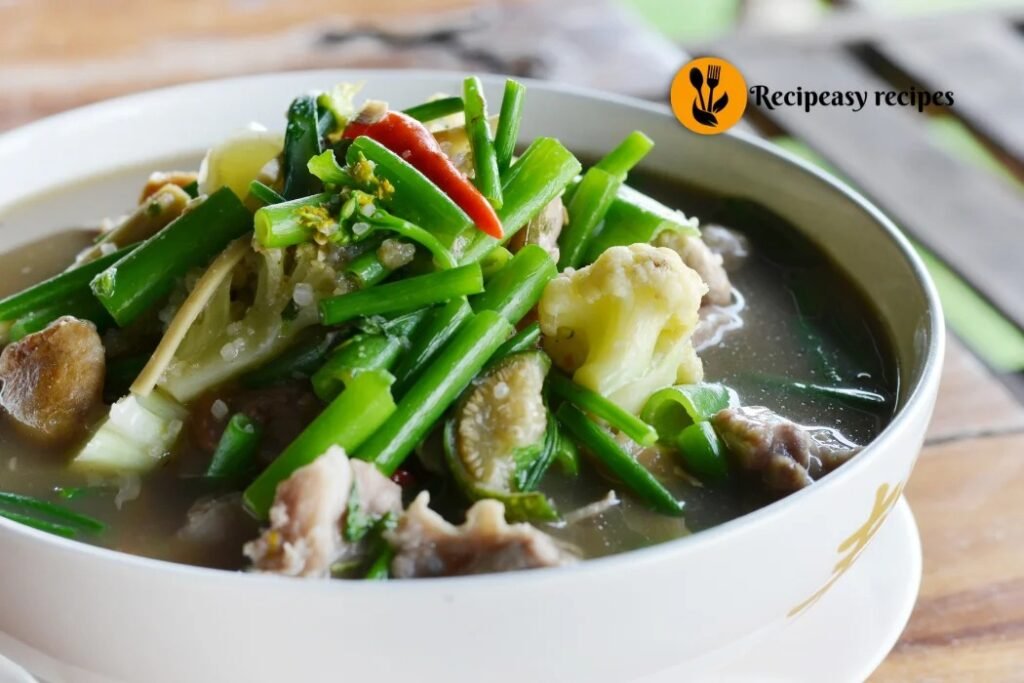
What You’ll Need
These are your na manok ingredients nothing fancy, just honest kitchen staples.
For the broth and chicken:
- 1 kg chicken, cut into serving pieces
- 1.5 liters water
- 1 packet tamarind sinigang mix (or fresh tamarind, about 6–8 pieces)
- 1 medium onion, quartered
- 2 medium tomatoes, quartered
- 2 tablespoons fish sauce (patis)
- Salt and pepper to taste
With vegetables:
- 1 cup string beans (sitaw), cut into 2-inch pieces
- 1 medium radish (labanos), sliced
- 1 bundle kangkong (water spinach), separated
- 2–3 pieces gabi (taro root), peeled and halved
- 2 finger chilies (siling haba)
Feel free to swap or add vegetables based on what’s available. Eggplant works beautifully here too.
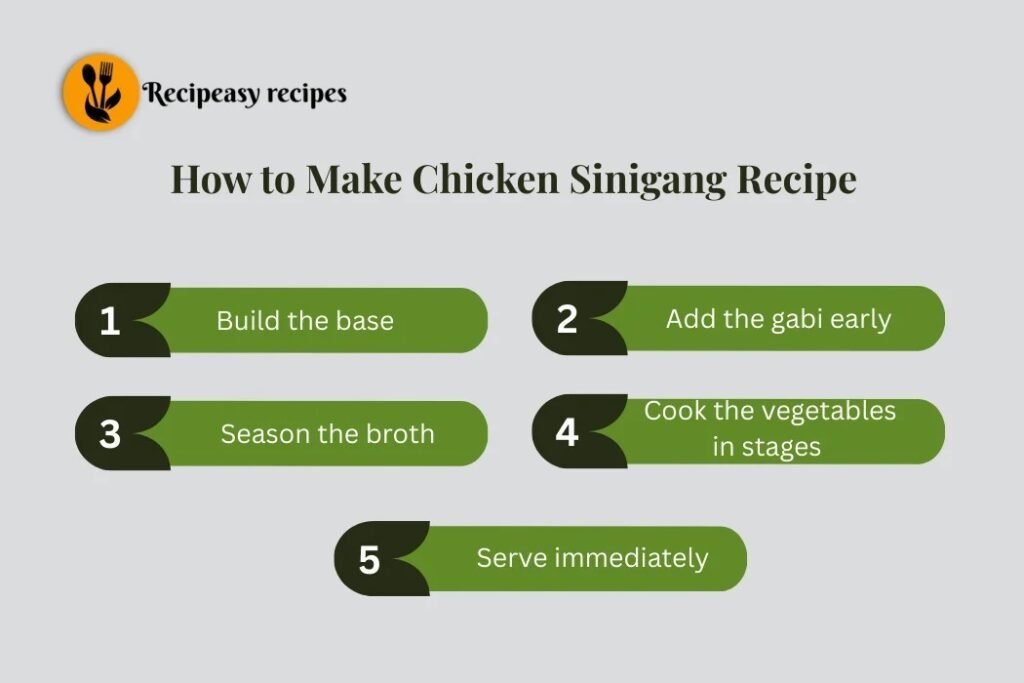
How to Make Chicken Sinigang
Build the base: In a large pot, combine the chicken, onion, and tomatoes. Pour in the water and bring everything to a boil over medium-high heat. Skim off any foam that rises to the surface. This keeps the broth clear and clean-tasting.
Add the gabi early: Once the broth is simmering, add the gabi with gabi pieces. Taro needs more time to soften compared to other vegetables, so it goes in before everything else. Let it cook for about 10–12 minutes until it starts to become tender.
Season the broth: Stir in the tamarind sinigang mix and fish sauce. Taste the broth and adjust — add more tamarind mix if you want it tangier, or a pinch more salt if it needs depth. The flavor should be bold, sour, and slightly savory all at once.
Cook the vegetables in stages: Add the radish and string beans next. Let them simmer for about 5 minutes. Then add the finger chilies. Finally, toss in the kangkong right at the end and turn off the heat. The residual heat will wilt it perfectly without turning it mushy.
Serve immediately: Ladle into bowls over steamed white rice. A little extra fish sauce on the side for dipping makes it even better.
A Few Tips Worth Knowing
Don’t overcook the vegetables: They should still have a slight bite. Overcooked kangkong especially turns slimy and unpleasant, so always add it last.
Fresh tamarind vs. the packet-both work: Fresh tamarind gives a more complex, rounded sourness. The sinigang mix is quicker and more consistent. On busy weeknights, the packet is your best friend.
Skim the broth: It’s a small step that makes a noticeable difference in the final flavor and appearance of the dish.
Browning the chicken first: is optional, but if you have a few extra minutes, searing the pieces in a little oil before boiling adds a subtle richness to the broth that makes it taste like it’s been cooking all day.
Variations to Try
Panlasang Pinoy home cooks often tweak sinigang based on regional taste or whatever’s in the fridge. Some families add a small amount of miso paste to the broth for an earthier, deeper flavor that version is called sinigang sa miso. Others use green unripe mangoes or guava as the souring agent instead of tamarind, which gives a completely different but equally delicious result.
You can also make this a heartier meal by adding cubed firm tofu or a handful of corn kernels to the pot.
Storing Leftovers
Sinigang actually tastes even better the next day as the flavors continue to develop overnight. Store it in an airtight container in the refrigerator for up to three days. Reheat gently on the stovetop over low heat avoid boiling it aggressively or the vegetables will fall apart.
If you’re planning to store it longer, freeze the broth and chicken separately from the vegetables. Cooked greens don’t freeze well, but the base freezes beautifully for up to a month.
FAQ’s
What makes chicken sinigang sour?
The sour taste in a chicken sinigang recipe usually comes from tamarind. Some variations also use green mango, guava, or a ready-made sinigang mix to create the signature tangy flavor.
Can I use fresh tamarind instead of sinigang mix?
Yes, fresh tamarind works very well in a chicken sinigang recipe. You can boil the tamarind, mash it, and strain the juice before adding it to the broth for a more natural sour flavor.
What vegetables are best for chicken sinigang?
Common vegetables used in a chicken sinigang recipe include radish, string beans, kangkong (water spinach), taro root, eggplant, and finger chilies. You can adjust the vegetables depending on what you have available.
How long does chicken sinigang last in the fridge?
Chicken sinigang can be stored in an airtight container in the refrigerator for up to 3 days. Many people find that the chicken sinigang recipe tastes even better the next day as the flavors continue to develop.
Final Thoughts
Honestly, once you’ve made this chicken sinigang recipe from scratch, it becomes one of those reliable go-to meals you return to again and again. It’s the best kind of cooking simple, nourishing, and full of real flavor. Whether it’s your first time trying Filipino food or you’re cooking it for the hundredth time, this bowl will not disappoint.
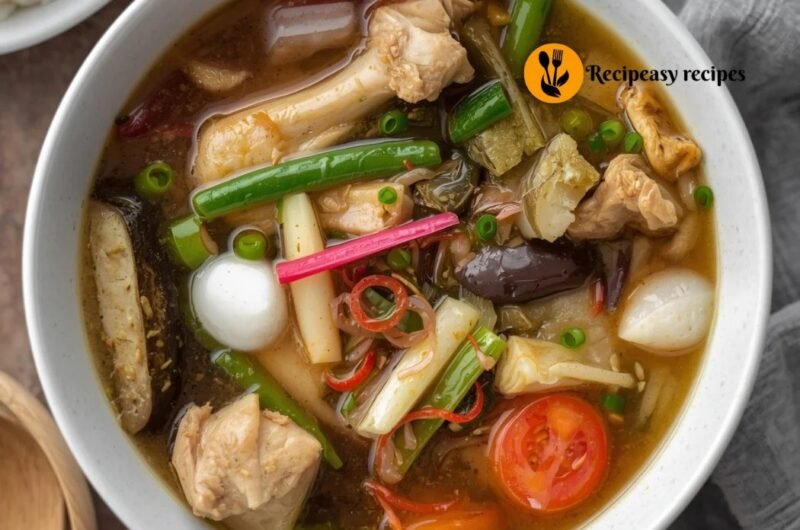
Chicken Sinigang Recipe: Sour, Savory, and Deeply Comforting
Course: Main, SoupsCuisine: FilipinoDifficulty: Easy5
servings15
minutes30
minutes320
kcalA comforting chicken sinigang recipe made with tender chicken simmered in a tangy tamarind broth with fresh vegetables. This classic Filipino soup is sour, savory, and deeply satisfying.
Ingredients
For the Chicken and Broth:
1 kg chicken, cut into serving pieces
1.5 liters water
1 packet tamarind sinigang mix (or 6–8 fresh tamarind pieces)
1 medium onion, quartered
2 medium tomatoes, quartered
2 tablespoons fish sauce (patis)
Salt and pepper to taste
Vegetables:
1 cup string beans (sitaw), cut into 2-inch pieces
1 medium radish (labanos), sliced
1 bundle kangkong (water spinach)
2–3 pieces gabi (taro root), peeled and halved
2 finger chilies (siling haba)
Directions
- Boil the chicken base
In a large pot, combine chicken, onion, tomatoes, and water. Bring to a boil and skim off any foam. - Cook the taro
Add the gabi (taro root) and simmer for about 10–12 minutes until slightly tender. - Season the broth
Stir in the tamarind sinigang mix and fish sauce. Adjust flavor with salt or extra tamarind if needed. - Add vegetables in stages
Add radish and string beans and cook for 5 minutes. Add finger chilies next. - Finish with kangkong
Add kangkong last, turn off the heat, and let it wilt in the hot broth. - Serve hot
Serve this chicken sinigang recipe with steamed white rice and extra fish sauce on the side.
Notes
- Add kangkong at the end to keep it fresh and vibrant.
- Fresh tamarind gives a deeper sour flavor, but sinigang mix is quicker.
- Skimming the broth helps keep the soup clear and clean tasting.