Costa Rica’s Greatest Bar Food — Making a Proper Chifrijo Recipe at Home
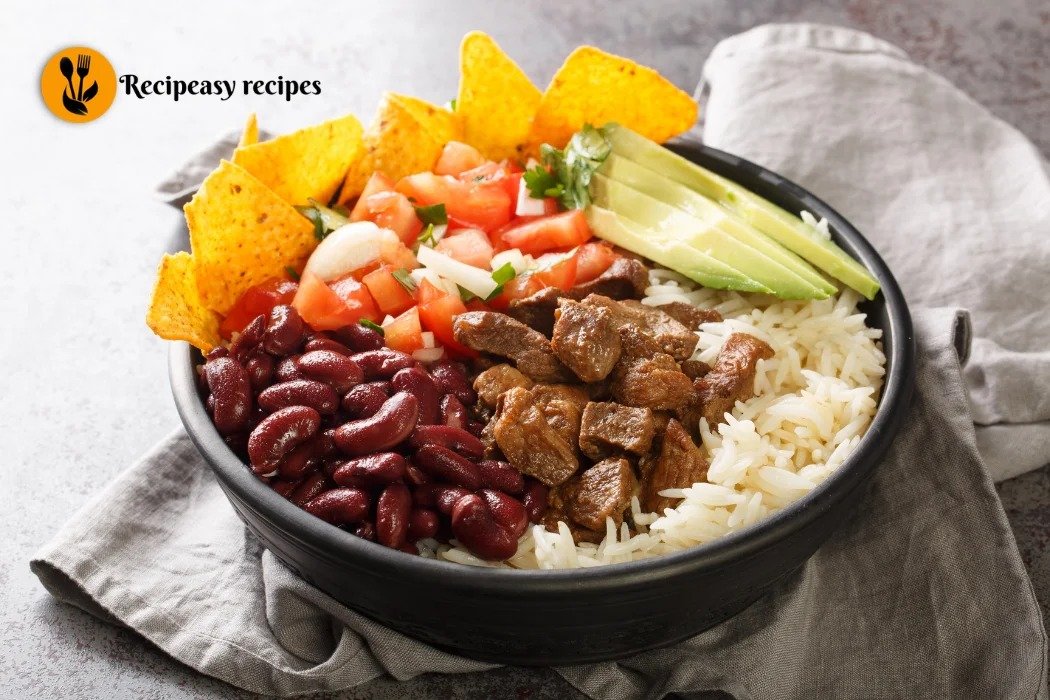
The first time I had chifrijo, I was sitting on a plastic stool at a tiny soda in San José, Costa Rica, slightly sunburned and very hungry. A ceramic bowl arrived stacked with layers crispy pork, red beans, rice, pico de gallo, and tortilla chips jammed in around the edges. I didn’t fully understand what I was eating, but I finished it in about four minutes and immediately ordered another.
That was a few years ago. Since then, I’ve made this dish probably thirty times trying to get it right at home, and I finally have a version that genuinely delivers. A good chifrijo recipe is not complicated, but there are a few specific things that separate a really satisfying bowl from a mediocre one, and I want to walk you through all of them.
Quick Note on the Name
Chifrijo is a portmanteau “chi” from chicharrón (fried pork) and “frijo” from frijoles (beans). Every component of the name is also a component of the dish. It was invented in the 1990s at a bar in San José, and it spread so fast across the country that it became essentially the national bar snack within a generation. Knowing that context matters because it shapes how you approach the dish this is food designed to be eaten with a cold drink, shared with people, and enjoyed without much ceremony.
The Pork Is the Foundation — Get This Right First
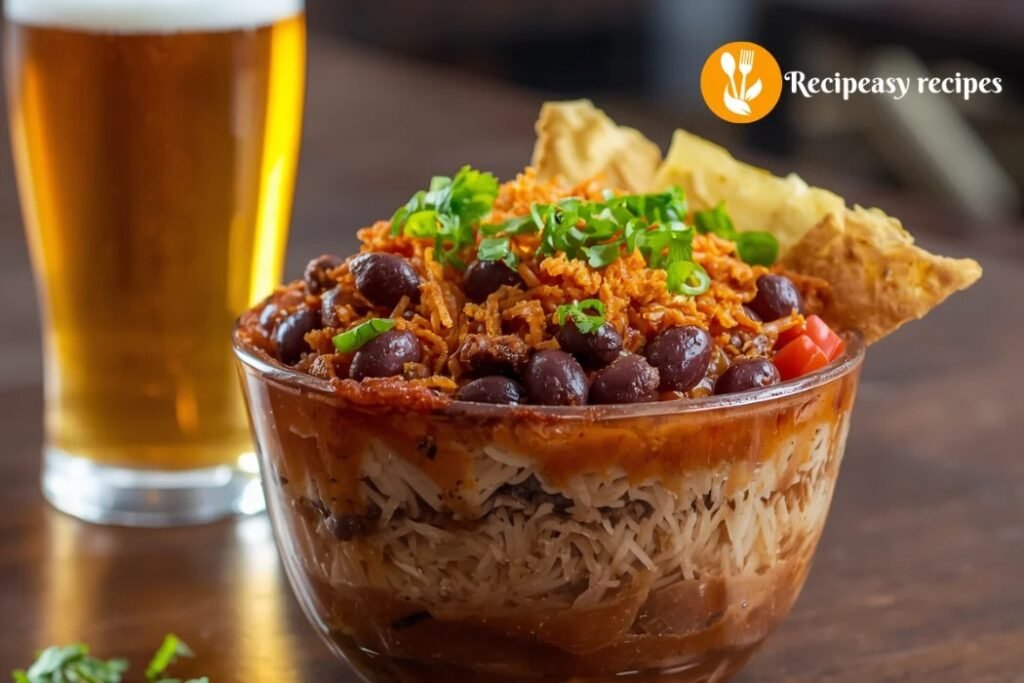
The chicharrón is where most home cooks either win or lose this dish. Traditional chifrijo uses pork belly or pork ribs cut into chunks, seasoned, and fried until the exterior is genuinely crispy. Not golden-brown-ish, not browned properly crispy, with a crackling outer layer that holds up even after the beans and salsa go on top.
I cut my pork belly into roughly one-inch cubes and season them generously with salt, garlic powder, cumin, and a little achiote paste if I have it. Achiote adds a subtle earthiness and that deep reddish-orange color you see in traditional preparations. However, if you can’t find it, the dish still works just add a small pinch of smoked paprika instead.
Fry the pork in batches in a heavy pan with a neutral oil over medium-high heat. The mistake I made early on was crowding the pan, which dropped the oil temperature and caused the pork to steam instead of fry. Each piece needs space. Also, don’t rush it about eight to ten minutes per batch, turning occasionally, gives you that exterior you’re looking for. Set them aside on paper towels when they’re done, and don’t cover them or they’ll steam and go soft.
The Beans Need to Actually Taste Like Something
Canned red beans work fine here, but please don’t just open a can and pour them in cold. Drain them, rinse them, and warm them in a small saucepan with a splash of olive oil, a crushed garlic clove, and a pinch of cumin and salt. Let them simmer gently for about five minutes until they’ve absorbed those flavors. This one extra step completely changes how the finished bowl tastes the beans go from flat and tinny to something that actually contributes to the dish instead of just sitting there.
The ingredients that make the bean layer work aren’t fancy, but the technique matters. Warm, well-seasoned beans versus cold canned beans is the difference between a dish that hangs together and one that feels like disconnected parts in a bowl.
Pico de Gallo — Make It Fresh, Make It Punchy
This is the component that ties everything together, and it needs to be bright and acidic to balance the richness of the pork and beans. Dice tomatoes, white onion, and fresh cilantro, add a finely chopped jalapeño or serrano, and squeeze over enough lime juice to make it genuinely tangy. Season with salt and let it sit for at least ten minutes before using it the lime juice and salt pull moisture from the tomatoes and create a little natural dressing that soaks into everything below it.
I slightly under-salted my pico the first few times I made this, and the whole bowl tasted flat despite the pork being perfect. The pico needs to be almost aggressively seasoned on its own so that when it lands on top of the beans and rice, it seasons the whole bowl naturally.
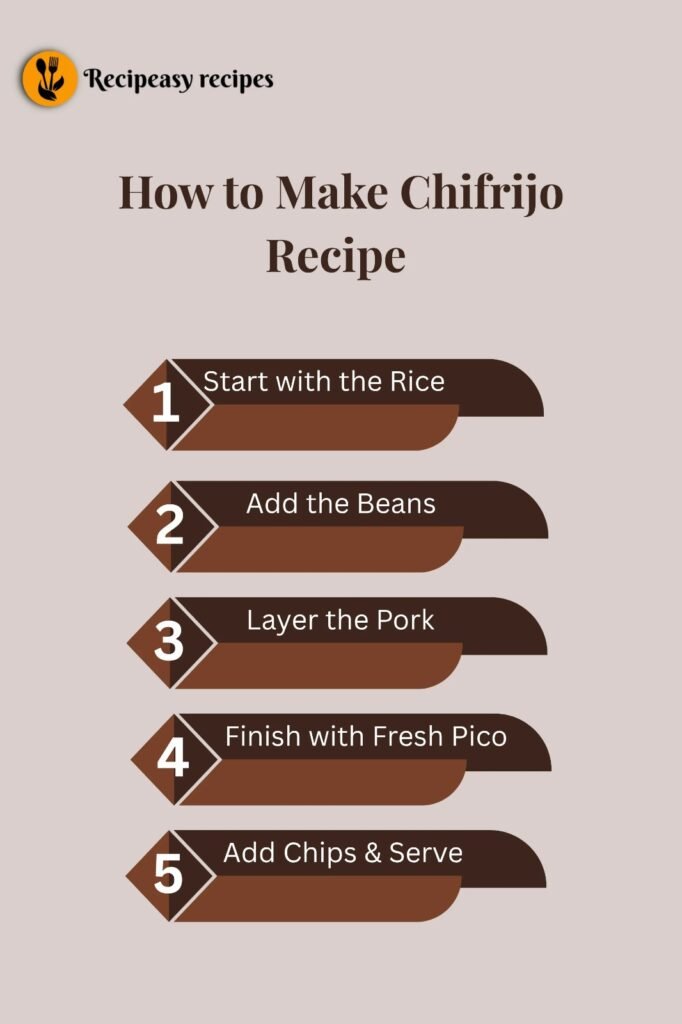
How to make chifrijo into a bowl that actually works: layering order matters more than you’d think. Rice goes in first as a base plain white rice, nothing fancy, just cooked and warm. Then the seasoned beans. Then the fried pork. Then the pico de gallo spooned generously over the top. Finally, tortilla chips or tostadas pushed into the sides and corners so they catch the juices from everything above.
Serve it immediately. This is not a dish that waits. The chips go soft, the pork loses its crunch, and the whole textural balance shifts within about ten minutes. Part of what makes it the best at a bar is that you eat it fast, standing up or on a barstool, not staring at it while it cools.
Something I Noticed After Making This Repeatedly
The dish smells like cumin and garlic and hot pork fat while it comes together, and the combination is hard to argue with. When you first spoon the pico onto the hot beans and pork, there’s this brief sizzle and a rush of lime-and-herb steam that comes up from the bowl. That moment before you’ve even eaten a bite is when you know it’s going to be good.
Also, the ratio matters. If you overload on rice, it becomes too heavy. If you skimp on pico, the richness of the pork overwhelms everything. I aim for roughly equal amounts of beans and rice as the base, with a generous but not excessive mound of pico on top, and as much crispy pork as I can justify.
Bringing It All Together
The version I make now is not identical to what I ate in San José I’ve never been able to track down the exact soda or recreate that specific bite. But it’s easy enough to pull together on a weeknight and genuinely satisfying in the way that good street food always is: bold, straightforward, and built entirely around contrast.
Every time I make this chifrijo recipe, it disappears faster than almost anything else I cook. Which is, honestly, the best review a dish can get.
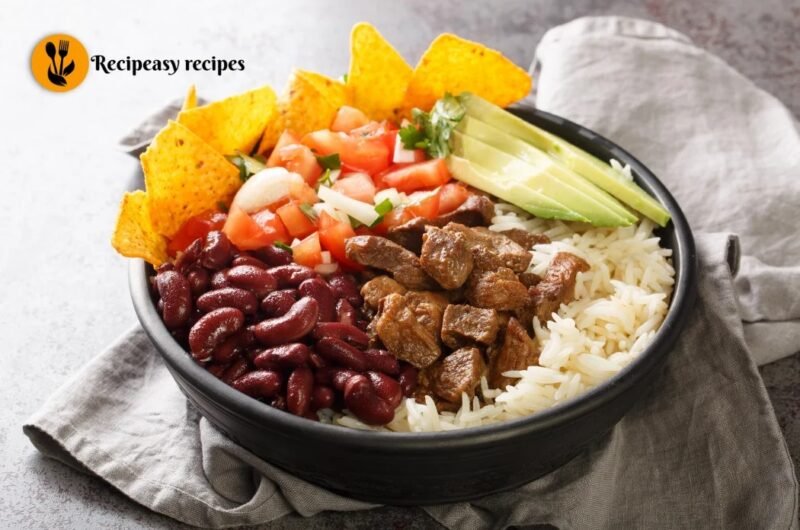
Costa Rica’s Greatest Bar Food — Making a Proper Chifrijo Recipe at Home
Course: Main Course / SnackCuisine: Costa Rican / Latin AmericanDifficulty: Easy4
servings30
minutes40
minutes300
kcalThis chifrijo recipe brings together crispy pork, seasoned beans, fluffy rice, and fresh pico de gallo into one bold and satisfying Costa Rican bowl that’s perfect for sharing.
Ingredients
For the Pork (Chicharrón):
500g pork belly (cut into cubes)
Salt (to taste)
1 tsp garlic powder
1 tsp cumin
1 tsp achiote paste (or smoked paprika)
Oil (for frying)
For the Beans:
1 can red beans (drained & rinsed)
1 tbsp olive oil
1 garlic clove (crushed)
1/2 tsp cumin
Salt to taste
For the Base:
2 cups cooked white rice
For Pico de Gallo:
2 tomatoes (diced)
1/2 onion (finely chopped)
Fresh cilantro (chopped)
1 jalapeño or serrano (finely chopped)
Juice of 1 lime
Salt to taste
For Serving:
Tortilla chips or tostadas
Directions
- 1. Cook the Pork
Season pork with salt, garlic powder, cumin, and achiote
Fry in batches over medium-high heat for 8–10 minutes
Cook until crispy and golden
Drain on paper towels
2. Prepare the Beans
Heat olive oil in a pan
Add garlic and cook briefly
Add beans, cumin, and salt
Simmer for 5 minutes until flavorful
3. Make Pico de Gallo
Mix tomatoes, onion, cilantro, and chili
Add lime juice and salt
Let sit for 10 minutes
4. Assemble the Bowl
Add rice as the base
Layer seasoned beans on top
Add crispy pork
Spoon pico de gallo generously
Serve with tortilla chips on the side
Notes
- Fry pork in batches to keep it crispy
- Serve immediately for best texture
- Balance ratios (rice, beans, pork, pico)
- Season beans properly — don’t skip this step
- Pico should be tangy and slightly salty