Easy Chinese Chicken Feet Recipe for Beginners
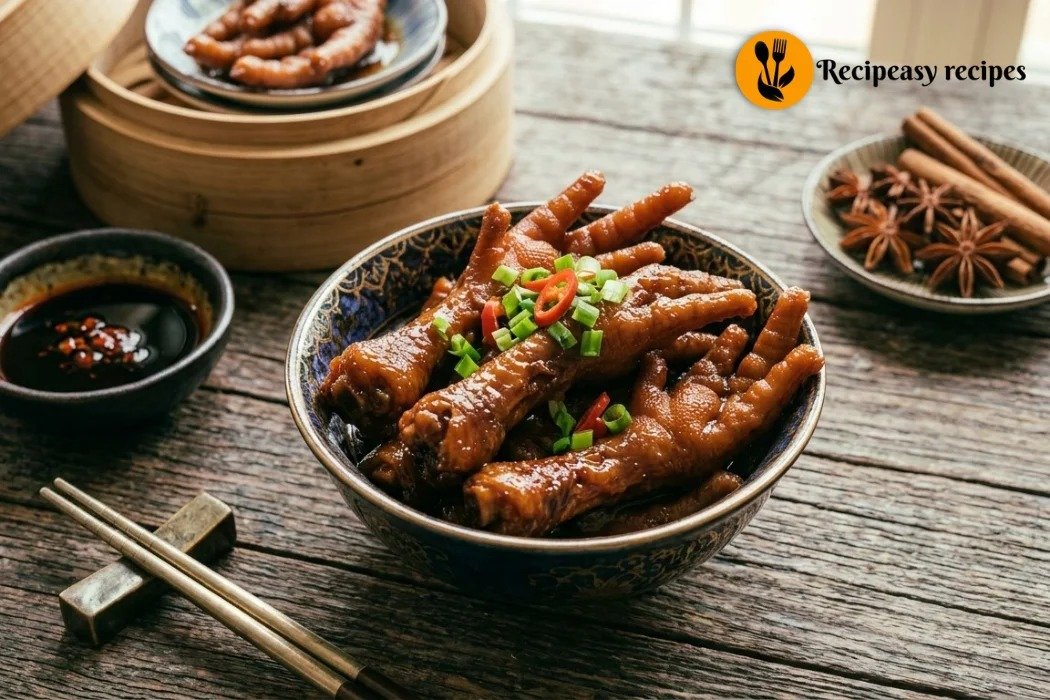
If you’ve ever had dim sum chicken feet (phoenix claws) at a restaurant and wondered how they get so soft and flavorful – this is the recipe you’ve been looking for. This chinese chicken feet recipe walks you through every step, from the first boil to the final braise. It’s easier than it looks, and the result is seriously good.
What Are Chicken Feet, Exactly?
In Chinese cooking, chicken feet are called fèng zhuǎ, which means phoenix claws. They’re a classic Cantonese style chicken feet dish served at dim sum. The skin turns soft and almost silky after cooking. The flavor soaks deep into every little bit. Once you try them done right, you’ll get it.
What You’ll Need
Serves: 4 to 6 Total time: About 1 hour 30 minutes (plus soaking time)
For the Chicken Feet
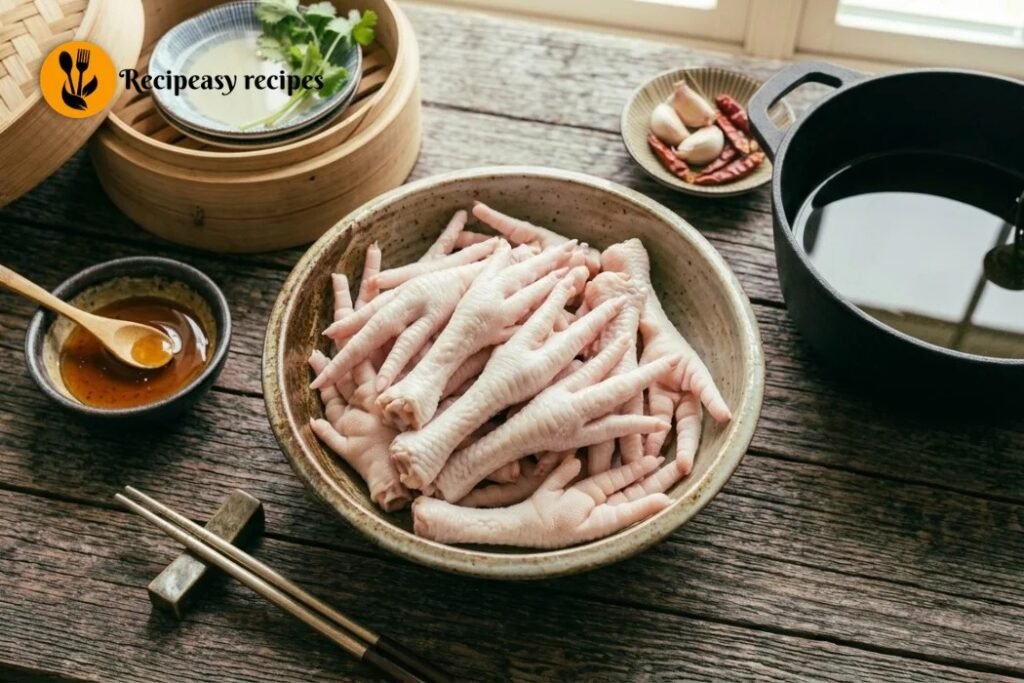
- 2 pounds chicken feet, nails removed and rinsed well
- 2 tablespoons maltose or honey
- 2 tablespoons rice vinegar
- Oil for deep frying (about 4 cups)
For the Braising Sauce
- 1 tablespoon oil
- 3 slices fresh ginger
- 2 stalks scallions, white parts only
- 2 tablespoons sugar
- 1 tablespoon fermented black beans
- 2 tablespoons light soy sauce
- 1 tablespoon dark soy sauce
- 2 tablespoons oyster sauce
- 2 tablespoons Shaoxing wine
- 4 cups water
- 2 bay leaves
These ingredients give you that deep, savory braised chicken feet in soy sauce flavor that dim sum restaurants are famous for.
How to Make This Recipe
Step 1 – The First Boil
Fill a pot with cold water. Add the maltose and stir until it dissolves. Then add the rice vinegar and give it a quick stir.
Next, add the chicken feet. Bring everything to a boil over high heat and let them cook for about 5 minutes. This step removes any off smell and starts building the color.
After that, drain them and let them dry completely. Pat them dry with paper towels if needed. This part is important – wet feet in hot oil will splatter badly.
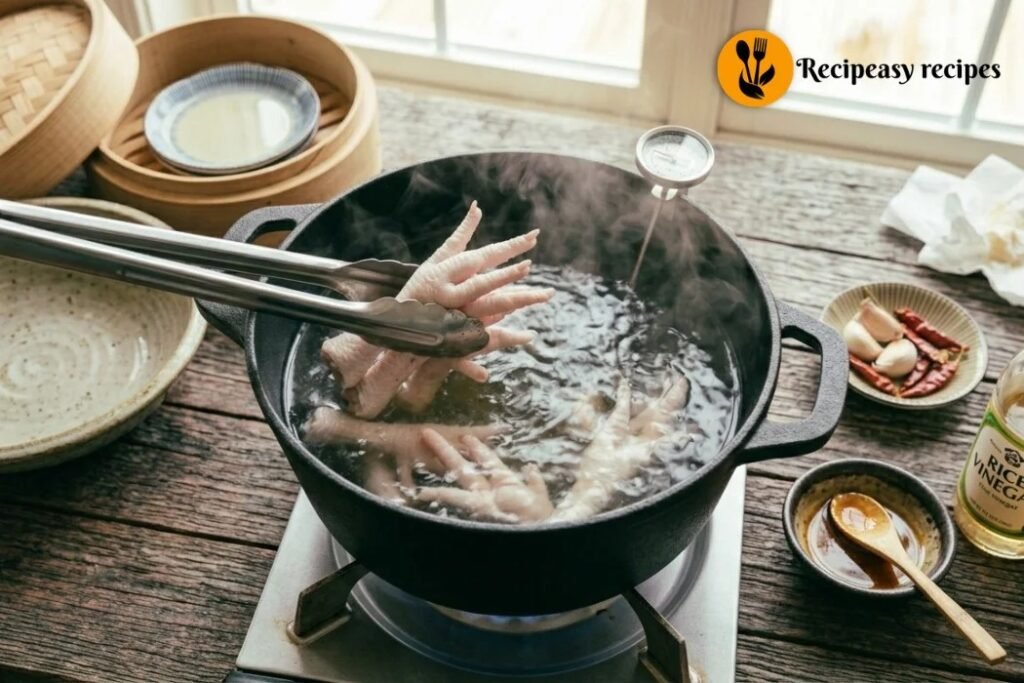
Step 2 – Deep Fry Until Golden
Heat your oil to about 350°F (177°C). Carefully lower the chicken feet in, working in small batches. Cover the pot with a lid right away to stop oil from popping everywhere.
Fry each batch for about 3 minutes until they turn golden brown. Then remove and set aside.
Done right, this step gives you that slightly blistered, golden skin – the signature look of a proper sticky glazed chicken feet recipe.
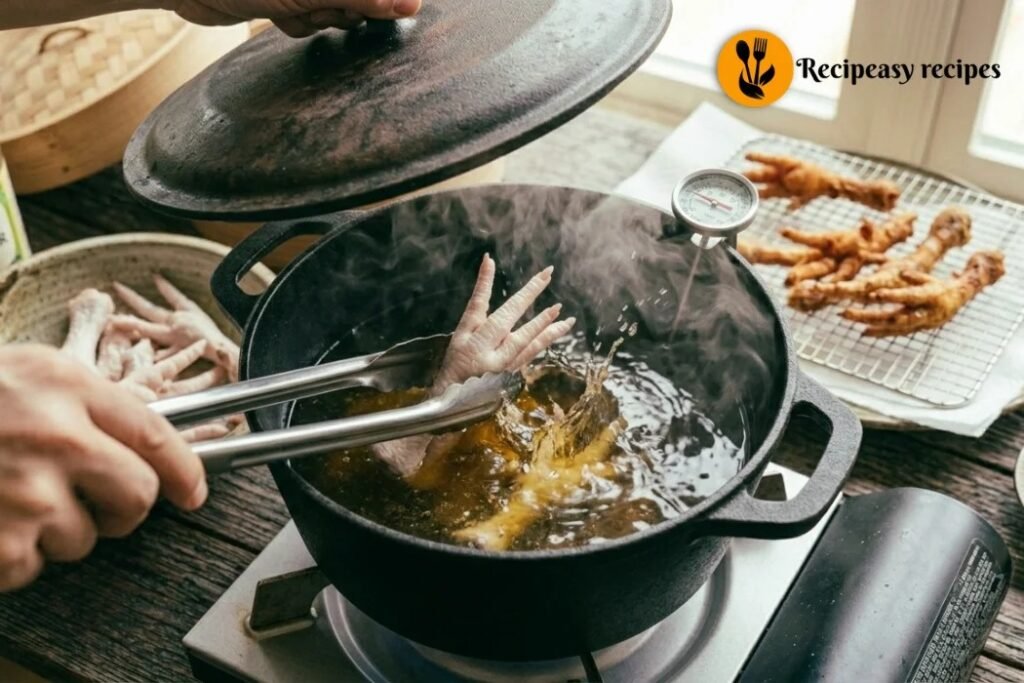
Step 3 – The Ice Water Soak
This step is what makes the texture so good. Place the fried chicken feet in a big bowl and cover them with ice cold water. Let them soak for at least 30 minutes, though 1 to 2 hours is even better.
As they soak, the skin puffs up and gets that wrinkled, soft texture that soaks up all the braising sauce beautifully. Don’t skip this.
Drain and set aside once done.
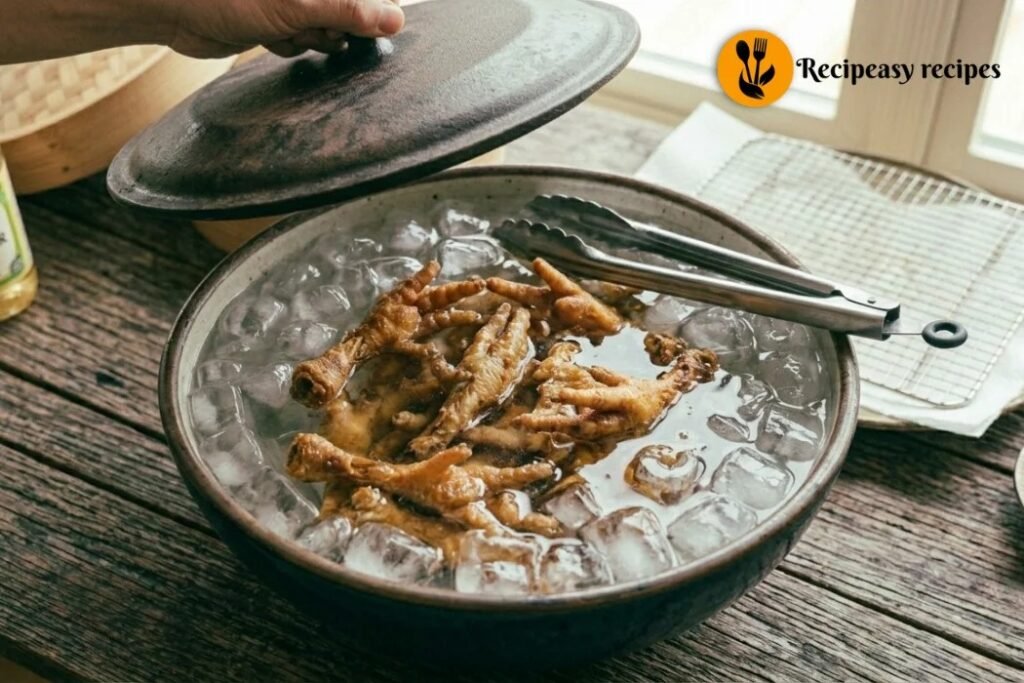
Step 4 – Braise Low and Slow
Heat a tablespoon of oil in a large pot over medium heat. Add the ginger and scallions and cook for about 30 seconds until you can smell them.
Add the sugar and stir until it melts. Then add the fermented black beans and stir for another 30 seconds. This is the base of the Chinese chicken feet black bean sauce – it smells amazing at this point.
Now add the soy sauce, dark soy sauce, oyster sauce, and Shaoxing wine. Return the chicken feet to the pot and stir everything together for about 2 minutes.
Pour in the water, add the bay leaves, and cover the pot. Bring to a simmer, then turn the heat to low. Let it braise gently for 45 minutes.
After 45 minutes, take off the lid and turn the heat back up to high. Let the sauce reduce for about 5 minutes until it thickens and clings to the feet.
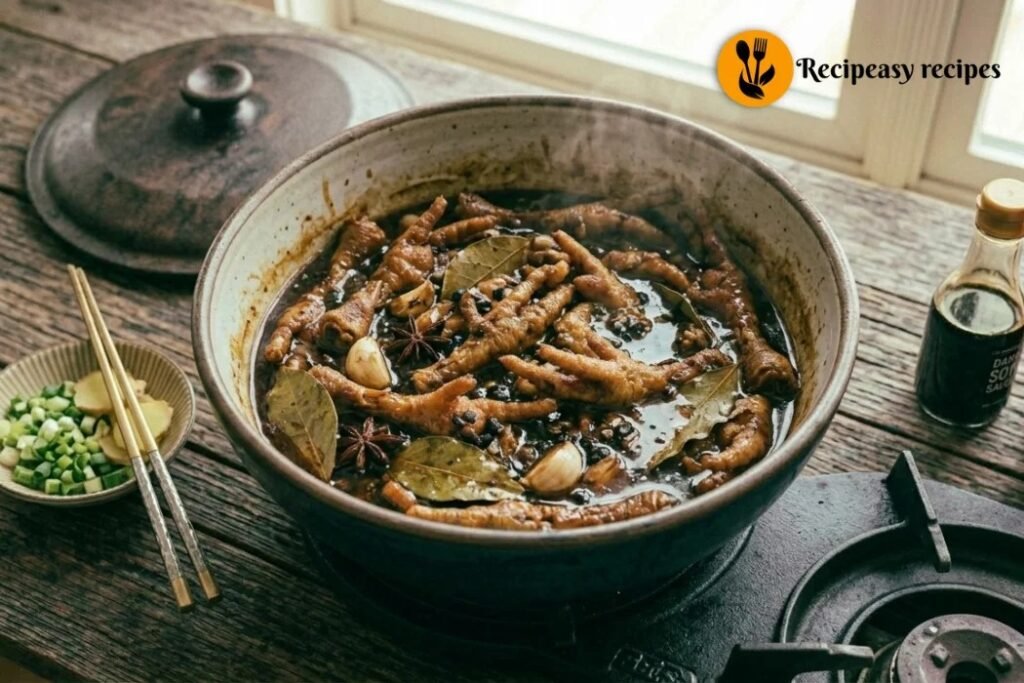
Step 5 – Steam Before Serving (Optional but Great)
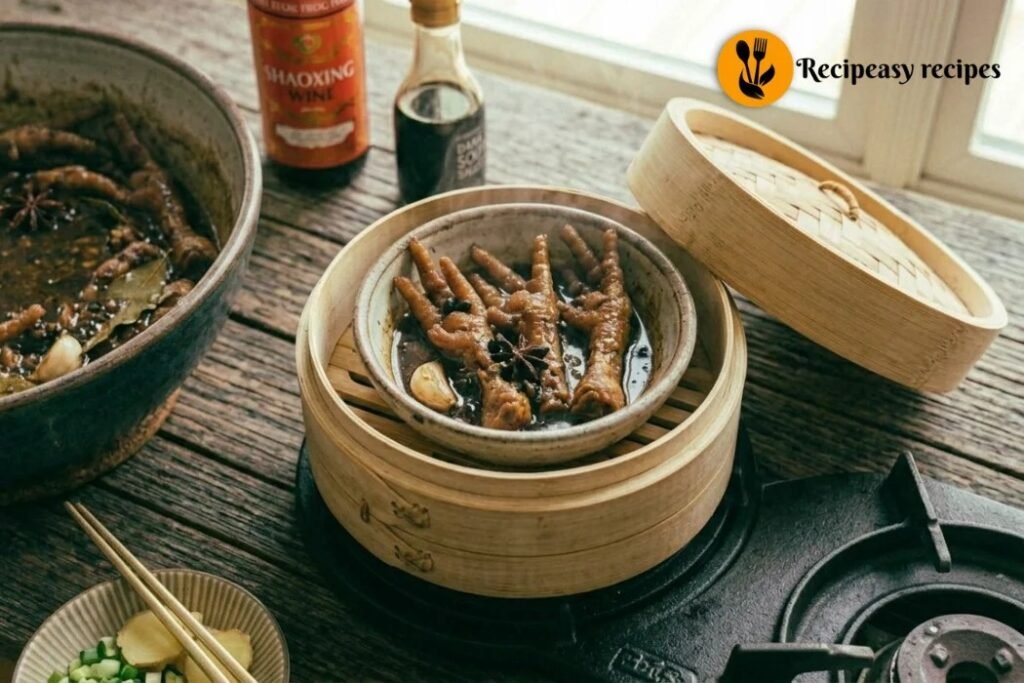
If you’re serving these as steamed dim sum chicken feet, here’s the final touch. Place a few pieces in a small bowl. Steam over boiling water for about 6 minutes.
This is exactly how they’re done at dim sum restaurants. The steaming step warms everything through and makes the texture even more tender.
Tips Worth Knowing
Dry the feet before frying. Even a little moisture causes hot oil to splatter dangerously. Take your time here.
Don’t rush the soak. The longer they sit in ice water, the better the texture. Two hours makes a real difference.
Use thighs or honey if maltose is hard to find. Honey works just as well for color and a little sweetness.
Make them ahead. Fully braise the chicken feet, refrigerate, and then steam to reheat right before serving. They actually taste better the next day after sitting in the sauce overnight.
Adjust the heat. Want something with more kick? A small spoonful of chili bean paste or dried chilies added during the braise turns this into a version closer to a spicy Sichuan chicken feet dish. Just add it along with the black beans and adjust to taste.
Why This Recipe Works
The method here – boil, fry, soak, braise – is the real traditional process. Each step has a purpose. The boil cleans and starts the color. The fry creates that blistered texture. The ice soak puffs the skin. The braise fills every wrinkle with deep, savory flavor.
So when you bite in, the skin is soft, the sauce is rich, and it tastes exactly like the best version you’d get at a dim sum cart. That’s the whole goal of this chinese chicken feet recipe – restaurant quality, made at home.
Give it a try. It’s worth every step.

The Chinese Chicken Feet Recipe I Was Scared to Try (And Now Can’t Stop Making)
Course: Appetizer / Side DishCuisine: Chinese / CantoneseDifficulty: Easy4
servings2
hours20
minutes1
hour15
minutes300
kcalIngredients
For the Chicken Feet
700–800g chicken feet
Oil for deep frying
Water for soaking
For the Braising Sauce
3 tablespoons fermented black bean paste or mashed fermented black beans
2 tablespoons oyster sauce
1.5 tablespoons soy sauce
1 tablespoon dark soy sauce
1 tablespoon Shaoxing rice wine
1 tablespoon sugar
1/2 teaspoon white pepper
100ml chicken stock or water
3 garlic cloves, minced
1 small ginger piece, sliced
2–3 dried red chilies (optional)
Optional Garnish
Thinly sliced green onions
Small drizzle sesame oil
Directions
- Step 1: Clean the Chicken Feet: Rinse the chicken feet thoroughly and trim the nail tips using kitchen scissors or a cleaver.
- Step 2: Blanch the Feet: Place chicken feet in cold water, bring to a boil, and blanch for 5 minutes. Drain, rinse, and pat completely dry.
- Step 3: Fry Until Golden: Heat oil to 180°C and fry the chicken feet in batches for 5–6 minutes until deep golden amber.
- Step 4: Soak in Cold Water: Immediately transfer fried feet into a bowl of cold water and soak for at least 1–2 hours or overnight for best texture.
- Step 5: Prepare the Sauce: Mix black bean paste, oyster sauce, soy sauces, Shaoxing wine, sugar, white pepper, stock, garlic, ginger, and dried chilies.
- Step 6: Braise the Chicken Feet: Heat a tablespoon of oil in a wok. Fry garlic, ginger, and chilies until fragrant. Add black bean paste and stir briefly. Add soaked chicken feet and toss well. Pour in remaining sauce ingredients and bring to a gentle boil. Reduce heat, cover, and simmer for 45–60 minutes until soft and tender.
- Step 7: Optional Steaming Finish: Transfer braised feet to a heatproof dish, spoon extra sauce on top, and steam for 20–30 minutes for authentic dim sum texture.
- Step 8: Garnish and Serve: Top with green onions and sesame oil before serving hot.
Notes
- Dry the chicken feet thoroughly before frying to avoid dangerous oil splatter.
- For a spicy Sichuan version, replace black bean paste with doubanjiang and add Sichuan peppercorns and chili oil.
- Taste the sauce during cooking since black bean paste saltiness varies by brand.
- Do not skip the soaking step after frying — this creates the signature wrinkled texture.