Chinese Sausage Recipe Everyone Should Try at Least Once
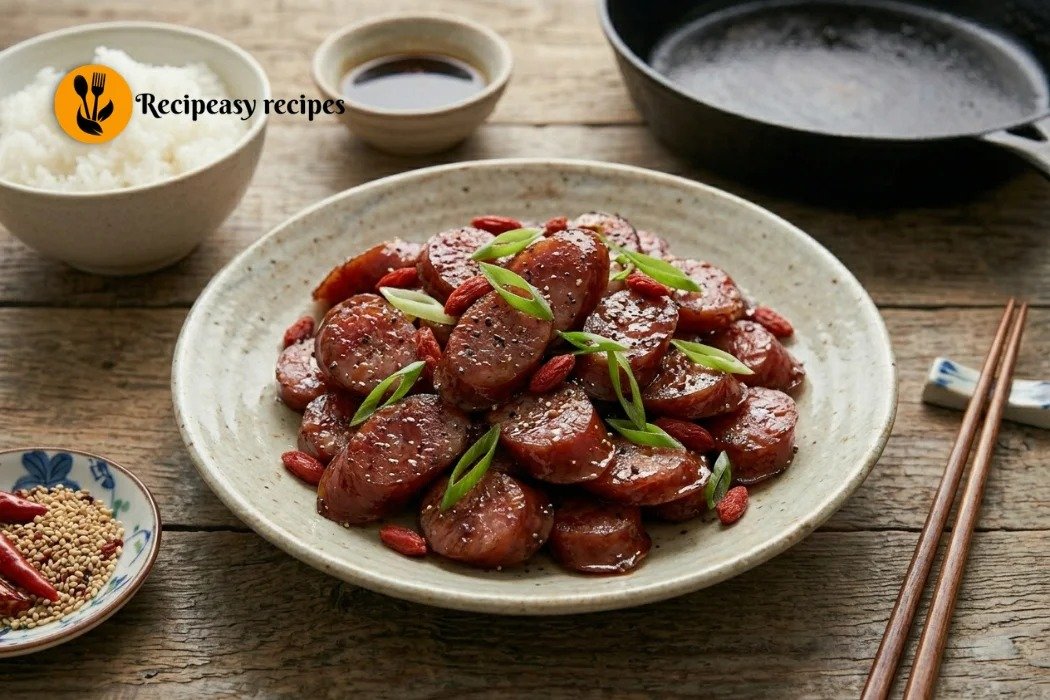
If you have ever eaten at a Chinese restaurant or walked through a Chinese grocery store, you have probably seen those small, shiny, dark-red sausages hanging in a row. They smell amazing. They look amazing. And honestly, they taste even better than they look.
This is a Chinese sausage recipe that walks you through everything. From what goes into it, to how you cook it, to how you use it in everyday meals. So let’s get into it.
What Exactly Is Chinese Sausage?
Chinese sausage is a dried, cured meat sausage. It is sweet, salty, and a little smoky all at once. The flavor is unlike anything else.
Most people know it by the name Lap Cheong. That is the Cantonese word for this type of sausage. In Cantonese, “lap” means preserved and “cheong” means intestine. So basically, it is a preserved meat sausage stuffed into a natural casing.
A Cantonese sausage recipe typically uses pork, soy sauce, rose wine, sugar, and salt. The sweetness is what makes it stand out. It is not spicy. It is not overly savory. It is its own thing entirely.
You can buy it ready-made at any Chinese grocery store. But making it at home? That is a whole different level of flavor. Plus, you control what goes into it.
What You Need to Make It at Home
Here is what you need for a basic homemade Chinese sausage that follows the classic Cantonese style.
For the Sausage:
- 700g lean pork (pork shoulder works great)
- 300g pork fat (back fat or fatback)
- 1 tablespoon salt
- 2 tablespoons sugar
- 2 tablespoons soy sauce
- 1 tablespoon dark soy sauce (for color)
- 2 tablespoons Shaoxing wine or Chinese rose wine
- 1 teaspoon white pepper powder
- ½ teaspoon five-spice powder
- Natural sausage casings (soaked overnight in cold water)
- Cotton string (cut into short pieces)
That is genuinely all you need. Nothing fancy. Nothing hard to find.
A quick note on the fat: do not skip it. Fat content should be around 20–30% of the total meat weight. Less fat means the sausage will turn out dry and tough. So stick to the ratio.
How to Make It Step by Step
Preparing the Meat
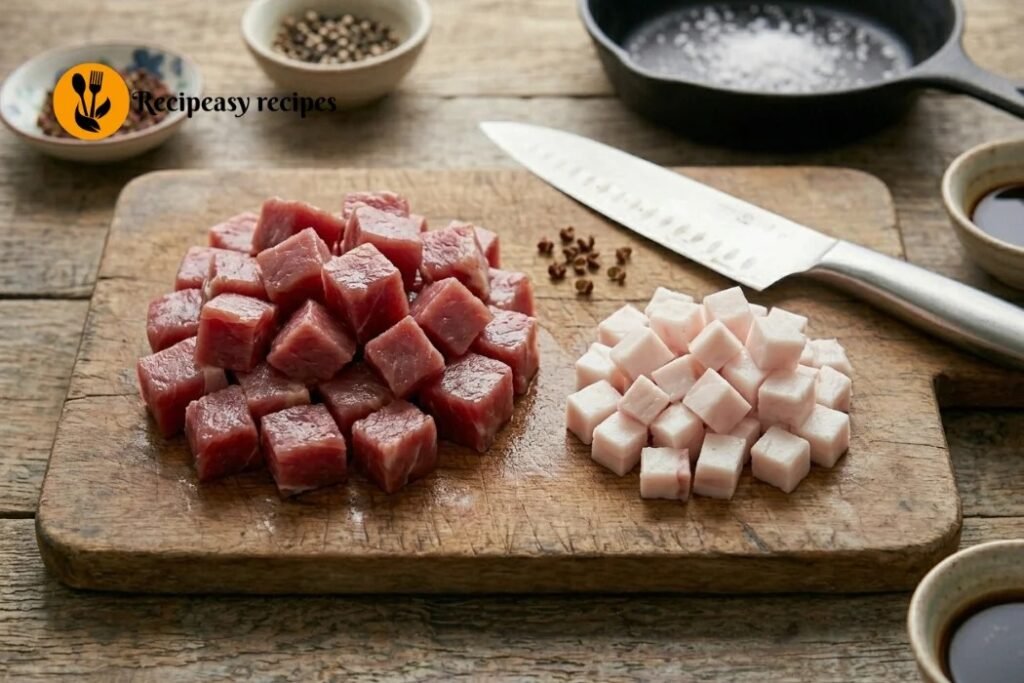
First, trim the pork and cut it into small cubes. Around 1 cm pieces work well. Do not mince it. Cubed pieces give the sausage that chewy, satisfying texture.
Then cut the pork fat into slightly smaller cubes. Keep the lean and fat separate for now.
Mixing the Seasonings

Next, combine the salt, sugar, soy sauce, dark soy sauce, wine, white pepper, and five-spice powder in a small bowl. Mix them together until the sugar dissolves.
After that, pour the seasoning mix over the pork. Add the fat pieces in. Mix everything well with your hands for a few minutes. You want every piece of meat coated evenly.
Then cover and let it marinate in the fridge for at least 2 hours. Overnight is even better.
Stuffing the Casings
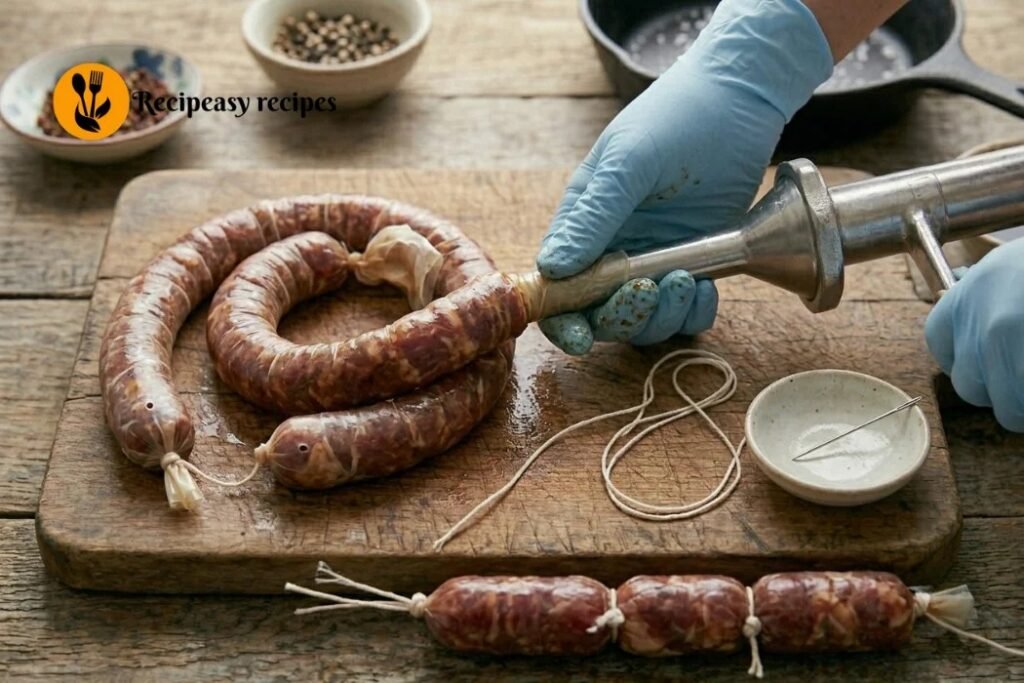
Before stuffing, rinse the soaked casings under cold water. Then slide them onto a funnel or sausage stuffer nozzle.
Tie off one end of the casing with a piece of cotton string.
Slowly push the marinated meat through the funnel into the casing. Pack it firmly but not too tightly. If it is too tight, the casing may burst during drying.
Once you reach the length you want, tie off the other end. Then divide the long sausage into 5–6-inch sections by tying cotton string at regular intervals.
Finally, use a clean needle or toothpick to poke tiny holes all over the sausage. This lets moisture escape during drying and stops the casing from bursting.
Drying the Sausage
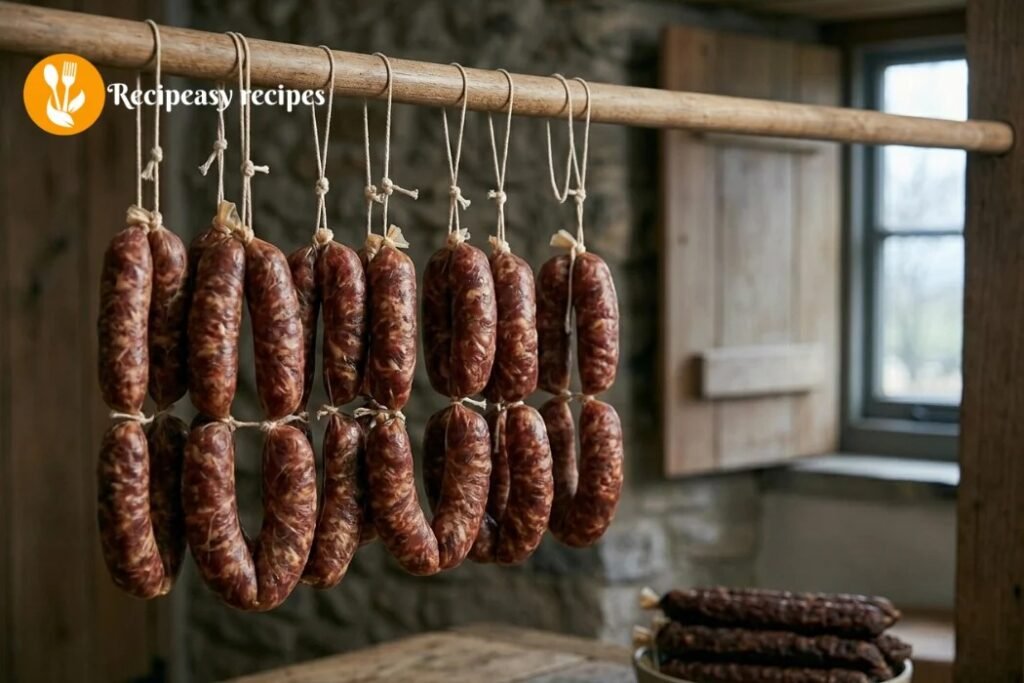
Hang the sausages in a cool, airy spot. No direct sunlight. The temperature should stay between 0°C and 15°C (32°F–60°F).
Let them hang and dry for 7 to 10 days. Turn them occasionally so all sides dry evenly.
After about a week, the sausage will shrink, firm up, and darken in color. That means it is ready.
Store extra dried sausages in the freezer. They keep well for months.
How to Cook Chinese Sausage
Now, here is the part everyone is curious about: how to cook Chinese sausage.
The good news is that it is very easy. There are a few different ways to do it.
Boiling or Steaming
This is the most traditional method. Just drop the sausage into a pot of boiling water. Cook for about 10 to 15 minutes. Then take it out, slice it on an angle, and serve.
Steaming works just as well. Steam for about 15 minutes over medium heat. Both methods add a little moisture back into the sausage, which makes the texture softer.
Pan Frying
Simply slice the sausage and toss it into a hot pan. No oil needed because the fat renders out on its own. Cook for 2 to 3 minutes per side until slightly caramelized. This gives a golden, crispy edge that is hard to resist.
Rice Cooker Method
This is probably the most popular everyday method. Place the whole sausage on top of the rice before cooking. When the rice is done, the sausage will be perfectly cooked too. Slice and serve right over the rice. Simple and delicious.
Easy Ways to Use Chinese Sausage in Meals
Once you have your sausage ready, the possibilities are honestly endless.
Chinese Sausage Fried Rice
Chinese sausage fried rice is probably the most well-known way to use it. Cook your rice the day before so it is cold and dry. Then fry it in a hot wok with garlic, eggs, green onions, soy sauce, and sliced sausage. The sausage adds a natural sweetness that makes the fried rice taste incredible. It truly elevates a simple dish.
Chinese Sausage Stir Fry
A Chinese sausage stir-fry with vegetables is another quick weeknight option. Slice the sausage thinly. Stir-fry it with garlic, ginger, bell peppers, and broccoli. Add a splash of soy sauce and oyster sauce. Done in under 15 minutes.
Chinese Sausage and Rice (Clay Pot Style)
Chinese sausage and rice cooked in a clay pot is a classic comfort dish. The rice soaks up the fat and flavor from the sausage as it cooks. Top it with a drizzle of sweet soy sauce and some sliced green onions. It is simple, warming, and deeply satisfying.
Quick Tips That Actually Help
Use cold meat when stuffing. Warm meat is slippery and harder to handle. Keep everything cold for cleaner results.
Do not skip the wine. The Shaoxing wine or rosé wine adds a subtle depth to the flavor. Without it, the sausage tastes flat.
Check the drying spot carefully. Too warm and the sausage will spoil. Too much sun and the fat will oxidize and taste off. A covered porch or a cool garage works perfectly.
Taste the filling before stuffing. Cook a tiny bit of the marinated meat in a pan. Taste it. Adjust salt or sugar if needed. Much easier to fix before it goes into the casing.
Slice on an angle for serving. Diagonal slices look better and give you a bigger surface area for browning. A small detail, but it makes a real difference on the plate.
A Few Things People Often Ask
Can I use chicken instead of pork? Yes, you can. Chicken sausage works, but the texture will be different. Pork fat is what gives the classic sausage its rich flavor. If you use chicken, add a little extra oil to the mix so it does not dry out completely.
Do I need a sausage stuffer machine? Not at all. A clean plastic funnel and a wooden spoon work just fine. It takes a bit more time, but the result is the same.
How long does homemade Chinese sausage last? Once dried, they last about 1 month in the fridge. In the freezer, they stay good for 3 months or longer.
Can I skip the drying step? Technically, yes, but you lose a lot of flavor. Drying concentrates the taste and gives the sausage that firm, chewy bite everyone loves. If you are short on time, dry for at least 3 to 4 days before cooking.
One Last Thing
Making your own Chinese sausage recipe at home is easier than most people think. Yes, it takes a few days of patience. But the result is a sausage that is fresher, tastier, and more rewarding than anything from a store.
Even if you just want to cook with store-bought sausage, hopefully this guide helps you understand exactly what to do with it. From fried rice to clay pot dishes to a simple pan fry, this sausage belongs in every kitchen.
Try it once, and you will see why so many families across China have been making it every year before Lunar New Year for generations.

Chinese Sausage Recipe Everyone Should Try at Least Once
Course: MainCuisine: Chinese (Cantonese)Difficulty: Easy8
servings2
hours15
minutes300
kcalThis traditional Chinese sausage recipe shows you how to make authentic Cantonese-style Lap Cheong at home. Sweet, savory, and packed with flavor, these dried pork sausages are perfect for fried rice, stir-fries, clay pot rice, and more.
Ingredients
For the Sausage
700g lean pork (pork shoulder)
300g pork fat (fatback or back fat)
1 tablespoon salt
2 tablespoons sugar
2 tablespoons soy sauce
1 tablespoon dark soy sauce
2 tablespoons Shaoxing wine or Chinese rose wine
1 teaspoon white pepper powder
½ teaspoon five-spice powder
Natural sausage casings, soaked overnight
Cotton string
Directions
- Prepare the Meat: Cut the pork into small 1 cm cubes. Cut the pork fat into slightly smaller cubes and keep separate.
- Season the Meat: Mix salt, sugar, soy sauce, dark soy sauce, wine, white pepper, and five-spice powder in a bowl. Pour over the pork and fat, then mix thoroughly. Refrigerate for at least 2 hours or overnight.
- Stuff the Casings: Rinse the casings and slide them onto a funnel or sausage stuffer. Tie one end, fill with the meat mixture, and tie off the other end. Divide into 5–6 inch sections using cotton string.
- Remove Air Pockets: Use a clean needle or toothpick to poke tiny holes throughout the sausages.
- Dry the Sausages: Hang in a cool, well-ventilated area (0°C–15°C / 32°F–60°F) for 7–10 days until firm and darker in color.
- Cook and Serve: Boil, steam, pan-fry, or cook the sausage with rice before serving.
Notes
- Maintain 20–30% fat for the best texture and flavor.
- Chinese sausage is excellent in fried rice, stir-fries, and clay pot rice dishes.
- Taste-test a small amount of filling before stuffing.
- Store dried sausages in the refrigerator for up to 1 month or freeze for up to 3 months.