Beef Menudo Recipe with Veggies & Tomato Sauce
When I first tried the beef menudo recipe, it instantly became one of my favorite dishes to cook. The tender chunks of beef combined with a rich, flavorful tomato sauce create a comforting and hearty meal that never fails to impress. What makes it so special is how simple yet satisfying it feels a true taste of home that connects generations.
This recipe isn’t just another Filipino dish; it’s a celebration of family and tradition. Whether you’re preparing it for a weekend dinner or a festive occasion, beef menudo delivers warmth and joy to the table. In this article, I’ll share every detail from its origin and meaning to the ingredients, cooking steps, and expert tips so you can recreate this delicious classic perfectly.
A Short Glimpse into Its History and Origin
Beef menudo has its roots in Filipino cuisine but carries a touch of Spanish influence. Traditionally, “menudo” referred to a stew prepared with pork and liver, introduced during the colonial period. Over time, cooks across the Philippines began experimenting, replacing pork with beef for a richer, deeper flavor. Today, it stands as a beloved comfort dish found in homes and gatherings throughout the country.
What Is Beef Menudo?
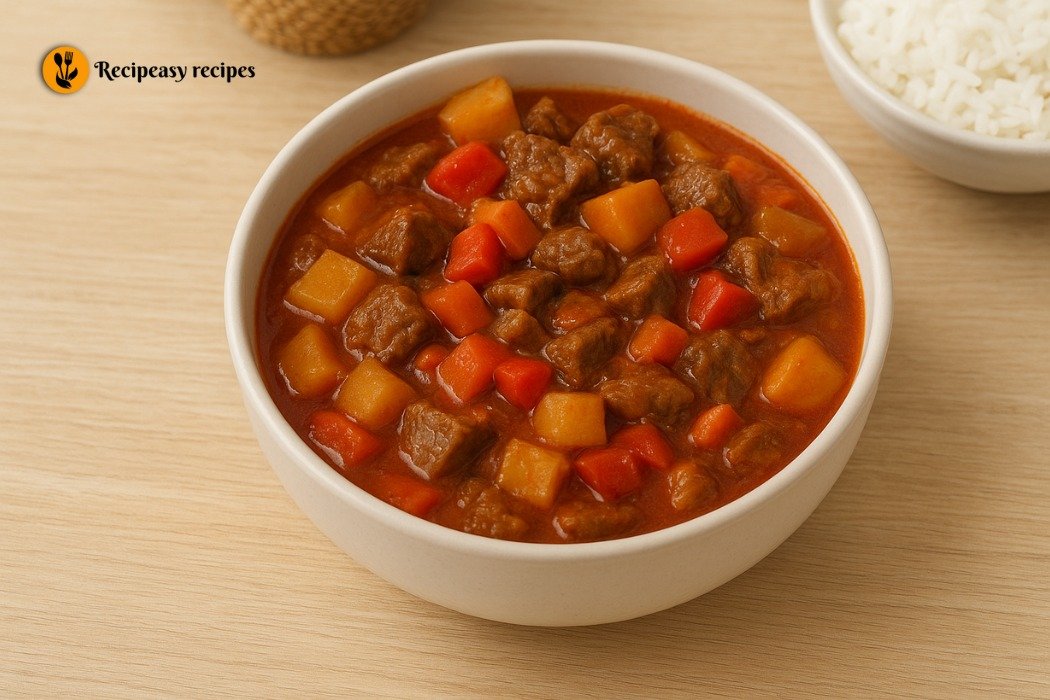
Beef menudo is a flavorful Filipino stew made with diced beef, potatoes, carrots, and bell peppers simmered in a tomato-based sauce. What makes it unique is its balance of savory, tangy, and slightly sweet flavors. It’s a dish that brings together the essence of Filipino cooking comfort, color, and community all in one bowl.
Why Try Beef Menudo Recipe?
If you’re looking for a home-cooked meal that’s easy, satisfying, and bursting with flavor, this recipe is for you. It’s perfect for both beginners and experienced cooks. The ingredients are simple, the process is straightforward, and the result is restaurant-quality. Plus, it’s versatile you can serve it with rice, bread, or even on its own for a lighter meal.
Tools and Equipment You’ll Need
Before starting, make sure you have these kitchen essentials ready:
- Large pot or deep pan: To simmer the beef and sauce evenly.
- Cutting board and knife: For chopping vegetables and beef cubes.
- Wooden spoon or spatula: For stirring ingredients without scratching your cookware.
- Measuring cups and spoons: To ensure accuracy in flavor balance.
- Strainer: To drain excess oil if needed.
Having these items ready helps make your cooking process smooth and enjoyable.
Beef Menudo Ingredients
Here’s what you’ll need to prepare this hearty dish:
- 500g beef (chuck or brisket, cut into small cubes)
- 2 medium potatoes (diced)
- 1 carrot (diced)
- 1 small red bell pepper (sliced)
- 1 green bell pepper (sliced)
- 1 medium onion (chopped)
- 3 cloves garlic (minced)
- 1 cup tomato sauce
- 2 tablespoons soy sauce
- 1 tablespoon vinegar
- 1 teaspoon sugar
- 1 cup beef broth or water
- 2 tablespoons cooking oil
- Salt and pepper to taste
Tip: For a traditional beef menudo recipe, some prefer adding liver or raisins for extra depth of flavor.
How to Cook Beef Menudo Recipe – A Complete Step-by-Step Cooking Experience
Cooking beef menudo is not just about mixing ingredients it’s about creating a flavorful experience filled with warmth, aroma, and tradition. Let’s dive into the process together so you can make a perfectly tender, restaurant-quality menudo right in your own kitchen.
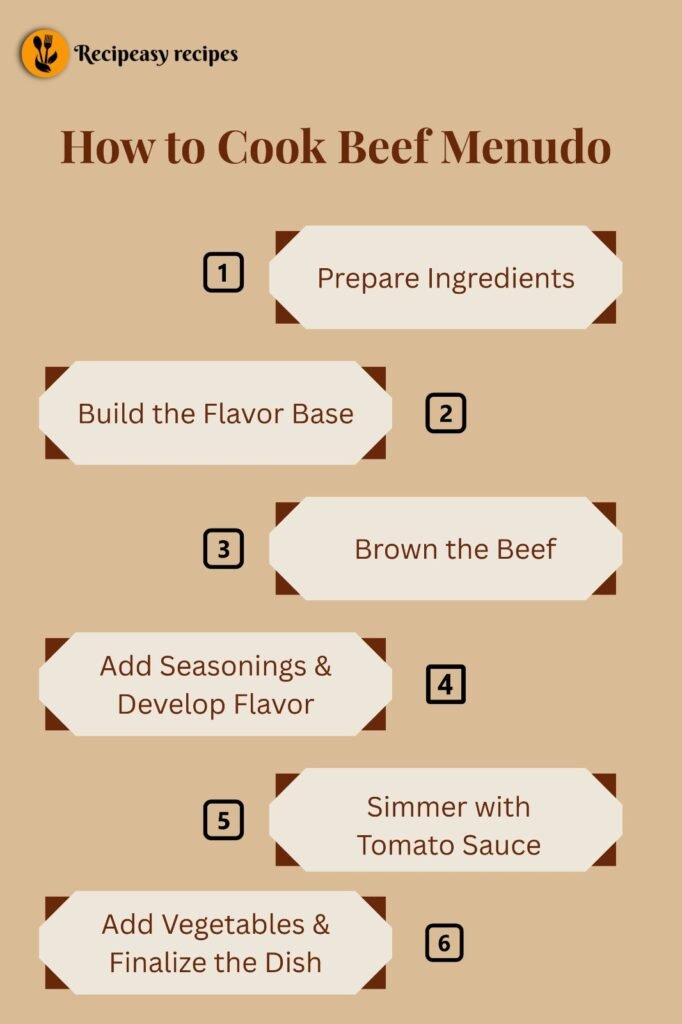
Step 1: Prepare All the Ingredients with Care
Before you even turn on the stove, spend a few minutes preparing everything neatly.
Wash and dice the vegetables potatoes, carrots, and bell peppers into small, even pieces so they cook uniformly. Slice the beef into bite-sized cubes for better tenderness and flavor absorption. Mince your garlic, chop the onions finely, and keep all ingredients close by.
Pro Tip: Use a sharp knife for cleaner cuts it helps the vegetables cook evenly and gives your dish a professional finish.
Step 2: Heat the Oil and Build the Flavor Base
In a large, deep pot, heat about two tablespoons of cooking oil over medium flame.
Once the oil warms up, add minced garlic and sauté until it releases its fragrance and turns light golden. Then, add chopped onions and cook until soft and translucent. This simple base is what gives your menudo its delicious depth of flavor never rush this part!
Chef’s Note: A perfectly sautéed onion and garlic combo forms the heart of any good Filipino stew.
Step 3: Add and Brown the Beef Properly
Now, add your beef cubes to the pot. Stir gently to coat each piece in the aromatic oil.
Let the beef cook until it changes color and becomes slightly brown on all sides. This browning step (called searing) locks in the juices and ensures your beef stays flavorful and tender even after long simmering.
Pro Tip: Don’t overcrowd the pan. If needed, brown the beef in small batches for even cooking.
Step 4: Add Seasonings and Let the Beef Absorb Flavor
Once your beef is lightly browned, pour in soy sauce and a small splash of vinegar. Sprinkle a pinch of sugar to balance the acidity.
Let this mixture simmer uncovered for about 5 minutes. This allows the beef to soak in the savory, tangy base that will later blend beautifully with the tomato sauce.
Tip: Avoid stirring right after adding vinegar let it cook off a little before mixing to keep the flavor balanced.
Step 5: Add Tomato Sauce and Broth for Richness
Now it’s time to bring everything together. Pour in the tomato sauce, followed by beef broth or water. Stir gently, cover the pot, and reduce the heat to low.
Let it simmer for about 45 to 60 minutes this slow-cooking process transforms tough beef into fork-tender perfection while allowing the sauce to thicken and develop depth.
Pro Tip: Check occasionally and add a little water if the sauce gets too thick before the beef softens.
Step 6: Add the Vegetables at the Right Time
After the beef becomes tender, it’s time to add your vegetables.
Start with diced potatoes and carrots they take longer to cook, so add them first and simmer for 10–12 minutes. Then, toss in the bell peppers and continue cooking for another 5 minutes until everything is soft but not mushy.
This careful timing keeps your vegetables colorful, firm, and full of flavor.
Step 7: Adjust the Taste and Balance the Flavors
Now that everything is cooked, taste your sauce.
If needed, adjust the salt, pepper, or a touch more sugar to enhance the balance of sweet, savory, and tangy notes. The sauce should be thick, glossy, and cling gently to the beef and vegetables that’s the perfect menudo consistency!
Chef’s Tip: For a deeper umami flavor, add ½ teaspoon of fish sauce or a few drops of lemon juice just before turning off the heat.
Step 8: Final Simmer and Rest Before Serving
Let your menudo simmer gently for 5 more minutes with the lid slightly open. This final simmer helps the flavors combine beautifully.
Once done, turn off the stove and let it rest for a few minutes before serving — this allows the sauce to settle and intensify its aroma.
Step 9: Serve and Enjoy Your Homemade Beef Menudo
Your kitchen should now be filled with a comforting aroma!
Serve your beef menudo hot with freshly steamed rice or warm bread. Sprinkle some chopped parsley on top for a fresh finish.
Each spoonful delivers the perfect balance of tender beef, creamy sauce, and softly cooked vegetables a heartwarming dish that captures the essence of Filipino comfort food
Nutritional Information
Here’s an approximate nutritional breakdown per serving:
- Calories: 350 kcal
- Protein: 28g
- Carbohydrates: 18g
- Fat: 18g
- Fiber: 3g
- Sodium: 800mg
Note: Values may vary depending on ingredients and portion sizes.
How to Serve This Dish
Beef menudo pairs beautifully with steamed white rice, which absorbs its rich, savory sauce. For gatherings, serve it in a large bowl garnished with chopped parsley for color. You can also enjoy it with pandesal (Filipino bread rolls) for breakfast leftovers it tastes even better the next day as the flavors blend overnight.
Benefits of This Recipe
This dish is not only delicious but also rich in protein, iron, and vitamins from vegetables. It’s an ideal meal for strengthening the body, especially after a long day. he combination of beef and veggies also supports muscle repair and boosts energy naturally.
FAQs
1. What cut of beef is best for menudo?
Beef chuck or brisket works best because they become tender after slow cooking.
2. Can I make this recipe without tomato sauce?
Yes, you can substitute it with fresh tomatoes blended into a puree, but the flavor will be slightly lighter.
3. How can I make the sauce thicker?
Simmer uncovered for a few extra minutes or mash a few potato cubes into the sauce.
4. Can I prepare beef menudo ahead of time?
Absolutely! It tastes even better the next day as the flavors deepen.
5. Is beef menudo spicy?
Traditionally, it’s not spicy, but you can add chili flakes or fresh chilies if you like a little heat.
Conclusion
The beef menudo recipe is more than just a Filipino stew it’s a dish filled with comfort, flavor, and history. Whether you’re cooking for your family or trying it for the first time, this recipe offers everything: taste, texture, and nourishment. Follow the steps, savor the aroma, and you’ll soon have a dish that brings warmth to every meal one that you’ll proudly share again and again.
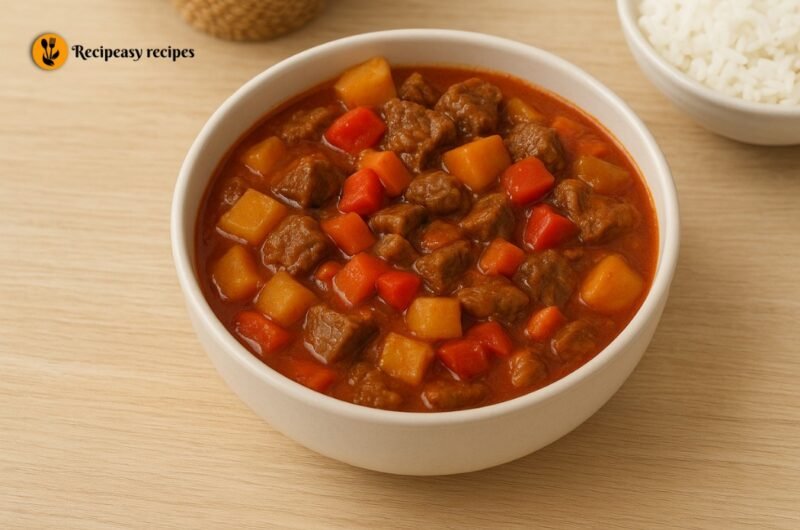
Beef Menudo Recipe with Veggies & Tomato Sauce
Course: Dinner, Main CourseCuisine: FilipinoDifficulty: Easy4–5 servings
servings20
minutes1
hour350 kcal
kcalFilipino Beef Menudo Recipe with tender beef, veggies, and rich tomato sauce. A flavorful and easy Filipino dish perfect for family meals.
Ingredients
500g beef (chuck or brisket, cut into small cubes)
2 medium potatoes (diced)
1 carrot (diced)
1 small red bell pepper (sliced)
1 green bell pepper (sliced)
1 medium onion (chopped)
3 cloves garlic (minced)
1 cup tomato sauce
2 tablespoons soy sauce
1 tablespoon vinegar
1 teaspoon sugar
1 cup beef broth or water
2 tablespoons cooking oil
Salt and pepper to taste
Directions
- Prepare All the Ingredients with Care
Before you even turn on the stove, spend a few minutes preparing everything neatly.
Wash and dice the vegetables potatoes, carrots, and bell peppers into small, even pieces so they cook uniformly. Slice the beef into bite-sized cubes for better tenderness and flavor absorption. Mince your garlic, chop the onions finely, and keep all ingredients close by.
Pro Tip: Use a sharp knife for cleaner cuts it helps the vegetables cook evenly and gives your dish a professional finish. - Heat the Oil and Build the Flavor Base
In a large, deep pot, heat about two tablespoons of cooking oil over medium flame.
Once the oil warms up, add minced garlic and sauté until it releases its fragrance and turns light golden. Then, add chopped onions and cook until soft and translucent. This simple base is what gives your menudo its delicious depth of flavor never rush this part!
Chef’s Note: A perfectly sautéed onion and garlic combo forms the heart of any good Filipino stew. - Add and Brown the Beef Properly
Now, add your beef cubes to the pot. Stir gently to coat each piece in the aromatic oil.
Let the beef cook until it changes color and becomes slightly brown on all sides. This browning step (called searing) locks in the juices and ensures your beef stays flavorful and tender even after long simmering.
Pro Tip: Don’t overcrowd the pan. If needed, brown the beef in small batches for even cooking. - Step 4: Add Seasonings and Let the Beef Absorb Flavor
Once your beef is lightly browned, pour in soy sauce and a small splash of vinegar. Sprinkle a pinch of sugar to balance the acidity.
Let this mixture simmer uncovered for about 5 minutes. This allows the beef to soak in the savory, tangy base that will later blend beautifully with the tomato sauce.
Tip: Avoid stirring right after adding vinegar let it cook off a little before mixing to keep the flavor balanced. - Step 5: Add Tomato Sauce and Broth for Richness
Now it’s time to bring everything together. Pour in the tomato sauce, followed by beef broth or water. Stir gently, cover the pot, and reduce the heat to low.
Let it simmer for about 45 to 60 minutes this slow-cooking process transforms tough beef into fork-tender perfection while allowing the sauce to thicken and develop depth.
Pro Tip: Check occasionally and add a little water if the sauce gets too thick before the beef softens. - Step 6: Add the Vegetables at the Right Time
After the beef becomes tender, it’s time to add your vegetables.
Start with diced potatoes and carrots they take longer to cook, so add them first and simmer for 10–12 minutes. Then, toss in the bell peppers and continue cooking for another 5 minutes until everything is soft but not mushy.
This careful timing keeps your vegetables colorful, firm, and full of flavor. - Step 7: Adjust the Taste and Balance the Flavors
Now that everything is cooked, taste your sauce.
If needed, adjust the salt, pepper, or a touch more sugar to enhance the balance of sweet, savory, and tangy notes. The sauce should be thick, glossy, and cling gently to the beef and vegetables that’s the perfect menudo consistency!
Chef’s Tip: For a deeper umami flavor, add ½ teaspoon of fish sauce or a few drops of lemon juice just before turning off the heat. - Step 8: Final Simmer and Rest Before Serving
Let your menudo simmer gently for 5 more minutes with the lid slightly open. This final simmer helps the flavors combine beautifully.
Once done, turn off the stove and let it rest for a few minutes before serving — this allows the sauce to settle and intensify its aroma.
Notes
- For tender beef menudo, use cuts like chuck, brisket, or shank.
- Avoid stirring too often while simmering let the meat cook slowly.
- Add a few drops of lemon juice before serving for a fresher taste.
- Store leftovers in an airtight container; it keeps well in the fridge for up to 3 days.
- To make it lighter, reduce oil and skip liver.