
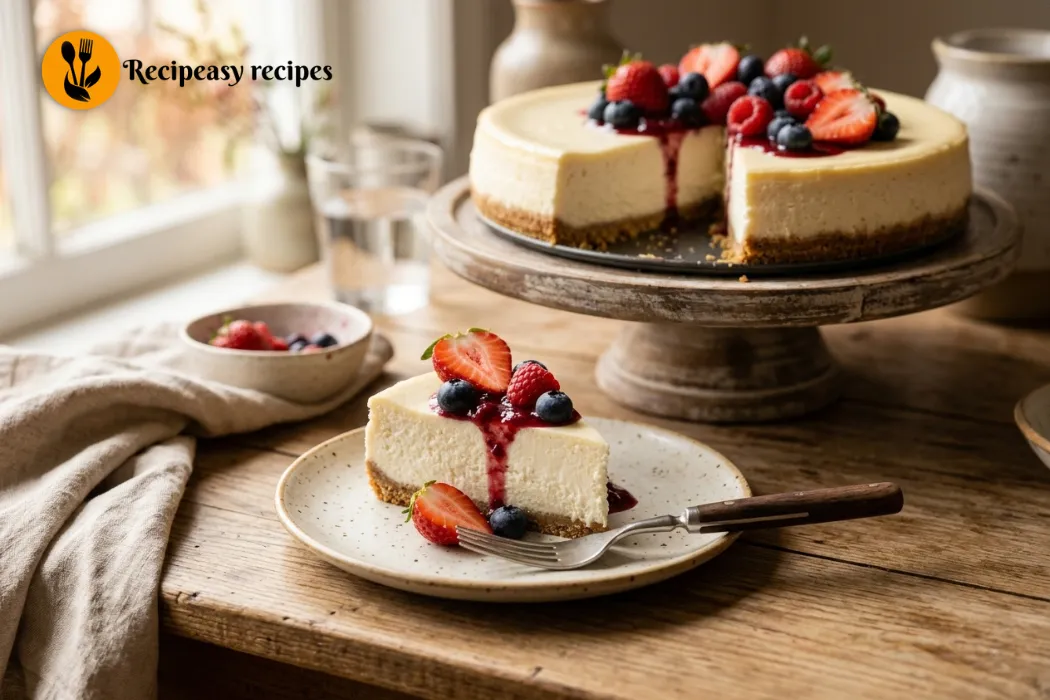
Cottage Cheese Cheesecake:(High-Protein, Creamy)
If you love cheesecake but want something a little lighter, this Cottage Cheese Cheesecake is a great one to try. It’s creamy, it’s lightly tangy, and it’s made from a blender full of simple ingredients.
Since the cottage cheese gets blended until silky, it bakes into a smooth, rich filling with no curds at all.
What Does It Taste Like?
This cheesecake tastes a lot like a classic one. It’s creamy, a little tangy, and just sweet enough. The texture is soft and smooth, a bit lighter than a dense New York-style slice.
Also, you can’t really taste the cottage cheese. Once it’s blended and baked with eggs, vanilla, and lemon, the flavor turns mild and cheesy. Most people think it’s regular cheesecake.
Plus, this cottage cheese cheesecake recipe is easy to make. There’s no mixer, no beating cream cheese, and no water bath. You blend, pour, and bake.
What You’ll Need
Here’s everything for this recipe. It makes one 8-inch cheesecake, about 8 slices.
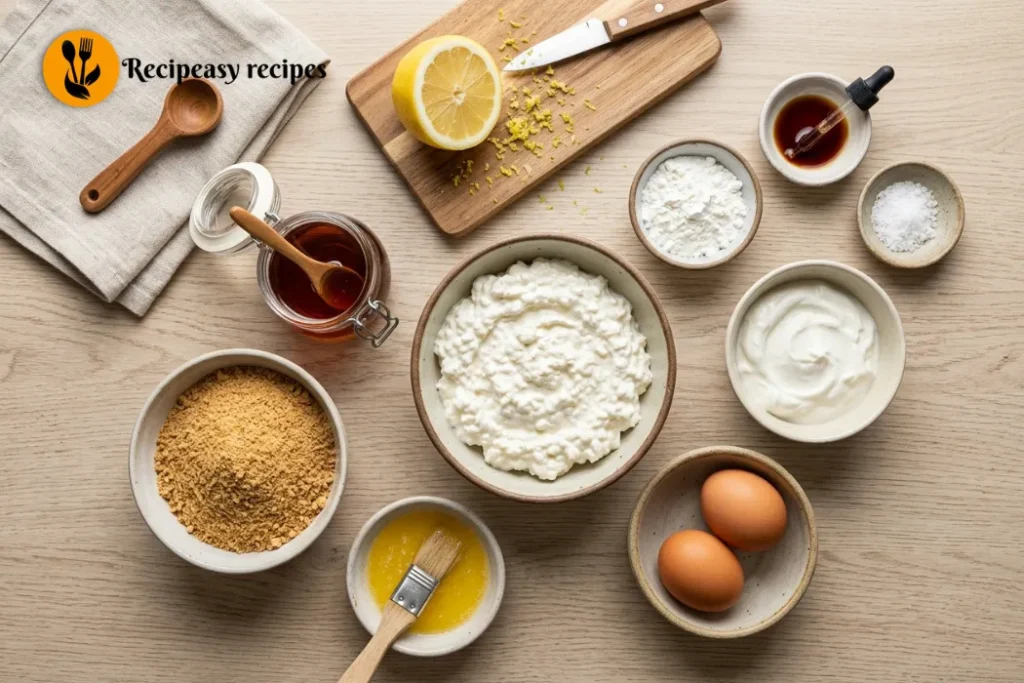
For the crust (optional):
- 1 cup cracker crumbs
- 3 tablespoons melted butter
- 1 tablespoon sugar
For the filling:
- 2 cups cottage cheese
- 1/2 cup plain Greek yogurt
- 3 large eggs, at room temperature
- 1/3 cup maple syrup or honey
- 2 tablespoons cornstarch
- 1 tablespoon lemon juice
- 1 teaspoon vanilla extract
- A pinch of salt
Since the cottage cheese is the main ingredient, pick a full-fat or 2% kind for the creamiest result. Fat-free versions work, but they can taste a little less rich.
Also, use room-temperature eggs and yogurt if you can. They blend more smoothly and help the cheesecake bake evenly.
How to Make Cottage Cheese Cheesecake
This cottage cheese and Greek yogurt cheesecake has a few simple steps. The longest part is the cooling, so plan.
Step 1: Heat the oven.
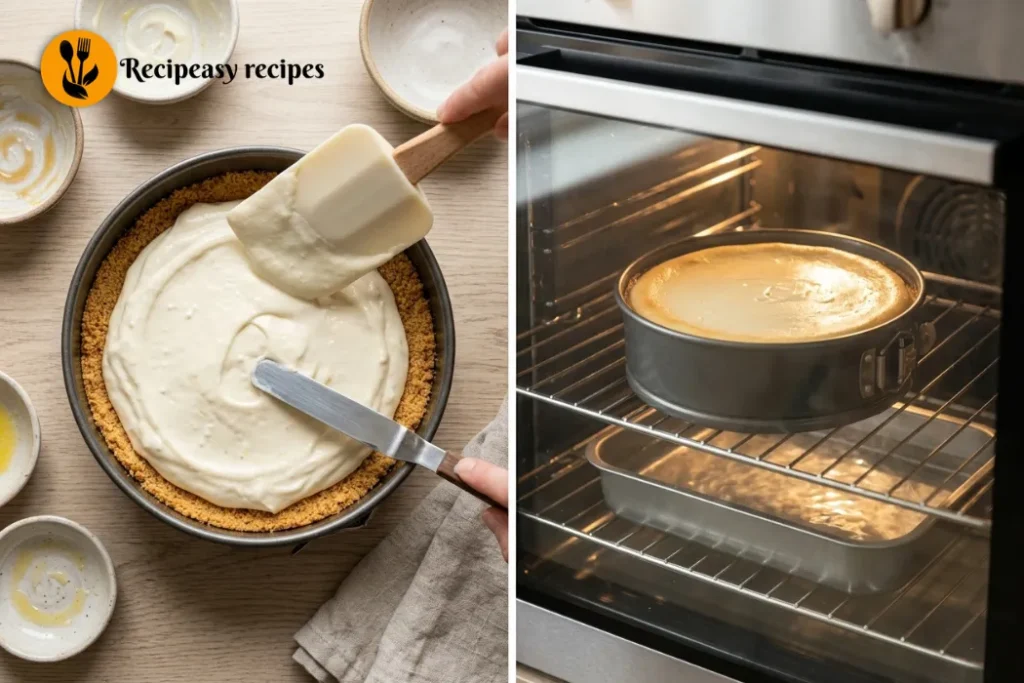
Heat your oven to 325°F. Grease an 8-inch springform pan, and line the bottom with parchment paper if you like.
Step 2: Make the crust.
In a bowl, mix the cracker crumbs, melted butter, and sugar until it looks like wet sand. Press it firmly into the bottom of the pan. Bake for 8 minutes, then set it aside while you make the filling. You can skip the crust for a crustless version.
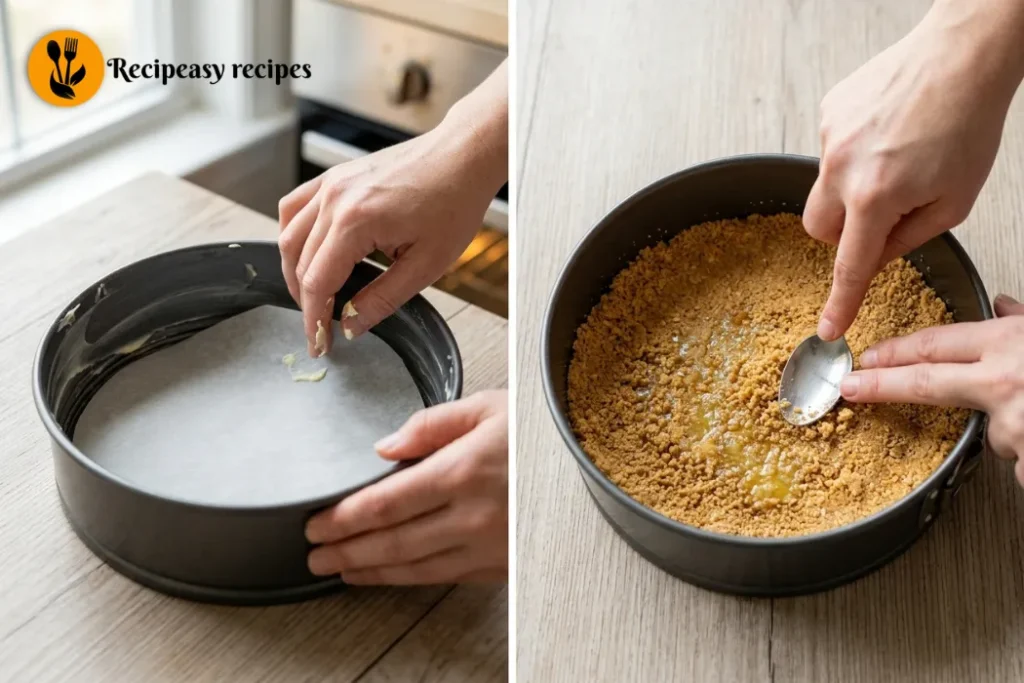
Step 3: Blend the filling.
Add the cottage cheese, Greek yogurt, eggs, maple syrup, cornstarch, lemon juice, vanilla, and salt to a blender. Blend on high for 1 to 2 minutes, until completely smooth. Scrape down the sides once or twice.
Step 4: Pour it in.
Pour the filling over the crust. Tap the pan gently on the counter a few times to pop any air bubbles.
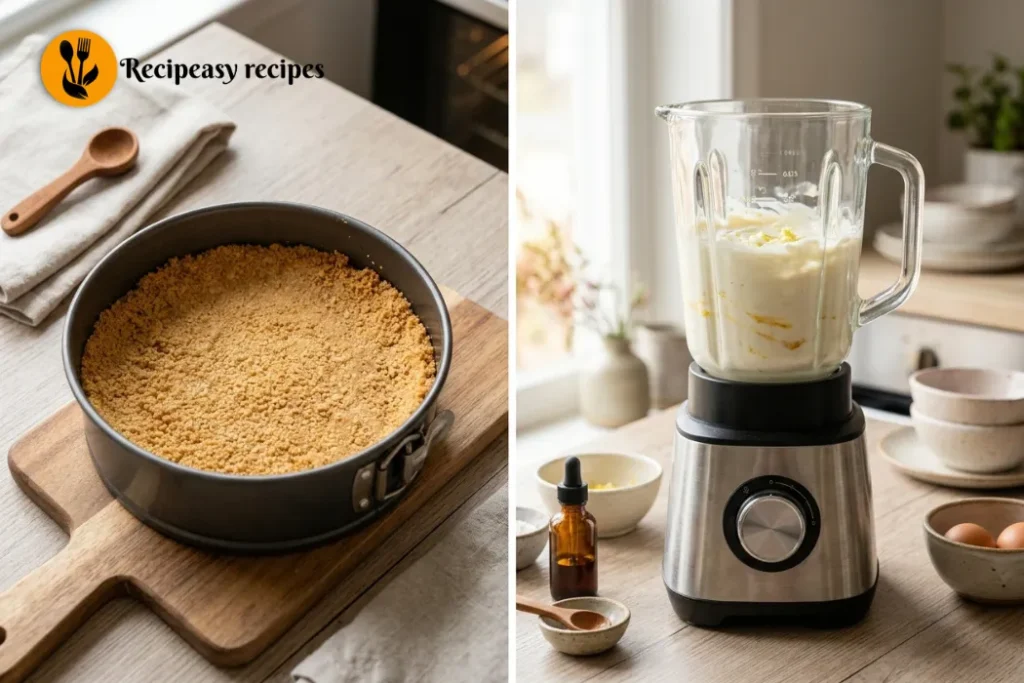
Step 5: Bake.
Bake for 45 to 55 minutes. The edges should be set, and the center should still jiggle a little when you shake the pan. It will firm up as it cools.
Step 6: Cool slowly.
Turn off the oven. Crack the door open, and leave the cheesecake inside for 1 hour. This slow cool-down helps prevent cracks.
Step 7: Chill.
Take the cheesecake out and let it reach room temperature. Then cover it and chill it in the fridge for at least 4 hours, or overnight.
Step 8: Slice and serve.
Run a thin knife around the edge before removing the springform ring. Slice with a clean, warm knife for neat pieces.
Tips for a Smooth, Crack-Free Cheesecake
Since smoothness is the goal, blend longer than you think you need to. If you can still see curds, keep blending. Your filling should look like thick cream.
Also, don’t overbake it. A slightly jiggly center is exactly what you want. If you bake until the middle is completely firm, the cheesecake can crack or turn dry.
For the best texture, cool it slowly. Sudden changes in temperature are the main reason cheesecakes crack. The gradual cool-down in the oven helps a lot.
Additionally, don’t skip the chill time. A warm cheesecake will look soft and a little wet. After a few hours in the fridge, it sets into clean slices with a creamy, dense bite.
Finally, drain any extra liquid from the top of the cottage cheese tub before measuring. Too much liquid can make the filling a bit loose.
3-Ingredient Version
If you’re short on time, there’s a super simple option. This 3-ingredient cottage cheese cheesecake uses only cottage cheese, eggs, and a sweetener.
Blend 2 cups of cottage cheese, 2 large eggs, and 1/3 cup honey or maple syrup until smooth. Pour it into a greased 8-inch pan or a few ramekins. Bake at 325°F, and start checking at 35 minutes. It’s done when the center is just barely set.
Keep in mind the texture is a little different. It’s lighter and more custardy, more like a baked cheesecake pudding. It’s still tasty, though, especially with fruit on top. For the best flavor, add a splash of vanilla and a squeeze of lemon, even if those aren’t counted as main ingredients.
Toppings and Serving Ideas
A plain slice is great on its own. But toppings make it feel extra special. Here are a few ideas.
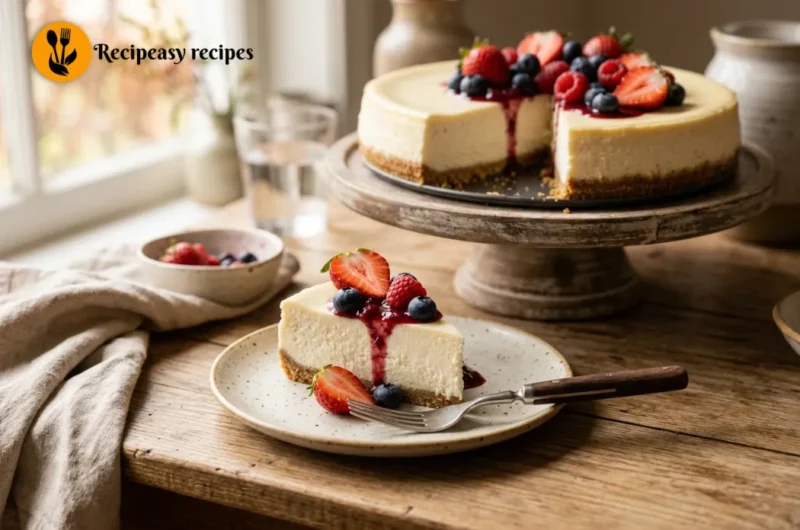
- Fresh berries, like strawberries, blueberries, or raspberries
- A spoonful of berry compote or jam
- Honey and a sprinkle of crushed pistachios
- Lemon curd and a little whipped cream
- Sliced peaches or figs
- Melted dark chocolate drizzled on top.
- Crushed cookies for crunch
Since the cheesecake is mildly sweet, tangy toppings work especially well. Berries and lemon are a natural match.
Easy Variations to Try
Once you’ve made the basic version, you can switch up the flavor.
- Lemon: Add the zest of one lemon to the filling.
- Chocolate: Blend in 3 tablespoons of cocoa powder and a little extra sweetener.
- Vanilla bean: Use vanilla bean paste instead of extract.
- Berry swirl: Drop spoonfuls of jam over the batter and swirl with a knife.
- Pumpkin spice: Stir in 1/3 cup pumpkin puree and a teaspoon of pumpkin pie spice.
- No crust: Skip the crust and grease the pan well for an easy, crustless cheesecake.
For anyone who wants a healthy cheesecake recipe, this one is a good option. It uses cottage cheese and yogurt in place of cream cheese. Still, it’s a dessert, so enjoy it as a treat.
You can also think of it as a cottage cheese cake for brunch. Serve a small slice with fruit and a cup of coffee.
Storing Your Cheesecake
Cover the cheesecake and store it in the fridge. It keeps for 4 to 5 days. Since it contains eggs and dairy, don’t leave it out for more than 2 hours.
To freeze, chill the cheesecake first. Then wrap individual slices tightly and store them in a freezer bag for up to 1 month. Thaw them in the fridge overnight. The texture may turn a little softer after thawing, but the flavor stays good.
For the best slices, serve the cheesecake chilled and use a clean knife for each cut. Wipe the blade between slices.
Common Questions
Does it taste like cottage cheese?
Not really. Once blended and baked, the flavor is mild, creamy, and tangy, much like regular cheesecake.
Why did my cheesecake crack?
This usually happens from overbaking or cooling too quickly. Pull it from the oven when the center still jiggles, and let it cool slowly in the turned-off oven.
Why is my cheesecake watery?
The cottage cheese may have had extra liquid, or the cheesecake wasn’t baked or chilled long enough. Drain the cottage cheese, bake until the edges are set, and chill for at least 4 hours.
Why is it grainy?
The cottage cheese probably wasn’t blended long enough. Blend until the mixture is silky smooth.
Can I use a food processor?
Yes. A food processor works, but a blender usually gives the smoothest result.
Can I make it without a springform pan?
Yes. Use a 9-inch pie plate or a regular cake pan lined with parchment. Bake time may be a little shorter in a wider pan, so start checking early.
Can I use low-fat Greek yogurt?
Yes. Full-fat yogurt gives a creamier result, but low-fat works too.
Can I make it ahead?
Yes. It’s actually better the next day. Bake and chill it a day ahead, then top it right before serving.
Is it gluten-free?
The filling is naturally gluten-free. For a gluten-free crust, use gluten-free graham crackers, or skip the crust.
Final Thoughts
This Cottage Cheese Cheesecake is a simple way to enjoy a creamy homemade dessert with a different twist on the classic recipe. The cottage cheese and Greek yogurt create a soft filling, while the biscuit base adds a nice crunch.
Best of all, you can make it with everyday ingredients and prepare it ahead of time. Serve it plain, add fresh berries, or finish it with a little chocolate for extra flavor.
Cottage Cheese Cheesecake:(High-Protein, Creamy)
Course: DessertsCuisine: AmericanDifficulty: Medium4
servings15
minutes1
hour3
minutes450
kcal
This creamy Cottage Cheese Cheesecake is lightly tangy, smooth, and easy to make in a blender. Made with cottage cheese, Greek yogurt, eggs, and a touch of maple syrup or honey, it’s a delicious homemade dessert with an optional graham cracker crust.
Ingredients
For the Crust (Optional)
1 cup graham cracker crumbs
3 tablespoons melted butter
1 tablespoon sugar
For the Filling
2 cups cottage cheese
½ cup plain Greek yogurt
3 large eggs, at room temperature
⅓ cup maple syrup or honey
2 tablespoons cornstarch
1 tablespoon lemon juice
1 teaspoon vanilla extract
A pinch of salt
Directions
- Preheat the Oven: Heat the oven to 325°F. Grease an 8-inch springform pan and line the bottom with parchment paper if desired.
- Prepare the Crust: Mix the graham cracker crumbs, melted butter, and sugar until the mixture resembles wet sand. Press firmly into the pan and bake for 8 minutes. Skip this step for a crustless cheesecake.
- Blend the Filling: Add cottage cheese, Greek yogurt, eggs, maple syrup or honey, cornstarch, lemon juice, vanilla, and salt to a blender. Blend for 1–2 minutes until completely smooth.
- Fill the Pan: Pour the filling over the prepared crust. Gently tap the pan on the counter a few times to release air bubbles.
- Bake the Cheesecake: Bake for 45–55 minutes, until the edges are set and the center still jiggles slightly. Turn off the oven, crack the door open, and leave the cheesecake inside for 1 hour.
- Cool, Chill, and Serve: Let the cheesecake reach room temperature, then cover and refrigerate for at least 4 hours or overnight. Run a thin knife around the edge, remove the springform ring, and slice with a clean, warm knife.
Notes
- Full-fat or 2% cottage cheese gives the creamiest result.
- Drain excess liquid from the cottage cheese before measuring.
- Blend until completely smooth to prevent a grainy filling.
- Avoid overbaking; the center should still jiggle slightly when removed from the oven.
- Cool the cheesecake gradually to help prevent cracks.


2 Comments