Beef Chuck Eye Steak Recipe
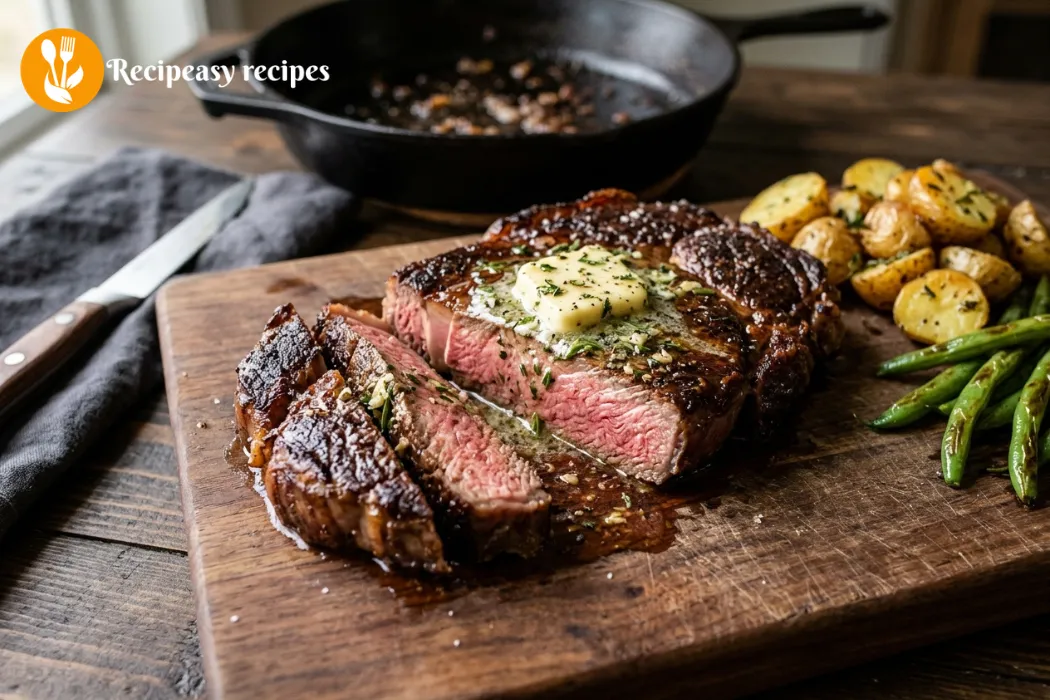
You don’t need an expensive ribeye to enjoy a flavorful steak dinner. This Beef Chuck Eye Steak Recipe uses a simple skillet method to create a nicely browned crust, juicy beef, and a rich garlic herb butter topping. Fresh rosemary, thyme, and garlic add plenty of flavor without needing a long marinade or complicated ingredients.
Chuck eye steak is an affordable cut with a naturally beefy taste and good marbling. Cook it in a hot skillet, finish it with homemade herb butter, and serve it with your favorite potatoes or vegetables for an easy steak dinner.
Ingredients for Beef Chuck Eye Steak Recipe
Salt, black pepper, and olive oil bring out the beefy flavor of chuck eye steak, while garlic, rosemary, and thyme make a rich butter topping for the finished steaks.
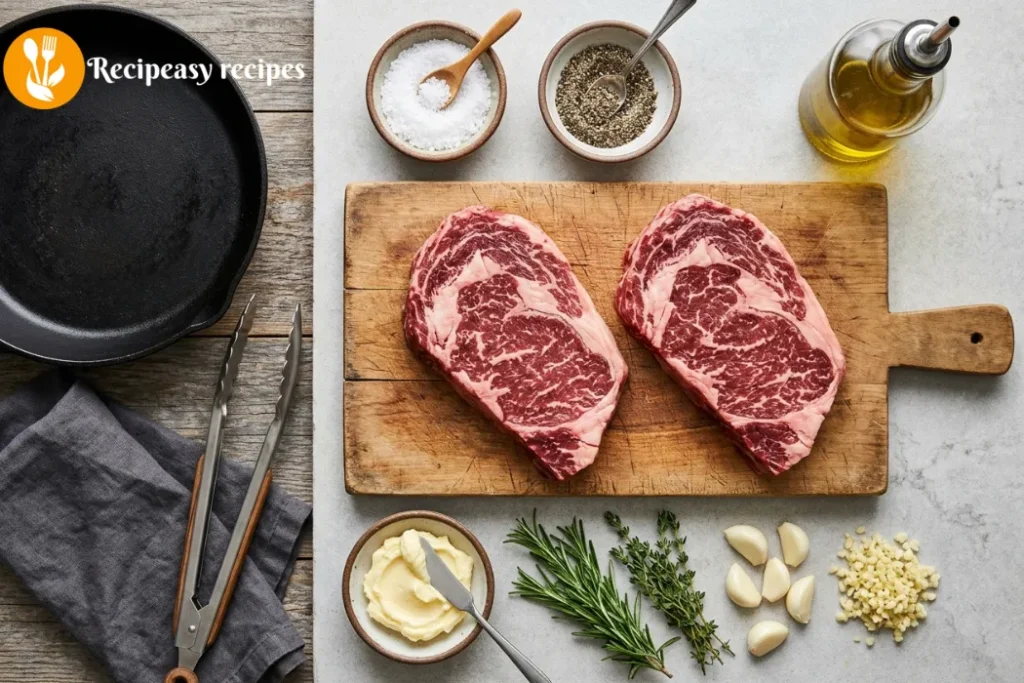
For the steak:
- Chuck eye steaks: Use 2 steaks, about 1 inch thick. Choose pieces with visible marbling for better flavor.
- Olive oil: Helps the steaks brown in the skillet. Avocado oil is another option.
- Kosher salt: Seasons the beef and brings out its natural flavor.
- Black pepper: Adds a little warmth and balances the richness of the meat.
For the garlic herb butter:
- Unsalted butter: Use softened butter so it’s easy to mix with the herbs.
- Garlic: Fresh minced garlic gives the butter a savory flavor.
- Fresh rosemary: Adds an earthy, aromatic note.
- Fresh thyme: Brings a mild herbal flavor that pairs well with beef.
Ingredient Substitutions
You can make a few simple swaps depending on what you have in your kitchen.
- Olive oil: Avocado oil or another neutral oil suitable for high-heat cooking works well.
- Fresh herbs: Fresh rosemary and thyme give the butter its best flavor. If using dried herbs, start with a smaller amount because their flavor is more concentrated.
- Butter: Salted butter can be used instead of unsalted. If you do, reduce the added salt on the steak slightly.
- Seasoning: Salt and pepper keep the beef flavor front and center. You can add a pinch of smoked paprika or cayenne if you prefer a little extra flavor.
How to Prepare Chuck Eye Steak
A little preparation helps the steaks brown properly and makes cooking easier. Get the butter ready before heating the skillet so everything is within reach. Preparing the garlic herb butter ahead of time makes this Beef Chuck Eye Steak Recipe easier to cook without rushing.
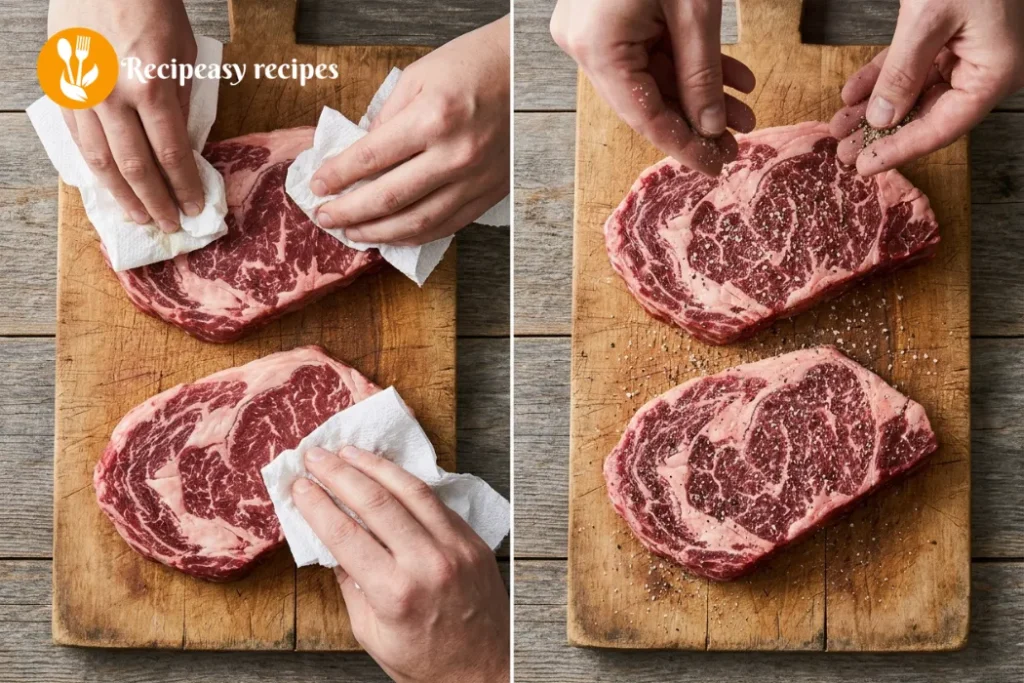
- Pat the steaks dry: Use paper towels to remove moisture from both sides. A dry surface helps the beef develop a browned crust.
- Season the beef: Sprinkle the steaks evenly with kosher salt and black pepper.
- Make the herb butter: In a small bowl, mix the softened butter with minced garlic, rosemary, and thyme until combined.
- Prepare ahead if needed: You can mix the herb butter in advance and refrigerate it. You can also salt the steaks ahead of time and keep them uncovered in the refrigerator for a dry brine. Keep raw beef refrigerated rather than leaving it out for an extended period.
- Check the shape: Some chuck eye steaks have loosely connected sections. If yours doesn’t hold together well, a small food-safe skewer can help keep its shape while cooking. Most steaks won’t need one.

How to Cook Chuck Eye Steak in a Skillet
A hot skillet is the key to getting a good crust on chuck eye steak. Cast iron works especially well because it holds heat, but a heavy stainless-steel skillet is another good option.
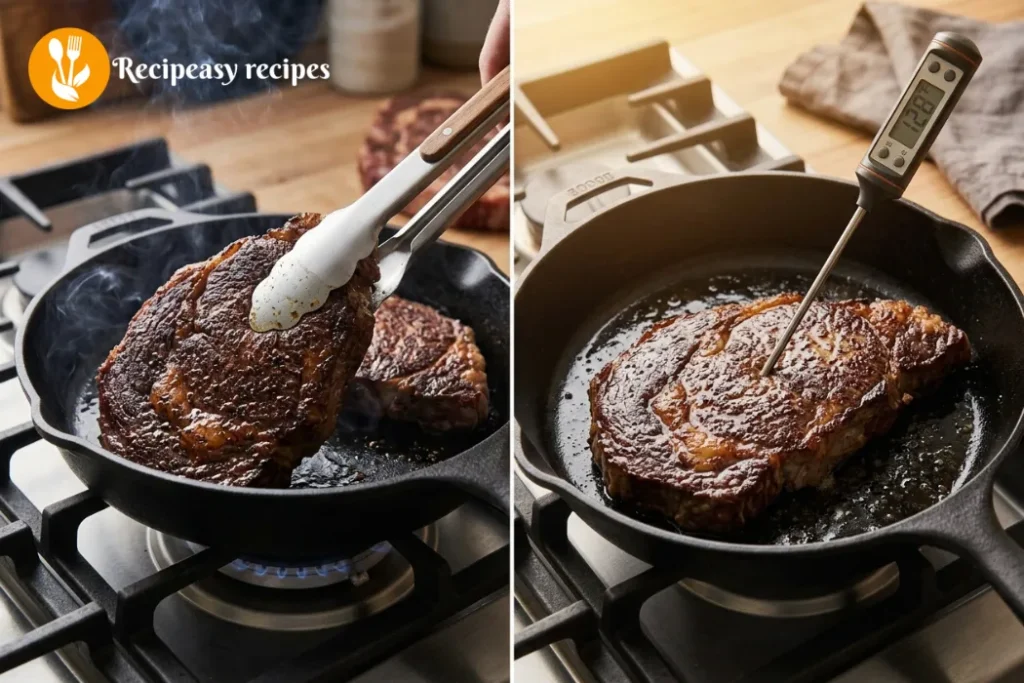
Sear the Steaks
- Place a cast-iron skillet over medium-high heat and let it heat thoroughly.
- Add the olive oil and swirl it around the pan.
- Carefully place the seasoned steaks in the skillet. Leave space between them so they sear instead of steam. Cook in batches if necessary.
- Let the steaks cook without moving them for about 3 to 4 minutes, then turn them with tongs.
- Cook the second side, checking the thickest part with an instant-read thermometer as they approach your preferred doneness.
The cooking time will vary with the thickness of the steaks and the heat of your skillet. If the outside is browning too quickly before the center is ready, lower the heat and continue cooking more gently.
Finish with Garlic Herb Butter
Once the steaks are cooked, transfer them from the hot skillet to a clean plate or cutting board. Spoon some garlic herb butter over each steak while it’s still hot.
The butter will soften and melt over the beef, coating it with garlic and fresh herbs. Let the steaks rest before slicing so the juices don’t run out as soon as you cut into them.
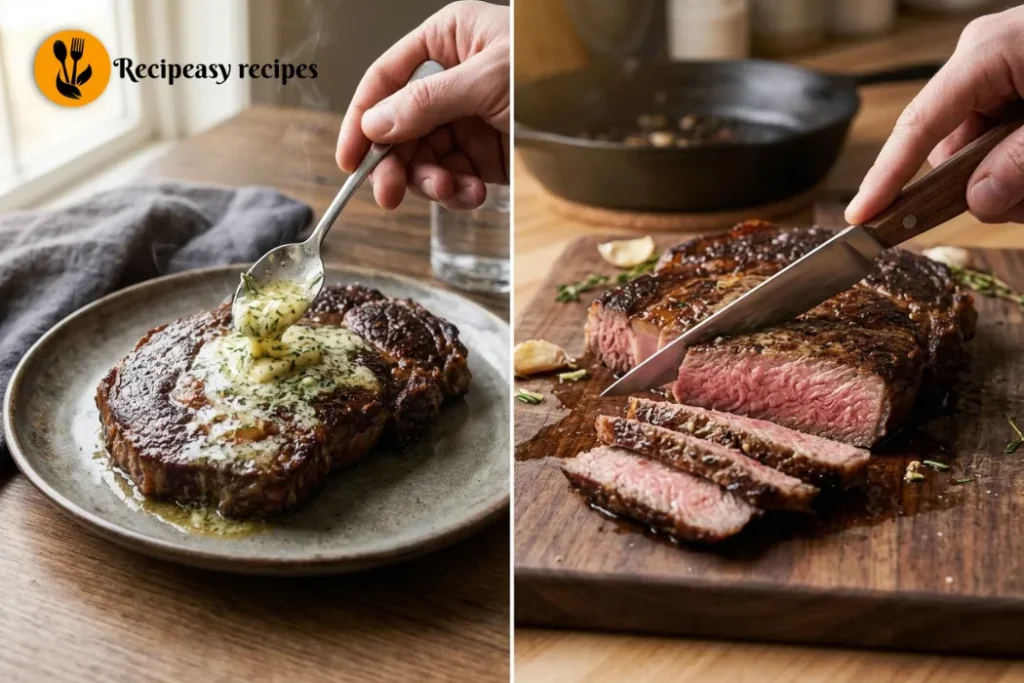
How Long to Cook Chuck Eye Steak
The cooking time depends on the thickness of the steak, the heat of the skillet, and your preferred doneness. A 1-inch steak will cook faster than a thicker one, so use time as a guide rather than relying on it alone. For this Beef Chuck Eye Steak Recipe, always check the thickest part with an instant-read thermometer because cooking times can vary.
An instant-read meat thermometer is the most reliable way to check the center of the steak. Insert it into the thickest part, away from large pockets of fat.
For food safety, the USDA recommends cooking whole beef steaks to a minimum internal temperature of 145°F (63°C), followed by at least a 3-minute rest.
| Doneness preference | Center appearance |
| Rare | Cool, red center |
| Medium-rare | Warm, red center |
| Medium | Warm, pink center |
| Medium-well | Slightly pink center |
| Well-done | Little or no pink |
These descriptions explain common doneness preferences. The USDA safe minimum for whole beef steaks remains 145°F, followed by a 3-minute rest.
Resting and Slicing the Steak
Resting gives the steak time to settle after cooking and makes it easier to slice without losing as much juice.
Transfer the steaks away from the hot skillet and let them rest for at least 3 minutes. Don’t leave them sitting in the pan, because the residual heat can continue cooking the meat.
When you’re ready to serve, look at the direction of the muscle fibers. Slice across them rather than along them. Cutting against the grain shortens the fibers and makes each bite easier to chew.
Can You Grill or Oven-Cook Chuck Eye Steak?
The skillet is the main cooking method for this recipe, but you can use a grill or oven if that works better for your kitchen.
Grilling Chuck Eye Steak
Preheat the grill and clean and oil the grates. Place the seasoned steaks over the heat and sear both sides, adjusting the heat if the outside browns too quickly.
Continue cooking until the thickest part reaches the recommended safe internal temperature. If a steak has loosely connected sections, a food-safe skewer can help hold it together while grilling.
Transfer the steaks to a clean plate or cutting board, let them rest, and finish with garlic herb butter.
Finishing Chuck Eye Steak in the Oven
For thicker steaks, you can sear them in an oven-safe skillet first and finish cooking in the oven.
After browning both sides on the stovetop, transfer the skillet to a preheated oven. Continue cooking until the center reaches the desired temperature, checking with an instant-read thermometer rather than relying on a fixed time.
If you enjoy making steak at home, try this easy skillet steak recipe for a different cut of beef.
Chuck Eye Steak vs. Ribeye
Chuck eye and ribeye come from neighboring sections of the cow. Both can have good marbling and a rich beef flavor, but ribeye is generally more tender and consistent.
Chuck eye is usually more affordable, making it a good choice when you want a steak dinner without spending as much. Choosing a well-marbled piece and cooking it carefully can help you get a flavorful result.
Tips for Choosing and Cooking Chuck Eye Steak
A few small details can make the cooking process easier and help you get a better result.
- Choose similar-sized steaks: Steaks with a similar thickness are easier to cook evenly.
- Look for marbling: Small streaks of fat throughout the meat add flavor.
- Use a suitable pan: Cast iron is a great choice, but a heavy stainless-steel skillet can also work.
- Don’t overcrowd the skillet: Too many steaks in the pan can lower its temperature and prevent proper browning.
- Avoid pressing the steaks: Pressing them down doesn’t improve the crust and can push out juices.
- Use a thermometer: The outside can look browned before the center is cooked. Check the thickest part instead of guessing.
- Add the herb butter after cooking: This keeps the garlic and herbs from burning during high-heat searing.
What to Serve with Chuck Eye Steak
The garlic herb butter makes this steak rich and savory, so simple sides are a natural match. Choose something creamy, roasted, or fresh to round out the meal.
Potato and Vegetable Sides
- Mashed potatoes: A creamy side that pairs well with the melted herb butter.
- Baked potatoes: Serve with sour cream, chives, or a little extra butter.
- Roasted carrots: Their natural sweetness balances the savory beef.
- Green beans: A simple vegetable side that keeps the meal from feeling too heavy.
- Broccoli or asparagus: Roast or grill them while preparing the steak.
Salads and Sauces
A fresh cucumber salad or simple green salad adds a crisp contrast to the rich steak.
If you’d like another sauce on the table, chimichurri adds a fresh, herby flavor, while mushroom sauce gives the meal a richer finish. You can also serve extra garlic herb butter on the side.
Storing and Reheating Leftover Steak
If you have leftover steak, let it cool and refrigerate it in an airtight container. Store extra garlic herb butter separately so you can use it when reheating or serving the leftovers.
Refrigerating and Freezing
Keep cooked steak refrigerated and use it within 3 to 4 days. For longer storage, wrap it tightly and freeze it in a freezer-safe container or bag.
Raw steaks should be kept separate from cooked foods and stored properly chilled. Thaw frozen steak in the refrigerator rather than leaving it on the counter.
Best Ways to Reheat Chuck Eye Steak
Reheat steak gently to help prevent it from drying out.
- Skillet: Warm slices briefly in a covered skillet over low heat with a small splash of broth or water.
- Oven: Place the steak in an oven-safe dish, cover it, and warm it gently.
- Air fryer: Use a low setting and check frequently so the edges don’t dry out.
For food safety, reheat leftovers to 165°F (74°C). Avoid repeatedly reheating the same portion.
If you have leftover steak, turn it into a delicious Beef Steak Wrap for another easy meal.