Why I Put Chili in My Chocolate (And Never Looked Back)
Quick tip before anything else: use good chocolate. Not baking chips, not compound chocolate actual dark chocolate with 70% cocoa or higher. This pairing lives or dies on the quality of that one ingredient.
Now, onto the actual story.
I came across a chili and chocolate recipe almost by accident. I was making a batch of brownies, ran out of my usual spices, and spotted a dried ancho chile sitting on the counter from the previous night’s dinner. Something made me toast it, grind a little of it, and fold it into the batter. The result was so unexpectedly good that I stood in my kitchen eating warm brownie pieces off the tray trying to figure out what exactly had just happened.
That was maybe two years ago. Since then, I’ve experimented with this combination in more ways than I can count brownies, truffles, hot chocolate, even a chocolate sauce for ice cream. The combination works because chili doesn’t actually make things taste spicy in the conventional sense. What it does is create warmth that blooms slowly, amplifies the bitterness of dark chocolate, and leaves this long, lingering finish that plain chocolate simply doesn’t have. It’s not heat for its own sake. It’s depth.
The Version I Keep Coming Back To: Dark Chocolate Chili Truffles
These are the best expression of this combination I’ve found so far. They’re small, intense, and genuinely impressive to serve. Also, they require no baking whatsoever.
The ingredients are straightforward. You need 200g of good dark chocolate (70–75% cocoa), 100ml of double cream, one or two dried chiles depending on how much heat you want (I use one ancho and half a guajillo), a tablespoon of unsalted butter, a tiny pinch of sea salt, and cocoa powder for rolling.
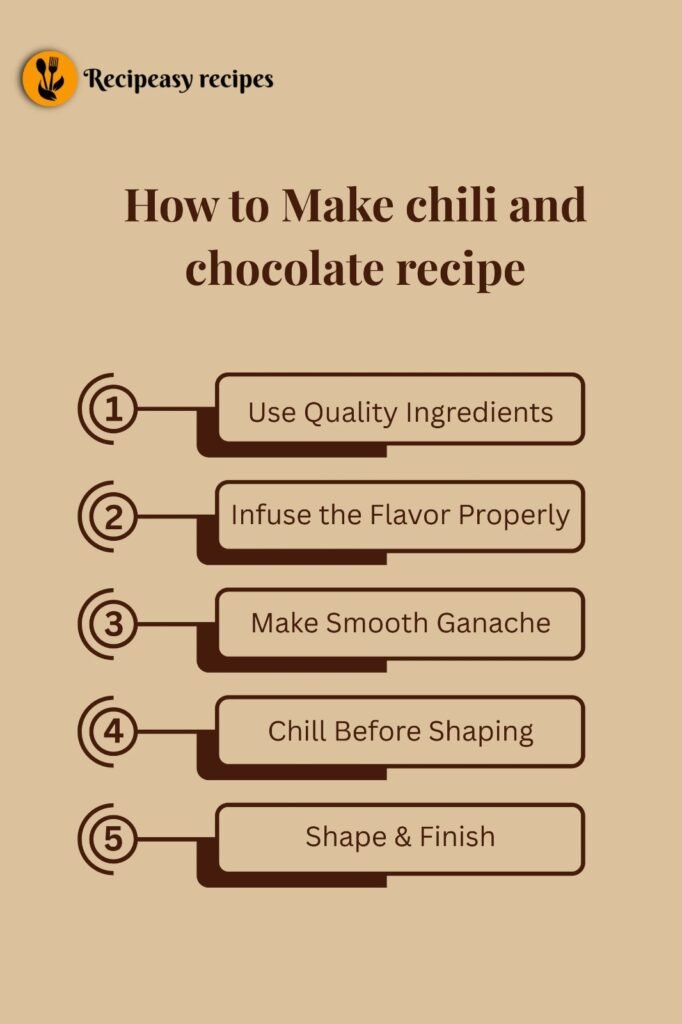
Start by toasting the dried chiles in a dry pan over medium heat for about 60–90 seconds per side. You’ll smell them a rich, almost smoky, slightly sweet fragrance. Don’t let them burn. After that, tear them open, remove the seeds, and steep them in the warm cream for 20 minutes. This is the step I skipped the first time because I was impatient, and the heat was flat and one-dimensional as a result. The steeping draws out the complex flavor of the chile, not just the capsaicin. It matters.
Meanwhile, chop your chocolate finely and put it in a heatproof bowl. Strain the chile-infused cream (discard the chiles) and bring it just to a simmer. Pour it over the chopped chocolate, let it sit for two minutes, then stir from the center outward until completely smooth. Add the butter and salt, stir again, and then refrigerate for at least two hours until firm enough to scoop.
Roll them in cocoa powder and keep them cold until serving. That’s it. The whole process is maybe 30 minutes of actual work.
Getting the Heat Level Right
This is where personal taste comes in, and also where I made a few miscalculations before landing somewhere I was happy with.
Ancho chiles are mild and fruity almost like dried plums with a whisper of heat. Guajillo adds a slightly sharper, more pronounced warmth. Chipotle brings smokiness and more intensity. Cayenne, if you go that route, is pure heat with very little flavor complexity.
My suggestion for a first attempt: use one ancho, steep it well, and taste the ganache before it sets. If you want more heat, add a very small pinch of cayenne at that stage. It’s much easier to add than to remove.
What I’d avoid: fresh chiles in this application. The water content affects the ganache texture and the flavor is less controlled. Dried is the way to go.
The Brownie Version (When You Want Something Crowd-Pleasing)
If truffles feel like too much work, the brownie route is actually easy and how to make it couldn’t be more approachable. Use your favorite brownie recipe mine is a simple one-bowl situation with melted butter, sugar, eggs, cocoa, flour, and dark chocolate. The only change is adding one teaspoon of ancho chile powder and a small pinch of cinnamon to the dry ingredients.
The cinnamon isn’t strictly necessary, but it rounds out the flavor in a way that feels more complete. Mexican hot chocolate uses this combination for a reason.
Bake as normal. The finished brownies smell extraordinary there’s a moment about ten minutes before they’re done where the whole kitchen fills with this deep, spiced chocolate aroma. The heat from the chile is subtle in the finished brownie, more of a warm aftertaste than anything obvious. Most people can’t identify it immediately, but they notice something.
One last thought on this combination. There’s an old belief in Mexican cuisine particularly in mole, which has been pairing chili and chocolate together for centuries that the two ingredients don’t just coexist, they complete each other. Spending time with this chili and chocolate recipe will show you exactly why that belief has lasted so long. The chocolate gets more interesting. The chile gets more complex. Together they become something neither one is on its own.
That first accidental brownie knew what it was doing.
Why I Put Chili in My Chocolate (And Never Looked Back)
Course: Dessert / ConfectioneryCuisine: Mexican-inspired / Fusion DessertDifficulty: Easy16
servings20
minutes1
hour300
kcalDiscover a rich and surprising chili and chocolate recipe that blends dark chocolate with warm chili heat. Learn how to make easy no-bake truffles and spicy brownies with deep, complex flavor in this simple gourmet guide.
Ingredients
200g dark chocolate (70–75% cocoa)
100ml double cream
1–2 dried chilies (ancho, guajillo, or mix)
1 tbsp unsalted butter
Pinch of sea salt
Cocoa powder (for coating)
Directions
- Lightly toast dried chilies in a dry pan for 60–90 seconds.
- Remove seeds, then steep chilies in warm cream for 20 minutes.
- Strain cream and discard chilies.
- Heat cream until just simmering.
- Pour over chopped dark chocolate and let sit for 2 minutes.
- Stir until smooth and glossy.
- Mix in butter and sea salt.
- Chill for 2 hours until firm.
- Scoop and roll into balls, then coat with cocoa powder.
Notes
- Use ancho chili for mild warmth, chipotle for smokiness, cayenne for extra heat.
- Steeping chilies is key for depth of flavor.
- Do not use fresh chilies (they affect texture and balance).