Chinese Steamed Eggs Recipe – Silky, Easy & Authentic
If you’ve never tried Chinese steamed eggs, you’re missing out on one of the easiest comfort foods out there. All you need is a few eggs, some water, and a steamer. That’s it. No fancy skills required.
This dish is soft, warm, and a little wobbly, kind of like a savory custard. Also, it takes barely any effort to put together. Once you know the basic method, you’ll never need to look up the recipe again.
What Exactly Are Steamed Eggs?
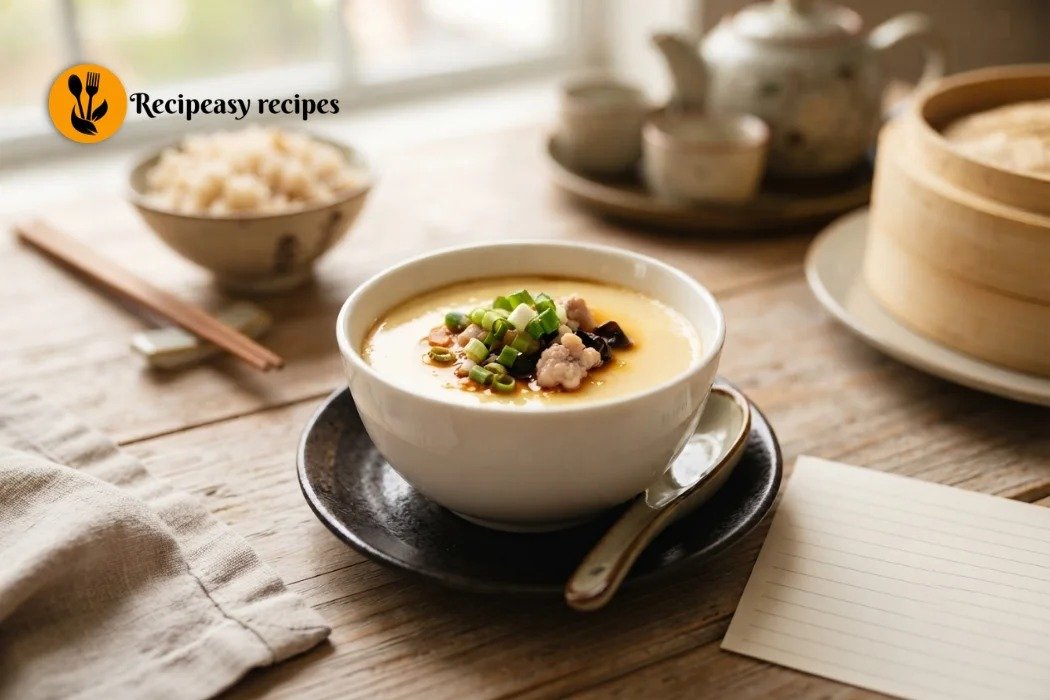
Steamed eggs are a classic part of Chinese home cooking. People also call this dish Cantonese steamed eggs, or a savory steamed egg custard, since the texture is smooth and silky, almost like pudding.
Basically, you whisk eggs with water (or broth), pour the mix into a dish, and steam it until it sets. The result is soft, jiggly, and full of gentle egg flavor. Unlike a fried or scrambled egg, this steamed egg custard has almost no texture at all. It just melts in your mouth.
Because it’s so mild and easy to digest, families often serve it to kids, older relatives, or anyone feeling under the weather. So think of it as chicken soup, but made with eggs instead.
What You’ll Need
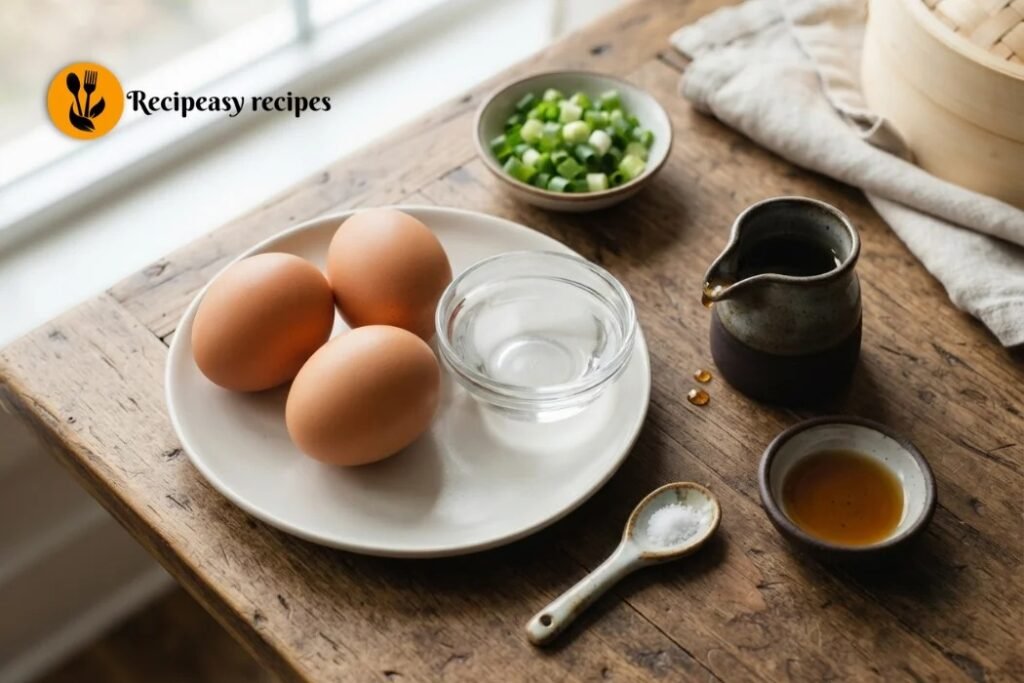
Here’s the good news: this recipe uses ingredients you probably already have at home.
- 3 large eggs
- Water (same amount as the eggs, once cracked)
- A small pinch of salt
- A few drops of sesame oil
- Chopped scallions, for topping
- Light soy sauce, optional but recommended
For extra flavor, some cooks swap the water for chicken or vegetable stock. That said, plain water works perfectly fine, too. Either way, you’ll end up with smooth steamed eggs that taste rich without much effort.
How to Make Chinese Steamed Eggs
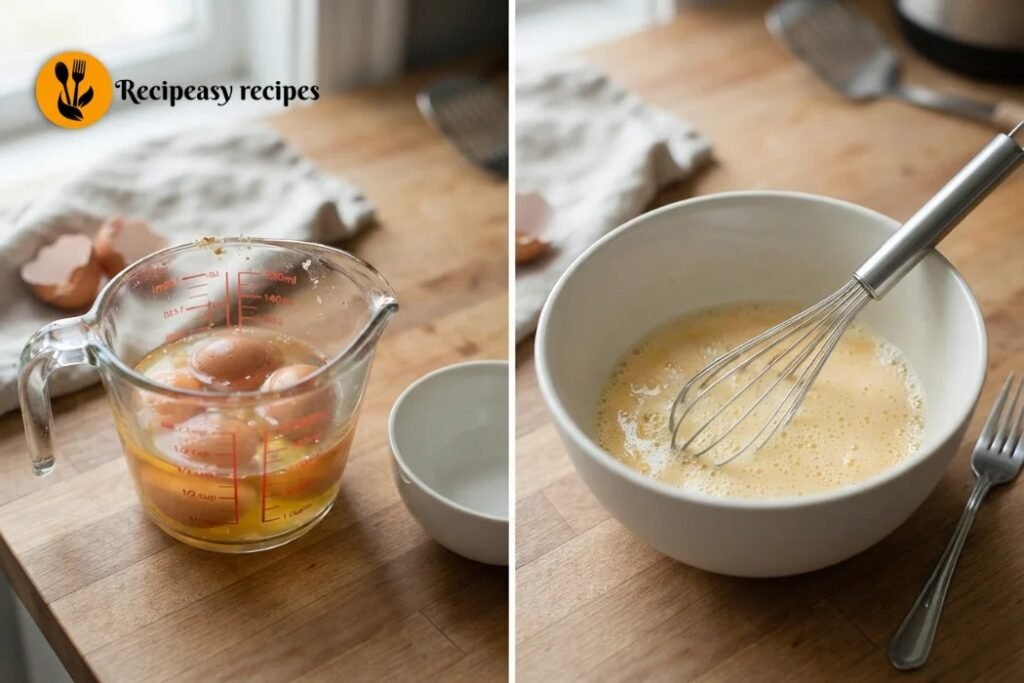
First, crack your eggs into a measuring cup or bowl. Note how much liquid they make, since you’ll need to match that amount with water.
Next, beat the eggs well. Don’t rush this part. A good minute of whisking helps everything blend evenly, which means a smoother finished dish.
After that, measure out water equal to the volume of the eggs. Slowly stir it into the egg mixture, along with a pinch of salt and a small splash of sesame oil.
Now comes an important step: strain the mixture through a fine mesh strainer into your steaming dish. Straining catches any little bubbles or bits of egg white that didn’t blend in. This is really the secret behind getting that glassy, fluffy steamed egg finish everyone loves.
Then, cover the dish loosely with foil or a plate. This keeps water droplets from dripping onto the eggs while they steam, which can leave little pits on top.
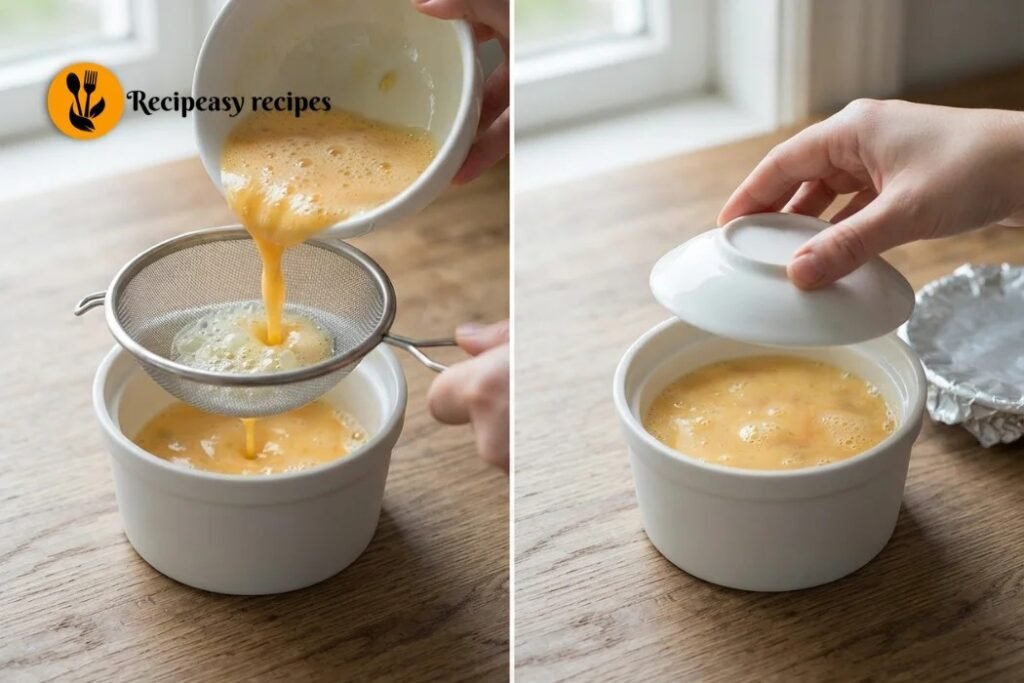
Once your steamer is ready and the water is boiling, place the dish inside. Steam over medium heat for about 10 to 12 minutes. Keep the heat gentle rather than blasting it on high, since a rolling boil can make the eggs turn rubbery instead of silky.
Finally, check for doneness. Give the dish a gentle shake. If the center still looks like liquid, give it another minute or two. If it just barely jiggles all over, it’s done.
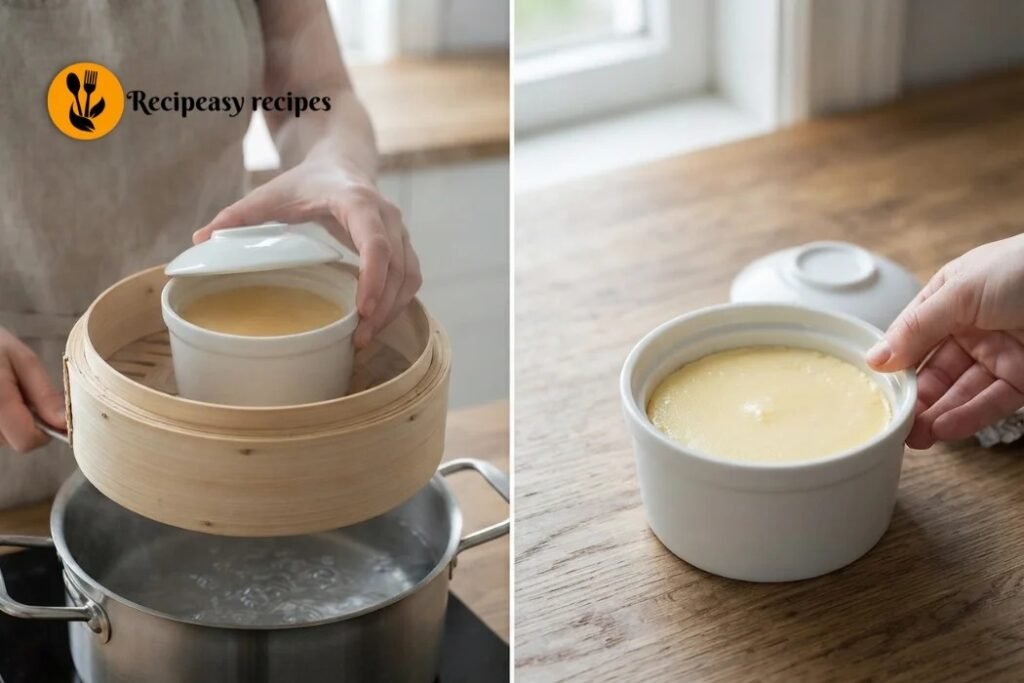
Simple Tips for the Best Results
Here are a few extra pointers to help you nail this Chinese steamed egg recipe every time.
Always strain the egg mixture. This step feels optional, but skipping it usually means bubbly, uneven eggs instead of that smooth top everyone wants.
Also, cover the dish while steaming. That thin layer of foil or a plate stops water from dripping in and ruining the surface.
Keep the heat moderate, too. High heat cooks the eggs too fast, which turns them tough instead of tender.
Additionally, let the dish rest for a minute or two after steaming. This helps the eggs finish setting gently, without overcooking.
Similarly, don’t skip the finishing touches. A few drops of sesame oil, a scatter of scallions, and a drizzle of soy sauce turn this simple dish into something special. In fact, these steamed eggs with soy sauce are a classic combo you’ll see in most Chinese homes.
Ways to Mix It Up
Once you’ve mastered the basic method, feel free to experiment. For instance, add small pieces of shrimp, minced pork, or mushrooms before steaming for a heartier meal. Or, top the finished dish with crispy fried shallots for some crunch.
If you want a vegetarian version, use vegetable stock instead of water. Either way, the base method stays the same.
A Few Common Questions
Why did my eggs turn out bumpy instead of smooth? This usually happens when the mixture wasn’t strained or the heat was too high while steaming.
Can I make this dish ahead of time? It’s best fresh, since the texture changes once it cools and sits in the fridge. That said, leftovers still taste good reheated gently in the microwave.
What’s the correct egg-to-water ratio? Match the water to the eggs, measure for measure. This is the easiest way to remember how to steam eggs Chinese style without guessing.
Give It a Try
Honestly, once you try this dish, you’ll understand why it’s a staple in so many Chinese kitchens. It’s cheap, quick, and endlessly comforting. Whether you’re cooking for a sick family member, a picky toddler, or just craving something warm and soft, Chinese steamed eggs always deliver. So grab a few eggs, get your steamer ready, and give this authentic Chinese steamed eggs recipe a try tonight. You won’t regret it.
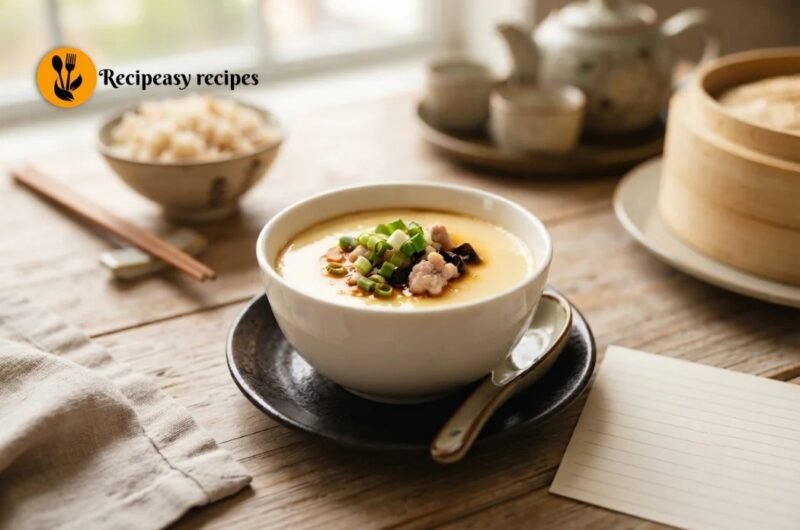
Chinese Steamed Eggs Recipe – Silky, Easy & Authentic
Course: Side DishCuisine: ChineseDifficulty: Easy2
servings5
minutes10
minutes120
kcalLearn how to make Chinese steamed eggs with just a few simple ingredients. This authentic recipe creates a silky, smooth, savory egg custard that’s comforting, easy to digest, and ready in about 15 minutes.
Ingredients
3 large eggs
Water (equal volume to the beaten eggs)
1 pinch salt
½ teaspoon sesame oil
1 tablespoon chopped scallions
1 teaspoon light soy sauce (optional)
Optional Add-ins
Chicken stock or vegetable stock (instead of water)
Cooked shrimp
Minced pork
Sliced mushrooms
Crispy fried shallots
Directions
- Crack the eggs into a bowl and whisk until smooth.
- Measure the volume of the eggs and add an equal amount of water or broth.
- Stir in the salt and sesame oil.
- Strain the mixture into a heatproof steaming dish.
- Cover loosely with foil or a heatproof plate.
- Steam over medium heat for 10–12 minutes.
- Check that the custard is just set with a slight jiggle.
- Let rest for 1–2 minutes.
- Top with scallions and soy sauce before serving.
Notes
- Always strain the egg mixture for an ultra-silky texture.
- Let the custard rest briefly before serving.
- Garnish with sesame oil, soy sauce, and fresh scallions for the best flavor.
- Cover the dish to prevent water droplets from falling onto the eggs.
- Keep the steaming heat gentle to avoid a rubbery custard.