Persian Rice (Tahdig): The Crispy Golden Rice
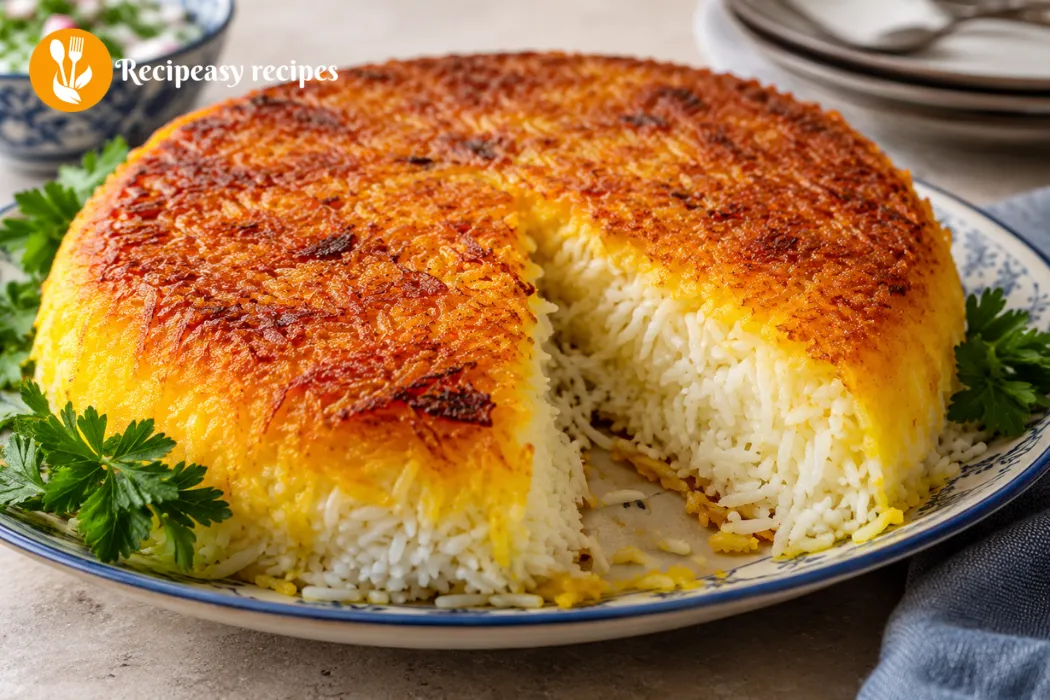
If you have never had Persian Rice (Tahdig) before, you are in for a treat. This dish is simple at its heart, just rice, butter, and a little patience, but it turns into something magical by the time it hits your plate. The bottom layer turns golden and crispy, almost like a rice chip, while the top stays soft and fluffy. Once you try it, you will understand why Persian families fight over that crispy bottom layer at every meal.
This guide walks you through everything step by step. No fancy tools needed. No confusing techniques. Just a good pot, some patience, and a little bit of trust in the process.
What exactly is Tahdig?
Tahdig literally means “bottom of the pot” in Persian. That’s exactly what it is. It is the crispy, golden crust that forms on the bottom of the rice pot during cooking. Persian families have been making this for generations, and it is often considered the best part of the meal.
Since tahdig is more a technique than a separate dish, you can make it plain or layer it with potatoes, bread, or even yogurt under the rice. Today, we are going with the classic version so you get that pure, crispy rice bottom that everyone loves.
Why This Recipe Works
Unlike a lot of rice dishes, this one takes a two-step approach. First, you parboil the rice. Then, you steam it slowly with butter and oil at the bottom of the pot. That combination is what creates the crackly crust while keeping the rest of the rice light and fluffy.
Also, this method is more forgiving than you might think. Even if your first try is not perfect, you will still end up with delicious rice. The crust just might not be as crispy the first time around, and that is completely okay.
What You Will Need
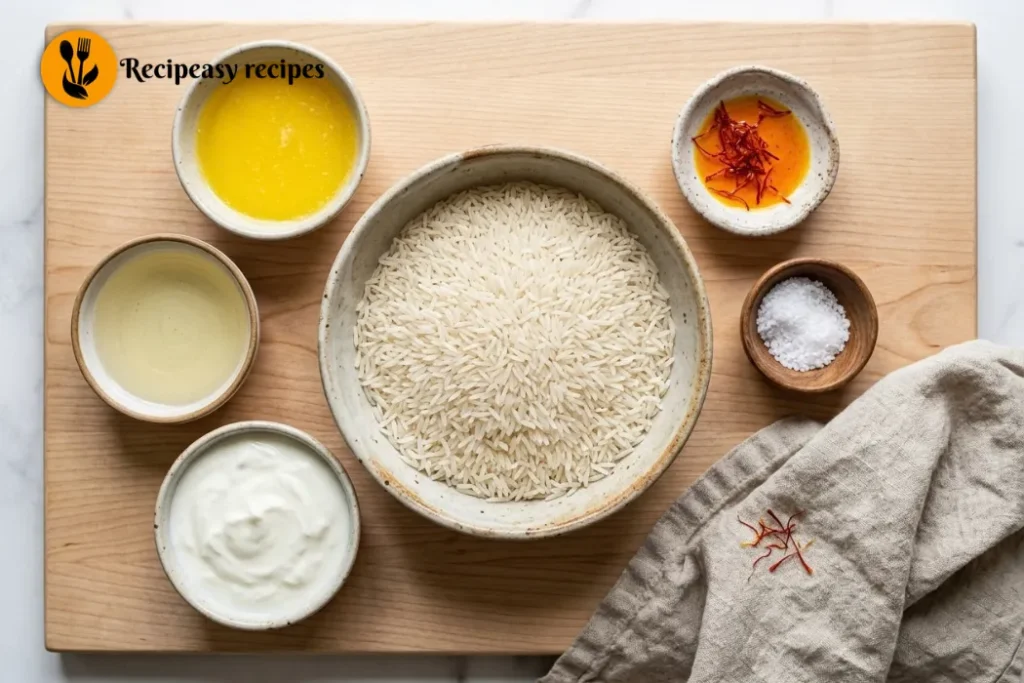
Here is what goes into this recipe. Nothing complicated, just a handful of pantry staples.
For the rice:
- 2 cups basmati rice
- Water for boiling
- 2 to 3 tablespoons salt (for the boiling water)
For the tahdig layer:
- 4 tablespoons butter, melted
- 2 tablespoons neutral oil (like vegetable or canola)
- 3 tablespoons plain yogurt
- A pinch of saffron threads, soaked in 2 tablespoons hot water
Since saffron is what gives Persian rice its signature golden color and light floral smell, do not skip it if you can help it. But if you cannot find it, the dish will still taste great without it.
Step-by-Step: How to Make Tahdig
Step 1: Rinse and Soak the Rice
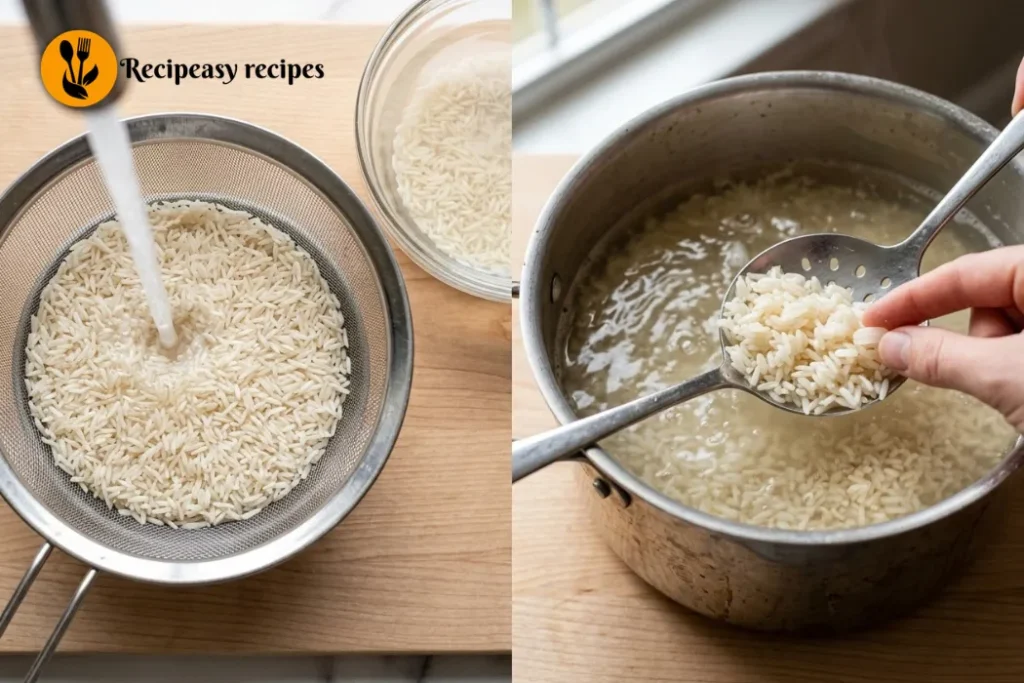
First, rinse your rice under cold water until the water runs mostly clear. This gets rid of extra starch so your rice does not turn gummy. After rinsing, soak the rice in water for at least 30 minutes. If you have time, soaking for an hour or two makes the texture even better.
Step 2: Parboil the Rice
Next, bring a large pot of water to a boil and add your salt. The water should taste like the sea. Once boiling, add your drained rice and cook it for about 6 to 8 minutes. You are not fully cooking it here, just softening the outside while the inside stays a little firm.
To check if it is ready, take a grain out and press it between your fingers. If it breaks apart with just a little resistance in the center, you are good to go. Then, drain the rice in a colander right away so it stops cooking.
Step 3: Prepare the Pot
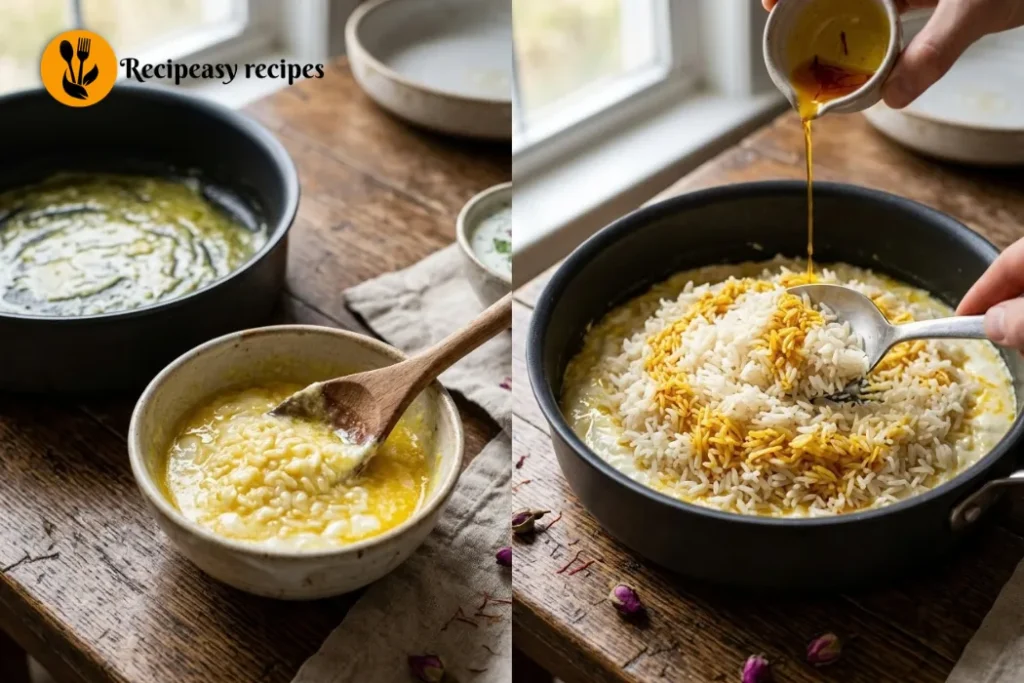
While your rice drains, mix the melted butter, oil, yogurt, and a spoonful of the parboiled rice in a small bowl. This mixture is the secret behind that golden crust. Because the yogurt helps the bottom layer crisp up evenly, it makes a real difference here.
Spread this mixture across the bottom of your pot in an even layer. Nonstick pots work best for this step since they make it much easier to flip the tahdig out later.
Step 4: Layer the Rice
Now it is time to build your rice. Spoon the parboiled rice on top of the butter mixture gently, building it up like a small mound rather than pressing it down flat. This little mound shape helps steam circulate through the rice evenly as it cooks.
After that, drizzle your saffron water over the top. This adds color and flavor as the rice steams.
Step 5: Steam It Low and Slow
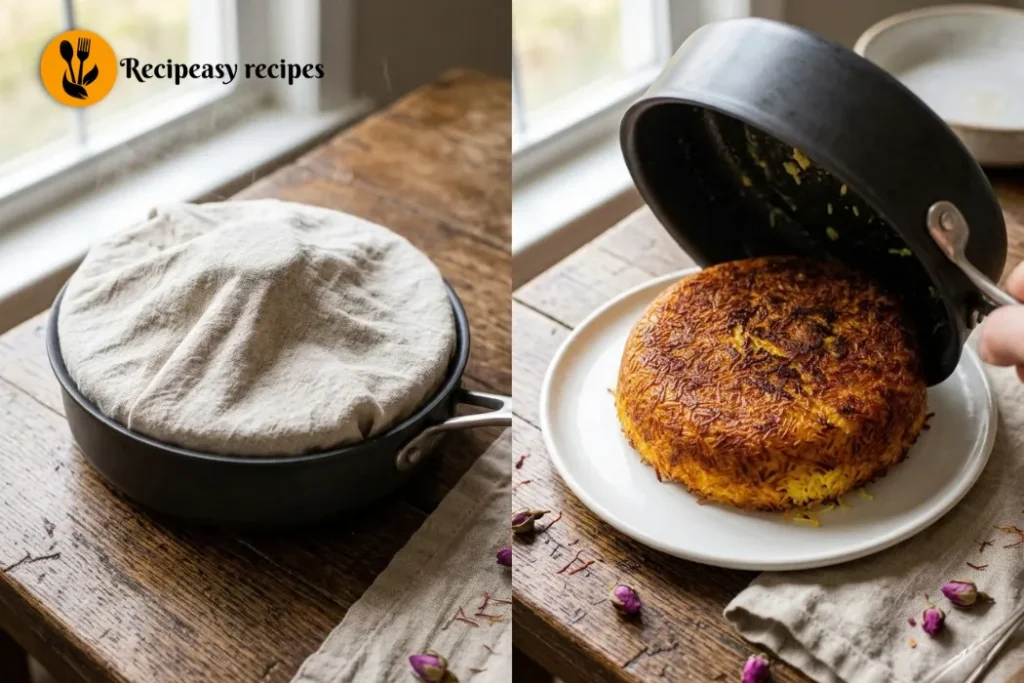
Cover your pot with a lid wrapped in a clean kitchen towel. The towel absorbs extra steam so it does not drip back down onto the rice and make it soggy. Cook on low heat for about 45 minutes to an hour.
Since every stove is a little different, start checking around the 40-minute mark. You will know it is close to ready once you smell a light toasty aroma coming from the pot.
How to Flip the Tahdig
This is the moment everyone waits for. Once your rice is done steaming, take the pot off the heat and let it sit for about 5 minutes. This little rest makes the crust easier to release.
Then, place a large plate over the pot and flip it in one confident motion. Lift the pot away slowly, and there it is: a golden, crispy layer of rice sitting proudly on top.
If a few pieces stick to the bottom of the pot, do not worry. Just scrape them off and add them back onto the plate. Nobody will notice, and honestly, everyone will still be reaching for a piece.
Tips for the Best Tahdig
Since this dish depends a lot on timing and heat control, here are a few tips to help you get it right.
- Always use low heat once the rice starts steaming. High heat will burn the bottom before the rice cooks through.
- A nonstick pot is your best friend here, especially the first few times you try this recipe.
- Do not skip the towel under the lid. It really does make a difference in texture.
- If you want extra crispy tahdig, let it steam a few minutes longer than usual.
- Fresh basmati rice works better than older rice since it holds its shape and texture more evenly.
What to Serve With Persian Rice
This dish pairs beautifully with grilled meats, stews, or a simple herb and yogurt dip on the side. Many Persian meals include tahdig alongside dishes like koobideh kebabs or a rich lamb stew, but it works just as well with something as simple as roasted chicken.
Storing and Reheating
If you have leftovers, store them in an airtight container in the fridge for up to 3 days. When reheating, a quick trip in a hot oven or air fryer will help bring back some of that crispiness. Microwaving works too, but the crust will soften a bit.
Final Thoughts
Making Persian Rice (Tahdig) at home might feel intimidating the first time, but once you get the hang of the flip, you will want to make it again and again. It is one of those dishes that turns a regular dinner into something special, just from one crispy golden layer of rice.
So the next time you are looking for a tahdig recipe that actually works, give this method a try. Once you taste that crackly bottom layer paired with soft, saffron-scented rice, you will understand exactly why this dish has stayed a favorite for generations.

Persian Rice (Tahdig): The Crispy Golden Rice Everyone Falls in Love With
Course: Dinner, Lunch, Main CourseCuisine: PersianDifficulty: Easy4
servings30
minutes1
hour8
minutes500
kcal
Persian Rice (Tahdig) features fluffy basmati rice steamed over a buttery yogurt layer until the bottom becomes golden and crispy. Saffron adds beautiful color and a light floral aroma to this classic Persian rice dish.
Ingredients
For the Rice
2 cups basmati rice
Water for boiling
2–3 tablespoons salt, for the boiling water
For the Tahdig Layer
4 tablespoons butter, melted
2 tablespoons neutral oil
3 tablespoons plain yogurt
A pinch of saffron threads
2 tablespoons hot water
Directions
- Rinse & Soak: Rinse basmati rice until the water runs mostly clear. Soak in water for at least 30 minutes.
- Parboil: Bring a large pot of salted water to a boil. Add drained rice and cook for 6–8 minutes, until the outside is tender but the center remains slightly firm. Drain immediately.
- Make the Tahdig Base: Mix melted butter, oil, yogurt, and a spoonful of parboiled rice. Spread the mixture evenly across the bottom of a nonstick pot.
- Layer the Rice: Gently spoon the remaining rice over the tahdig mixture, forming a loose mound. Mix saffron with hot water and drizzle it over the rice.
- Steam: Cover the pot with a lid wrapped in a clean kitchen towel. Cook over low heat for 45–60 minutes, checking around 40 minutes for a light toasty aroma.
- Rest & Flip: Remove from heat and rest for 5 minutes. Place a large plate over the pot and carefully flip the rice onto the plate. Scrape out any pieces that stick.
Notes
- Use low heat while steaming to prevent burning.
- A nonstick pot makes flipping easier.
- Wrap the lid with a clean kitchen towel to absorb excess steam.
- Steam a few extra minutes for a crispier tahdig.
- Saffron adds color and floral flavor but can be omitted.
- Fresh basmati rice is recommended for even texture.