Sisig Recipe (Sizzling Filipino Pork Sisig)
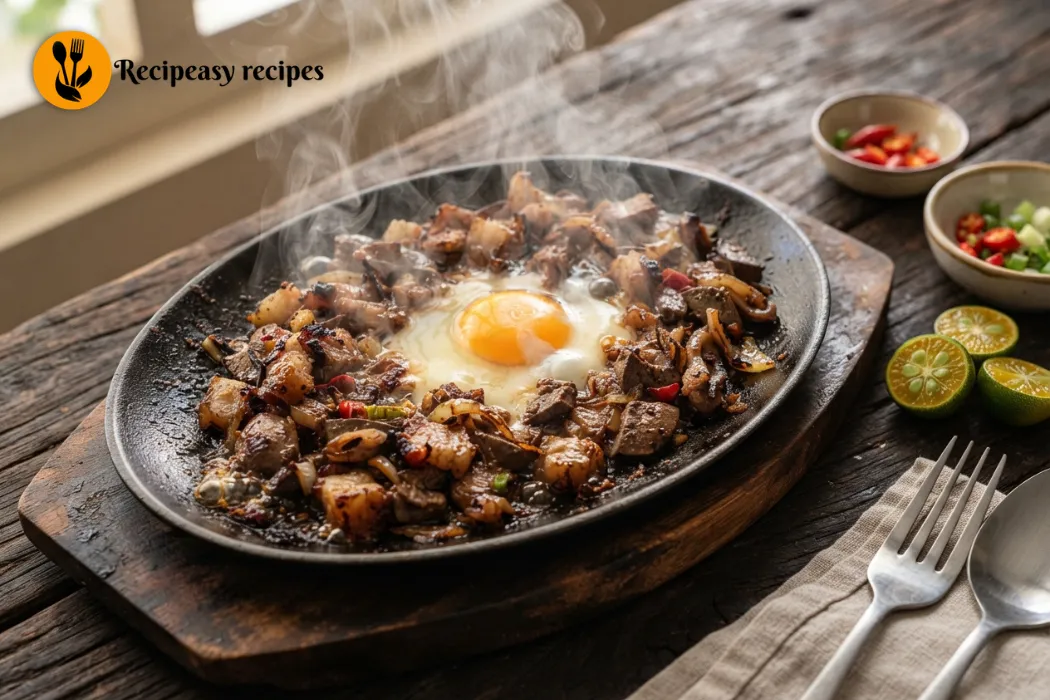
I’ve made this Sisig Recipe more times than I can count, and it never stops being a crowd favorite. There’s something about the sizzle when it hits the table, the smoky char on the pork, and that sharp hit of calamansi and chili that makes people go quiet for a second and just eat.
Over the years, I’ve picked up a few small tricks that make a real difference, like getting the char just right and balancing the tang so it doesn’t overpower the richness. So today, I’m sharing the version I’ve landed on after making this dish more times than I can count.
What Is Sisig?
Sisig is a Filipino dish made from chopped pork, seasoned with calamansi, chili, and onions, then served sizzling hot on a cast iron plate. Originally from Pampanga, a region in the Philippines known for its bold cooking, sisig started as a way to use every part of the pig, including the ears and cheeks, before becoming the beloved bar food it is today.
Also, this dish has grown far beyond its origins. Because it’s smoky, tangy, and a little spicy all at once, Filipino recipes versions have become popular in restaurants well outside the Philippines, often served as a shareable appetizer with ice-cold beer.
What You’ll Need
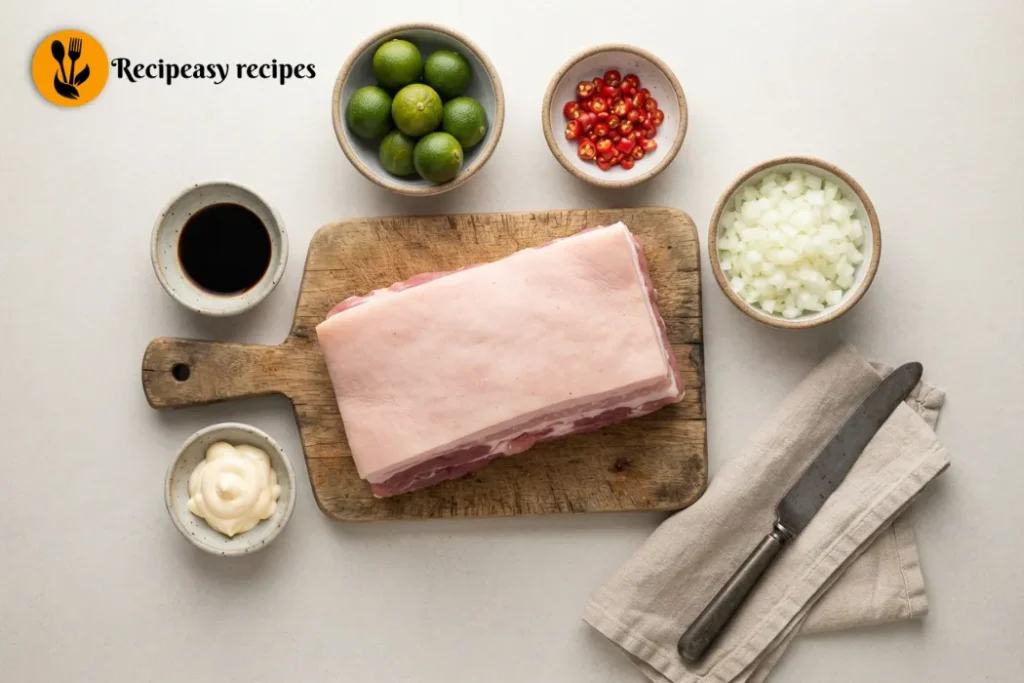
Here’s everything for this classic dish. A few ingredients may require a trip to an Asian grocery store, but most of it is easy to find.
For the pork:
- 1 pound pork belly
- 1/2 pound pork liver (optional, for authenticity)
- 4 cups water
- 1 small onion, quartered
- 3 cloves garlic, smashed
- 1 bay leaf
- Salt and pepper, to taste
For the seasoning:
- 1 small onion, finely diced
- 2 to 3 Thai chilies, finely chopped
- 3 tablespoons calamansi juice (or lime juice)
- 2 tablespoons soy sauce
- 2 tablespoons mayonnaise
- 1 tablespoon butter
- 1 egg (optional, for topping)
- Chili flakes, to taste
Since pork sisig recipe results depend heavily on getting a good char on the meat, don’t rush the boiling step. A well-cooked, tender piece of pork belly is what makes the final chop-and-sear so satisfying.
How to Make Sisig
This dish comes together in three main stages: boiling, grilling, and chopping. Each step builds on the last, so it’s worth taking your time here.
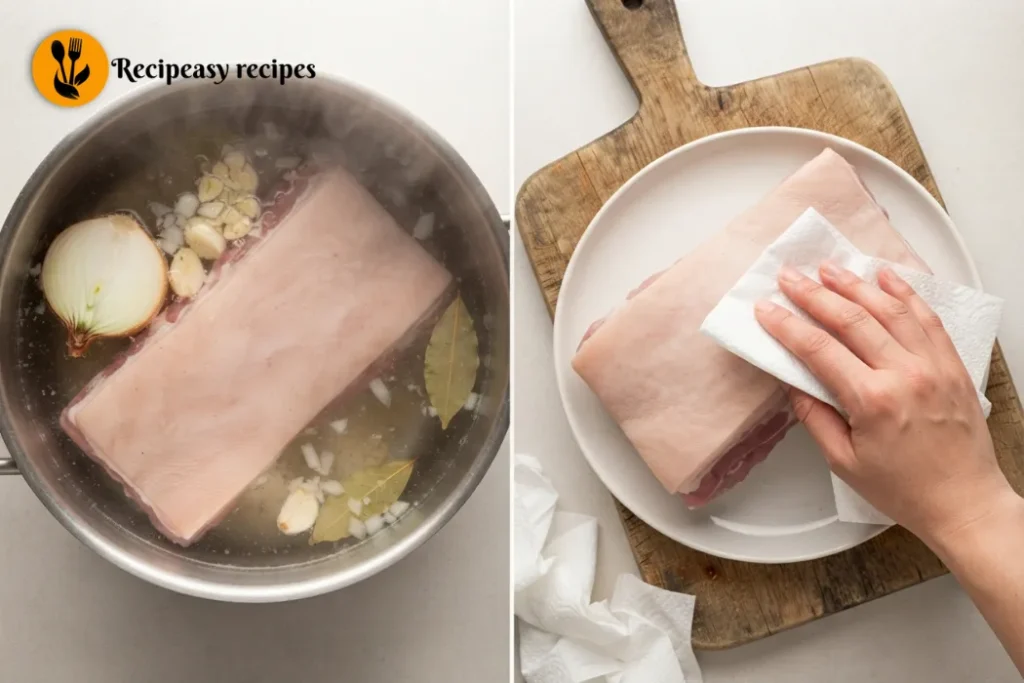
Step 1: Boil the pork. Place the pork belly in a large pot with water, quartered onion, garlic, bay leaf, salt, and pepper. Bring to a boil, then reduce the heat and simmer for about 45 minutes to an hour, until the pork is tender.
Step 2: Cool and dry the pork. Remove the pork from the pot and let it cool completely. Then pat it dry with paper towels, since a dry surface is what helps it char properly in the next step.
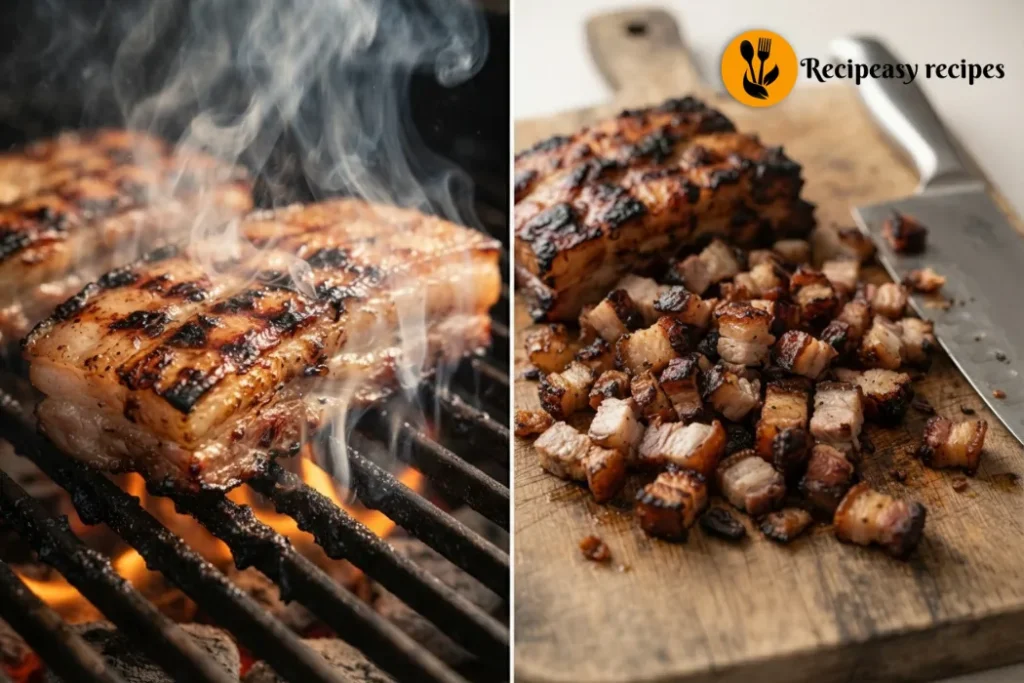
Step 3: Grill or broil for char. Grill the pork belly over medium-high heat, or broil it in the oven, until the skin turns crispy and slightly blackened in spots. This usually takes about 10 to 15 minutes, turning occasionally.
Step 4: Chop everything finely. Once the pork has cooled slightly, chop it into small, even pieces. If using pork liver, chop it just as finely and mix it in for extra richness.
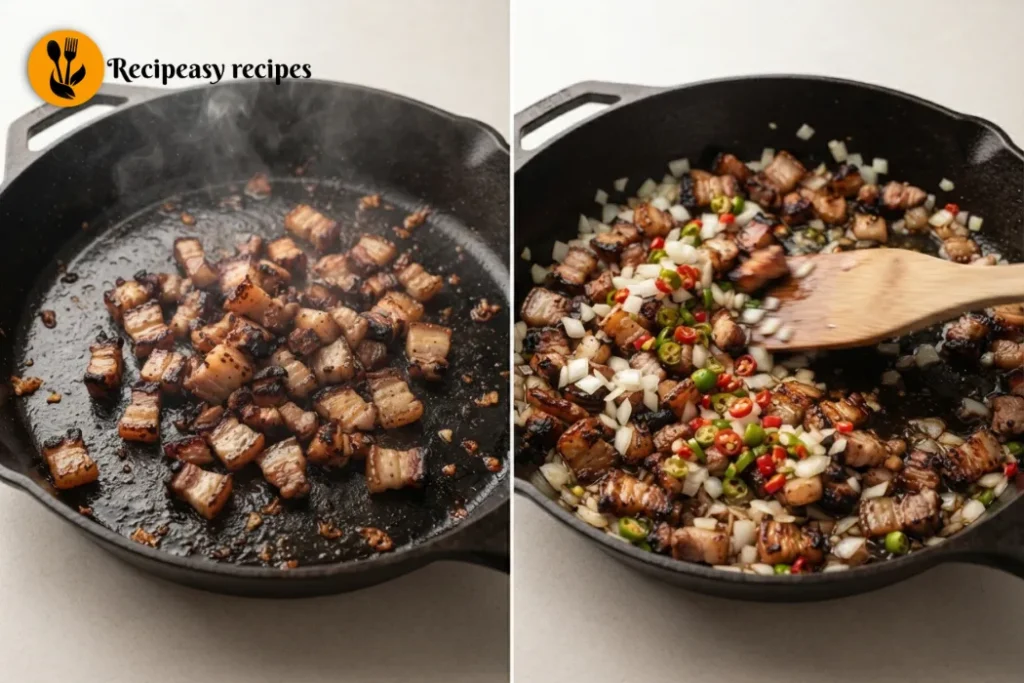
Step 5: Sear on a hot pan. Heat butter in a large skillet or cast iron pan over high heat. Add the chopped pork and cook for 3 to 4 minutes, until it develops a deeper, crispy texture.
Step 6: Add the seasoning. Stir in the diced onion, chopped chilies, calamansi juice, and soy sauce. Toss everything together until well combined and fragrant.
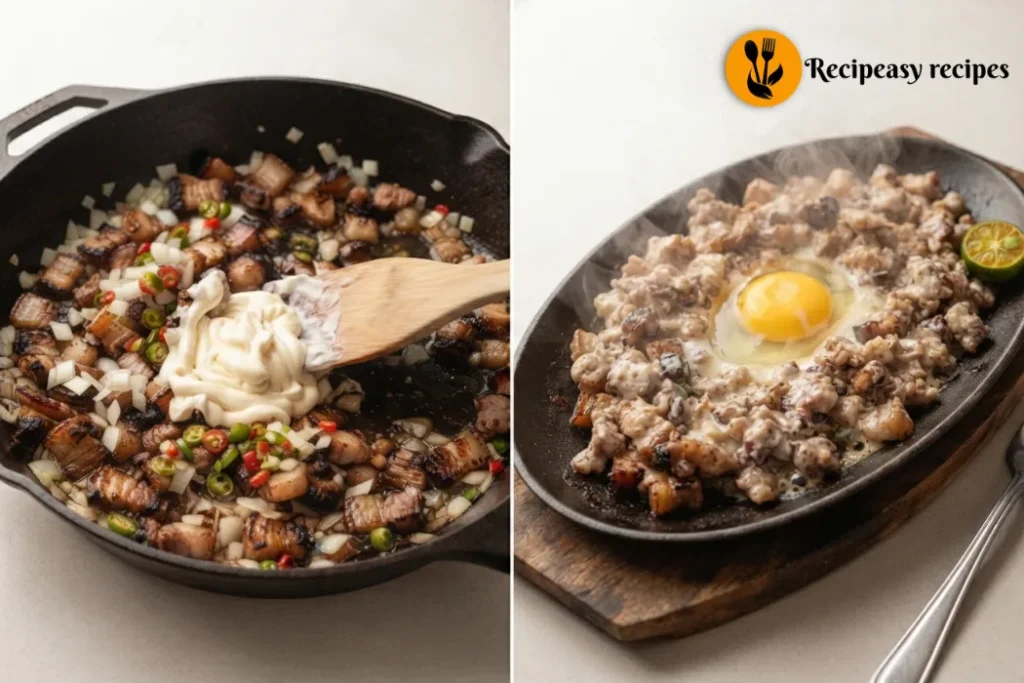
Step 7: Finish with mayo. Remove the pan from heat and stir in the mayonnaise, which gives the dish its signature creamy richness without making it heavy.
Step 8: Serve sizzling. Transfer the sisig to a hot cast iron plate if you have one, crack a raw egg on top, and stir it in tableside so it cooks in the residual heat. Serve immediately with rice.
Tips for the Best Results
Since a good char is what defines great sisig, don’t skip the grilling or broiling step. Boiling alone leaves the pork soft, but that smoky crispness is really where the flavor comes from.
Also, chop the pork finely and evenly. Since sisig is meant to be eaten in small, mixed bites, large chunks throw off the texture of the whole dish.
For an authentic sisig recipe, using pork liver alongside the belly adds a deeper, richer flavor that’s hard to replicate without it. That said, it’s completely optional if you’d rather keep things simpler.
Additionally, taste as you season. Since everyone’s tolerance for spice and tang is a little different, adjust the calamansi and chili to your liking before serving.
Making It Your Own
This dish is easy to adjust based on what you have or prefer. For instance, if pork liver isn’t your thing, you can leave it out entirely and rely on pork belly alone for a milder version.
Or, if you want to switch up the protein, some cooks make sisig with chicken, tuna, or even tofu for a lighter or vegetarian take. Additionally, a sprinkle of crushed pork rinds on top adds an extra layer of crunch that pairs beautifully with the creamy mayo.
For an easy sisig recipe shortcut, you can skip the boiling step entirely and use pre-cooked, roasted pork belly instead, then jump straight to chopping and searing.
What to Serve With Sisig
Sisig is traditionally served as sizzling sisig, straight off a hot plate, alongside a bowl of steaming white rice. Since the dish is rich and savory, plain rice helps balance every bite.
It also makes a fantastic appetizer for a party, especially finish the meal with halo-halo , which is how it’s most commonly enjoyed in Filipino restaurants.
Storing and Reheating
Once cooled, transfer any leftover sisig to an airtight container and store it in the fridge for up to 3 days.
When reheating, a hot skillet works best to bring back some of that crispy texture. Since the microwave tends to make the pork soft and a little soggy, it’s worth the extra few minutes on the stove.
Common Questions
Do I have to use pork liver? No, it’s optional. It adds a deeper flavor, but the dish is still delicious with pork belly alone.
Can I make sisig without a sizzling plate? Yes. A regular cast iron skillet works fine, though the tableside sizzle is part of the fun if you have the equipment for it.
Why is my sisig too watery? This usually means the pork wasn’t dried well enough before searing, or too much liquid was added during the seasoning step. Make sure to pat the pork dry and add sauces gradually.
Can I make this dish ahead of time? You can prep and chop the pork in advance, then store it in the fridge. Just do the final sear, seasoning, and egg step right before serving for the best texture.
Final Thoughts
At the end of the day, this Sisig Recipe is proof that bold, smoky, tangy flavors don’t need anything fancy to come together. It’s the dish I keep coming back to, and I hope it becomes one you return to as well. So the next time you’re craving something crispy, rich, and packed with flavor, give this one a try.