
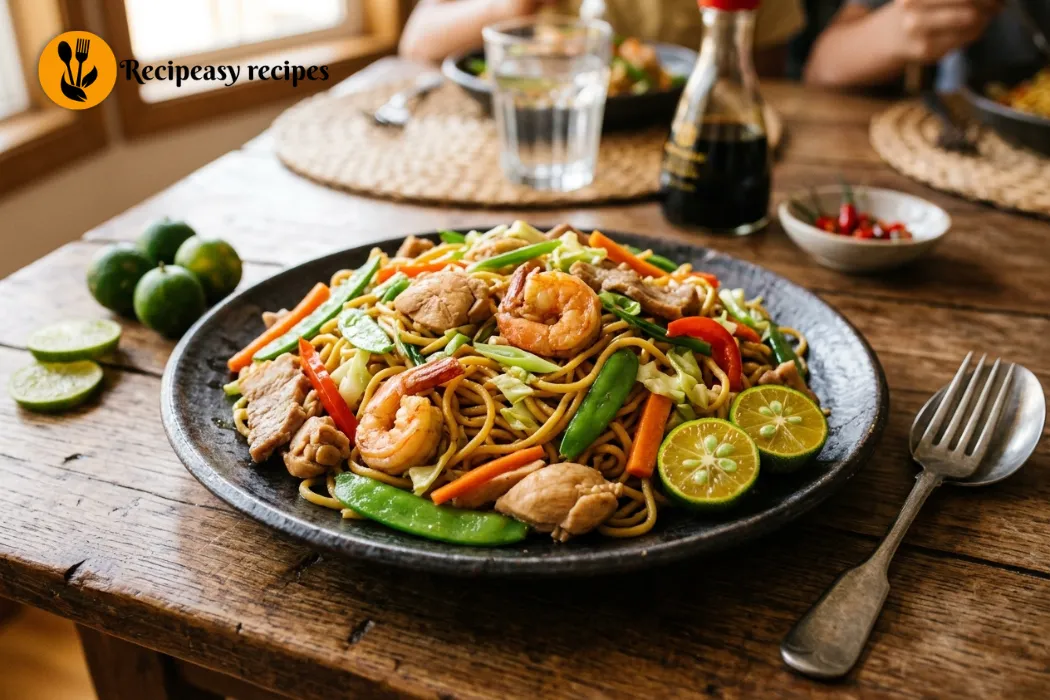
Pancit Canton Recipe (Authentic Filipino Noodles, Ready in 35 Minutes)
I’ve been making this pancit canton recipe for years, and it’s still one of the dishes I come back to the most. There’s something about the way the noodles soak up all that savory sauce that never gets old, whether I’m cooking for a quick weeknight dinner or a full table of guests.
Over time, I’ve learned exactly how to get the noodles just right, not too dry and not too soggy. So today, I’m sharing the version I’ve landed on after making this dish more times than I can count, along with every tip that’s made a real difference along the way.
Why This Recipe Works
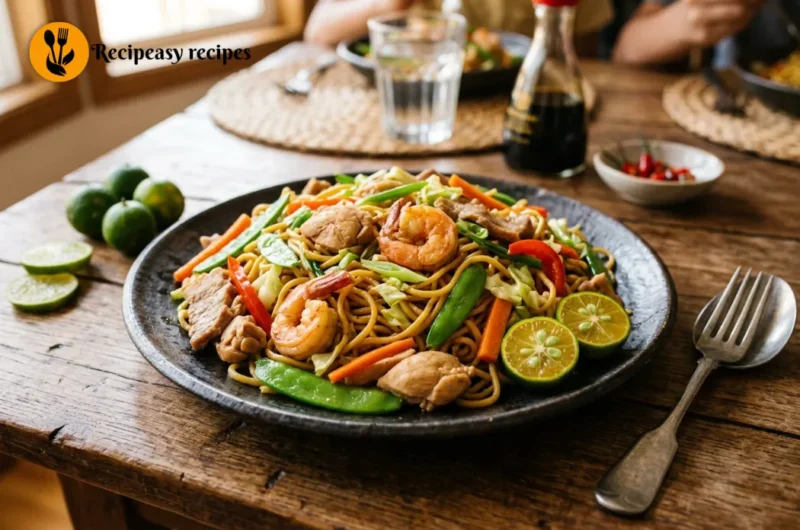
Since this dish leans on a handful of pantry staples, it comes together faster than most takeout orders. Also, the mix of chicken, shrimp, and vegetables means you’re getting a genuinely balanced, one-pan meal, not just noodles.
Plus, this Filipino Pancit Canton is endlessly forgiving. Because it’s built more like a formula than a strict recipe, it holds up well no matter what protein or vegetables you have sitting in the fridge.
What Is Pancit Canton?
Pancit canton is a Filipino stir-fried noodle dish made with wheat-flour noodles, vegetables, and usually a mix of meat or shrimp. Since it’s often served at birthdays and celebrations, many Filipino families believe the long noodles represent long life, so it’s rarely cut short before serving.
Also, this dish is deeply rooted in Filipino-Chinese cooking, since canton noodles themselves take their name from Guangzhou, a city once known as Canton. That shared history is part of why the dish feels so familiar, yet distinctly Filipino, at the same time.
Why You’ll Love This Recipe
First, the noodles are soft but still have a nice bite.Next, the chicken makes the dish hearty without making it too heavy.Also, the vegetables stay colorful and slightly crisp because they are cooked briefly before being added back to the noodles.Finally, the simple soy and oyster sauce gives the noodles a rich, savory taste without needing a long list of ingredients.
Ingredients You’ll Need
Here’s everything for this classic dish, along with a few notes on what matters most.
For the noodles and protein:
- 8 ounces canton noodles
- 1/2 pound chicken breast, thinly sliced
- 1/2 pound shrimp, peeled and deveined
- 4 ounces Chinese sausage, sliced (optional)
For the vegetables:
- 1 cup shredded cabbage
- 1 cup julienned carrots
- 1/2 cup snow peas
- 3 cloves garlic, minced
- 1 small onion, sliced
For the sauce:
- 2 tablespoons soy sauce
- 1 tablespoon oyster sauce
- 2 cups chicken broth
- 2 tablespoons vegetable oil
- Salt and pepper, to taste
- Calamansi or lemon wedges, for serving
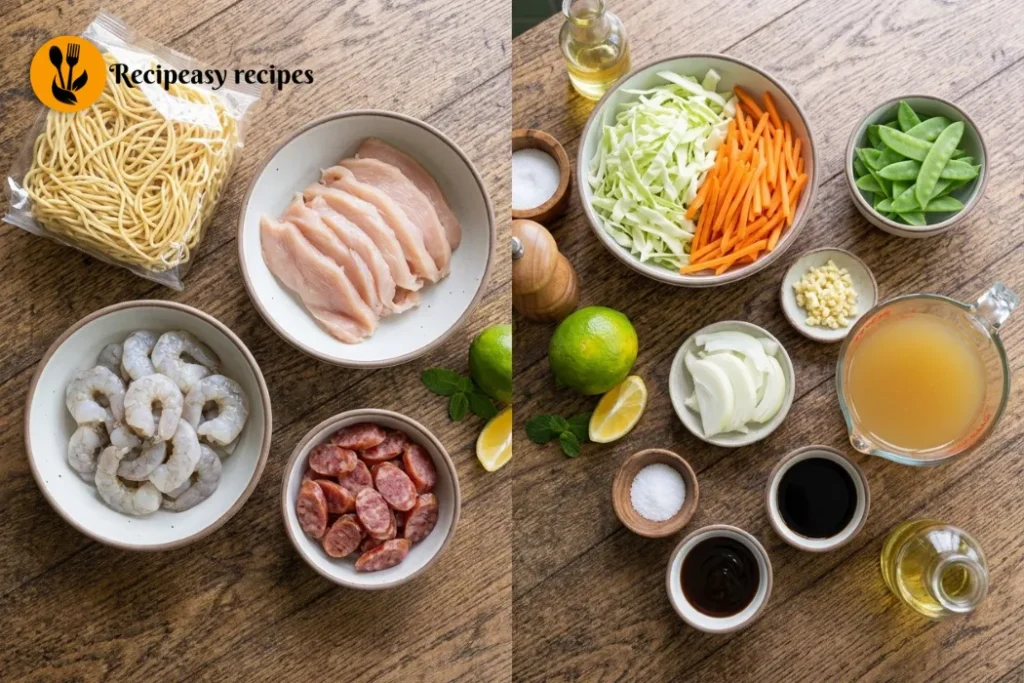
A quick note on ingredients: Since Pancit Canton noodles cook quickly, it’s worth having everything else prepped and ready before you even touch them. If you can’t find canton noodles locally, most Asian grocery stores carry them dried in the noodle aisle, and they keep well in the pantry for months.
How to Make It
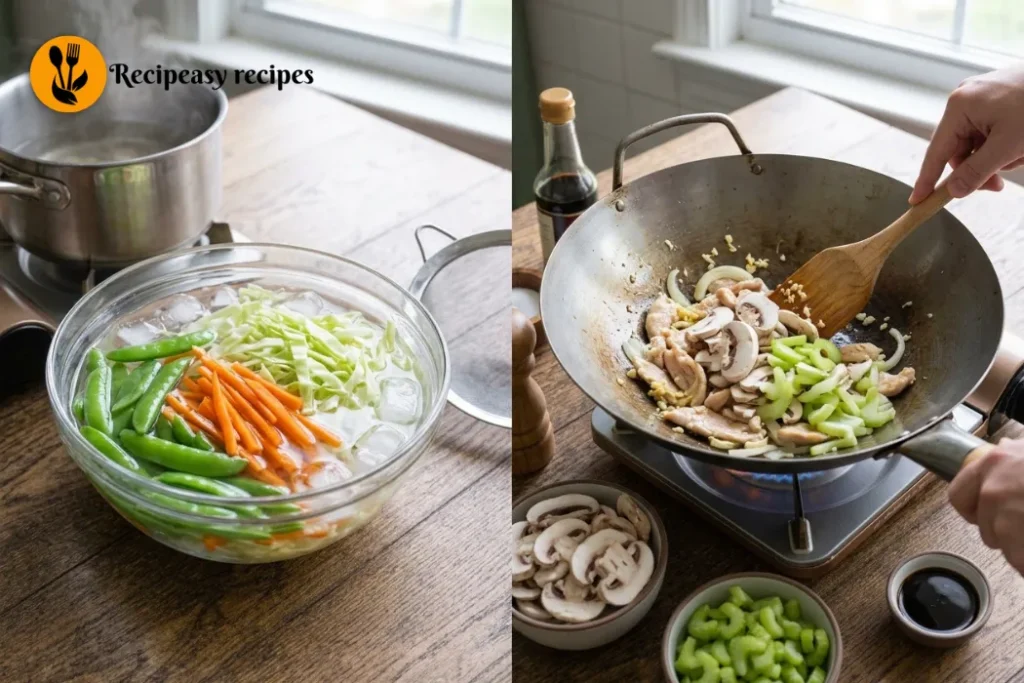
1. Prepare the vegetables
First, bring a pot of water to a boil.Then, add the snap peas, carrot, and cabbage. Cook them briefly, for about one minute.Next, move the vegetables into a bowl of ice-cold water. Leave them there for about two minutes.This quick step stops the vegetables from cooking too much. It also helps them keep their color and crunch.Drain the vegetables well and set them aside.
2. Cook the chicken
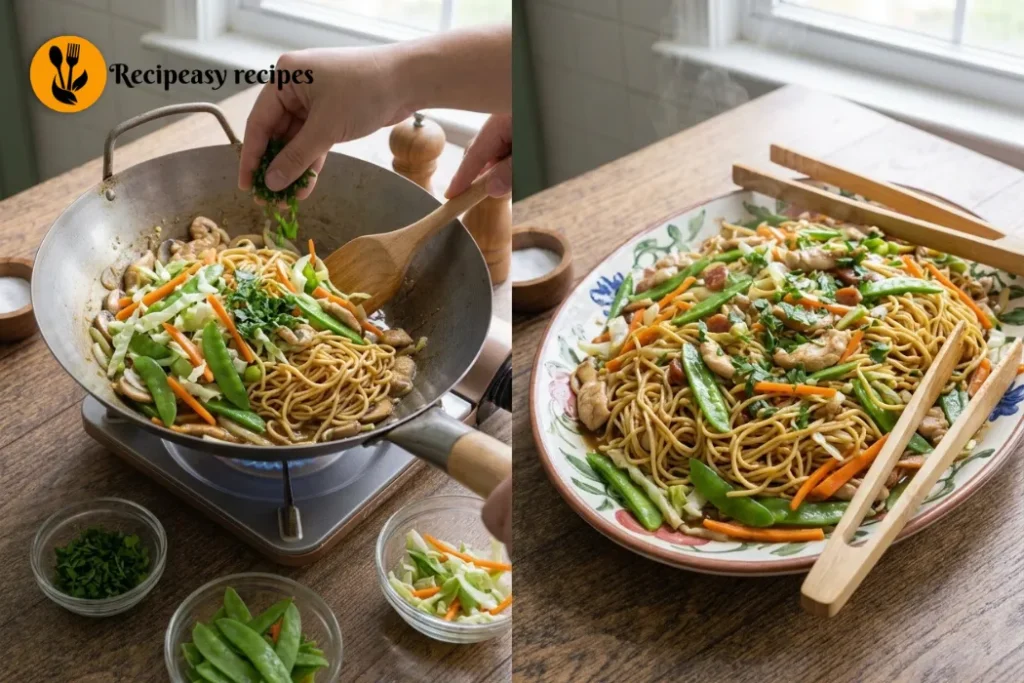
Next, heat the cooking oil in a large wok or wide pan.Add the garlic and onion. Cook until the onion starts to soften and the garlic smells good.Then, add the sliced chicken.Cook the chicken until it is lightly browned and cooked through. Since the chicken is sliced thinly, it should cook fairly quickly.After that, add the celery and sliced mushrooms. Cook for a short time until the vegetables begin to soften.
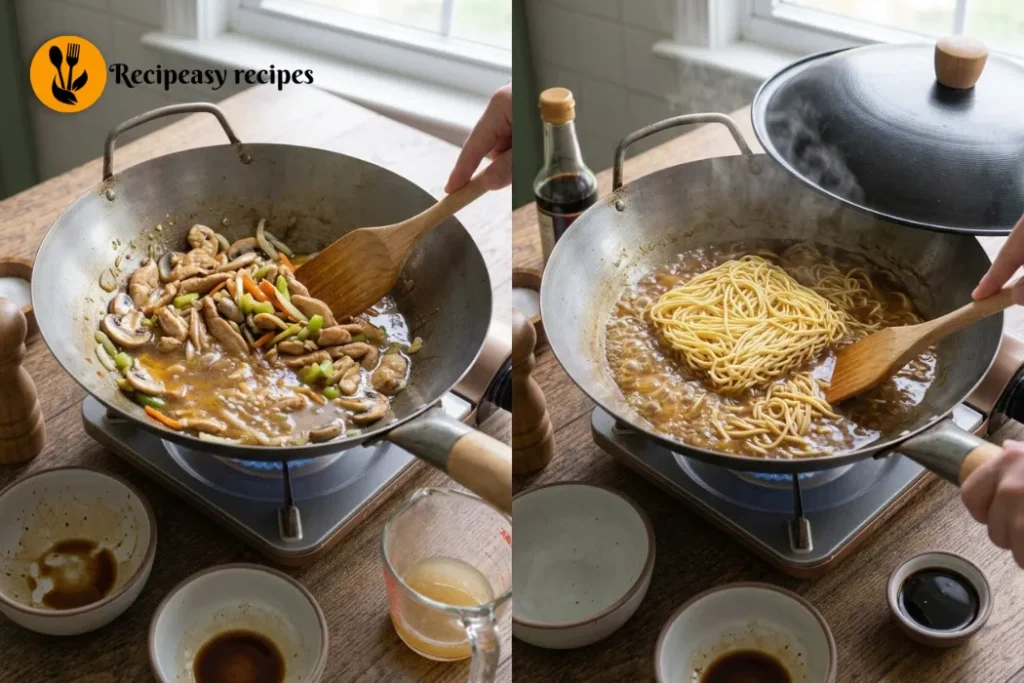
3. Add the sauce
Now, pour in the soy sauce and oyster sauce.Stir everything together so the chicken and vegetables are coated.Then, pour in the chicken broth. Add a little black pepper and bring the liquid to a gentle boil.At this point, taste the broth. If it needs more seasoning, you can adjust it before adding the noodles.
4. Add the noodles
Next, place the Canton noodles into the pan.Gently toss the noodles with the chicken, sauce, and broth. Avoid stirring too roughly because the noodles can break.Then, cover the pan and let the noodles cook and absorb the liquid.The noodles should become tender while still keeping their shape.If the noodles look too dry before they are tender, add a small amount of broth or water. Add it little by little so the noodles do not become soggy.
5. Add the vegetables
Once the noodles have absorbed most of the liquid, add the blanched vegetables.Toss everything together gently.Cook for another minute or two, just until the vegetables are heated through.Finally, add the chopped parsley and a little more black pepper if needed.Transfer the noodles to a large serving plate and serve while hot.
Pro Tips I’ve Picked Up Over the Years
Since overcooked noodles turn mushy fast, keep a close eye on them once they hit the broth. As soon as they’ve soaked up most of the liquid, they’re ready.Also, don’t skip prepping your ingredients ahead of time. Once the cooking starts, this dish moves quickly, and there’s very little downtime to chop things on the fly.
For an authentic Pancit Canton recipe, using both chicken and shrimp together gives you a more layered flavor than using just one protein alone. That said, feel free to use whichever you have on hand.
Additionally, a squeeze of calamansi right before eating brightens up the whole dish. It’s a small step, but it makes a real difference in the final flavor, cutting through the richness of the sauce.
Finally, if your noodles seem too dry after simmering, add a splash more broth rather than water. It keeps the flavor consistent instead of watering everything down.
Ingredient Substitutions and Variations
This Filipino noodle recipe is easy to adjust based on what’s in your fridge. For instance, you can swap the cabbage for bok choy, or add bell peppers for extra color and crunch.
Or, if you want a vegetarian version, simply skip the meat and shrimp, then add extra tofu and mushrooms instead. The sauce and noodles carry so much flavor on their own that it still tastes satisfying.
If you’re short on time, this easy Pancit Canton recipe also works well with pre-shredded coleslaw mix instead of chopping cabbage and carrots separately. Additionally, pork or beef strips can stand in for chicken if that’s what you have available.You can also try our vegetable lo mein noodles for extra flavour.
What to Serve With Pancit Canton
Pancit canton is often served alongside other Filipino dishes like lumpia or steamed rice, making it a great addition to a larger spread. It also works perfectly as a standalone meal, since it’s already packed with protein and vegetables.
For a full celebration-style table, pair it with a simple fruit salad or a light cucumber and tomato salad to balance out the richness of the noodles. Finish the meal with a classic Filipino dessert.
Storing and Reheating
Once cooled, transfer any leftovers to an airtight container and store them in the fridge for up to 3 days.
When reheating, a quick stir-fry in a hot pan with a splash of water or broth works best. This helps loosen the noodles back up, since they tend to stick together after chilling in the fridge. The microwave works in a pinch, but the texture holds up much better with a quick pan reheat.
Frequently Asked Questions
Can I use a different type of noodle? Yes, though the texture will be a bit different. Canton noodles have a distinct chewiness that other noodles, like rice noodles, won’t fully replicate.
Why did my noodles turn out mushy? This usually means they simmered too long in the broth. Since canton noodles cook fast, it’s best to pull them the moment they’ve absorbed most of the liquid.
Can I make this dish ahead of time? It’s best served fresh, since the noodles can soften more the longer they sit. However, you can prep your vegetables and protein a day in advance to save time on a busy night.
Is pancit canton the same as pancit bihon? No. Pancit bihon uses thin rice noodles, while pancit canton uses thicker wheat noodles, giving each dish a noticeably different texture and bite.
Can I freeze leftover pancit canton? It’s not ideal, since the noodles tend to turn soft and lose their texture after thawing. It’s really best enjoyed fresh or reheated within a few days.
Final Thoughts
At the end of the day, this pancit canton recipe is proof that some of the best comfort food comes from simple ingredients cooked with care. It’s the dish I keep coming back to, and I hope it becomes one you return to as well. So the next time you’re craving something hearty and homemade, give this one a try.
Whether you are making it for a regular family dinner or a special gathering, this pancit canton recipe gives you a comforting Filipino noodle dish that is easy to share and enjoy.
Frequently Asked Questions
Can I use a different type of noodle? Yes, though the texture will be a bit different. Canton noodles have a distinct chewiness that other noodles, like rice noodles, won’t fully replicate.
Why did my noodles turn out mushy? This usually means they simmered too long in the broth. Since canton noodles cook fast, it’s best to pull them the moment they’ve absorbed most of the liquid.
Can I make this dish ahead of time? It’s best served fresh, since the noodles can soften more the longer they sit. However, you can prepare your vegetables and protein a day in advance to save time on a busy night.
Is pancit canton the same as pancit bihon? No. Pancit bihon uses thin rice noodles, while pancit canton uses thicker wheat noodles, giving each dish a noticeably different texture and bite.
Can I freeze leftover pancit canton? It’s not ideal, since the noodles tend to turn soft and lose their texture after thawing. It’s really best enjoyed fresh or reheated within a few days.
Final Thoughts
At the end of the day, this pancit canton recipe is proof that some of the best comfort food comes from simple ingredients cooked with care. It’s the dish I keep coming back to, and I hope it becomes one you return to as well. So the next time you’re craving something hearty and homemade, give this one a try.
Pancit Canton Recipe (Authentic Filipino Noodles, Ready in 35 Minutes)
Course: Appetizers, Dinner, Lunch, Main CourseCuisine: FilipinoDifficulty: Medium4
servings15
minutes20
minutes550
kcalIngredients
Noodles & Protein
8 ounces canton noodles
1/2 pound chicken breast, thinly sliced
1/2 pound shrimp, peeled and deveined
4 ounces Chinese sausage, sliced (optional)
Vegetables
1 cup shredded cabbage
1 cup julienned carrots
1/2 cup snow peas
3 cloves garlic, minced
1 small onion, sliced
Sauce
2 tablespoons soy sauce
1 tablespoon oyster sauce
2 cups chicken broth
2 tablespoons vegetable oil
Salt, to taste
Black pepper, to taste
For Serving
Calamansi or lemon wedges
Directions
- Prepare the vegetables: Bring a pot of water to a boil. Add the snow peas, carrots, and cabbage and blanch for about 1 minute. Transfer them to ice-cold water for about 2 minutes, then drain well and set aside.
- Cook the chicken: Heat the vegetable oil in a large wok or wide pan. Add the garlic and onion and cook until softened and fragrant. Add the sliced chicken and cook until lightly browned and cooked through.
- Cook the additional vegetables: Add the celery and sliced mushrooms mentioned in the article and cook briefly until they begin to soften.
- Add the sauce: Pour in the soy sauce and oyster sauce and stir to coat the chicken and vegetables. Add the chicken broth and black pepper. Bring the liquid to a gentle boil and adjust the seasoning if needed.
- Add the noodles: Place the Canton noodles into the pan. Gently toss them with the chicken, vegetables, broth, and sauce. Cover the pan and allow the noodles to cook and absorb the liquid. If they become too dry before becoming tender, add a small amount of additional broth or water.
- Add the blanched vegetables: Once most of the liquid has been absorbed, add the blanched cabbage, carrots, and snow peas. Toss gently and cook for another 1–2 minutes.
- Finish and serve: Add chopped parsley and additional black pepper if desired. Transfer to a serving plate and serve hot with calamansi or lemon wedges.
Notes
- Prepare all ingredients before cooking because the dish comes together quickly.
- Avoid overcooking the noodles, as they can become mushy.
- Add broth a little at a time if the noodles become dry.
- Using both chicken and shrimp gives the dish a combination of flavors and textures.
- For a vegetarian version, omit the meat and shrimp and use extra tofu and mushrooms.
- Cabbage can be replaced with bok choy, and bell peppers can be added for extra color and crunch.

2 Comments