
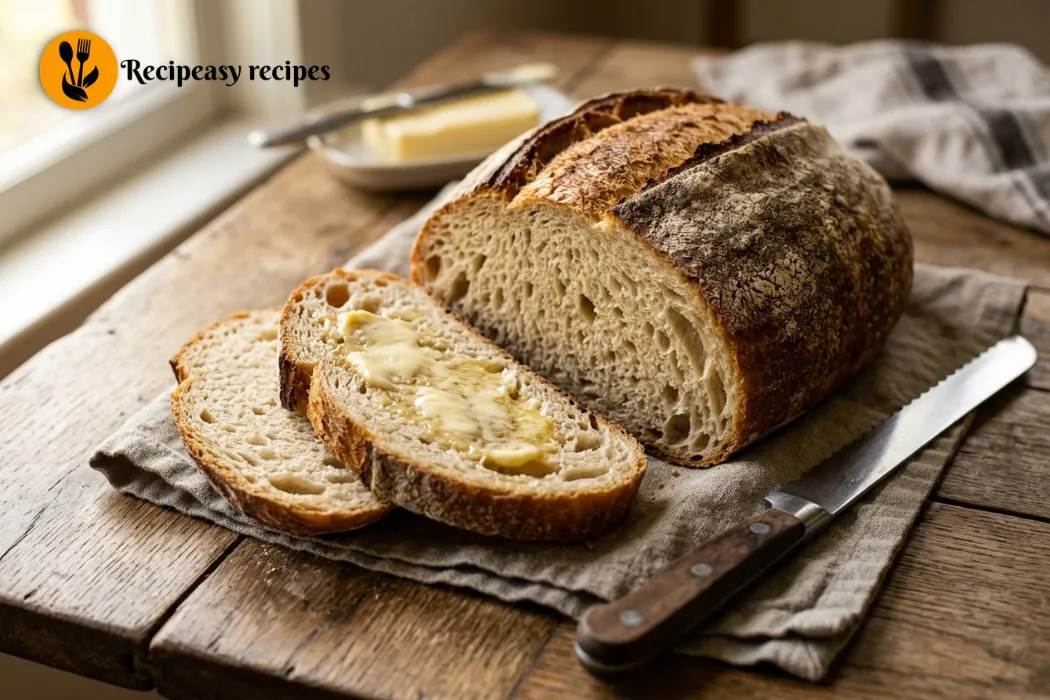
Soft Sourdough Sandwich Bread Recipe
If you’ve been feeding a sourdough starter and want something beyond another rustic boule, this Soft Sourdough Sandwich Bread Recipe is exactly what you need. It’s soft, slices clean, and holds together beautifully for sandwiches and toast alike.
Since it skips the fussy shaping and scoring that a lot of sourdough recipes call for, this loaf is a great starting point if you’ve felt intimidated by sourdough baking before.
Why This Bread Works So Well
First, baking it in a loaf pan means you don’t need to worry about shaping a perfect round or scoring a fancy pattern on top. Also, a touch of milk and butter in the dough gives it a softer crumb than a typical rustic sourdough, closer to what you’d want for a sandwich.
Plus, this sourdough sandwich bread stays soft for days, so it’s just as good on day three as it is fresh from the oven.
What You’ll Need
Here’s everything for this recipe. Nothing here requires special equipment.

- 1 cup active sourdough starter
- 1 cup warm milk
- 2 tablespoons melted butter
- 2 tablespoons honey
- 1 1/2 teaspoons salt
- 3 1/2 to 4 cups bread flour
Since soft sourdough bread depends on an active, bubbly starter, make sure yours has been fed within the last several hours before you start. A sluggish starter will give you a denser loaf.
How to Make Soft Sourdough Sandwich Bread
This recipe really comes down to two things: patience during the rise, and very little hands-on effort otherwise.
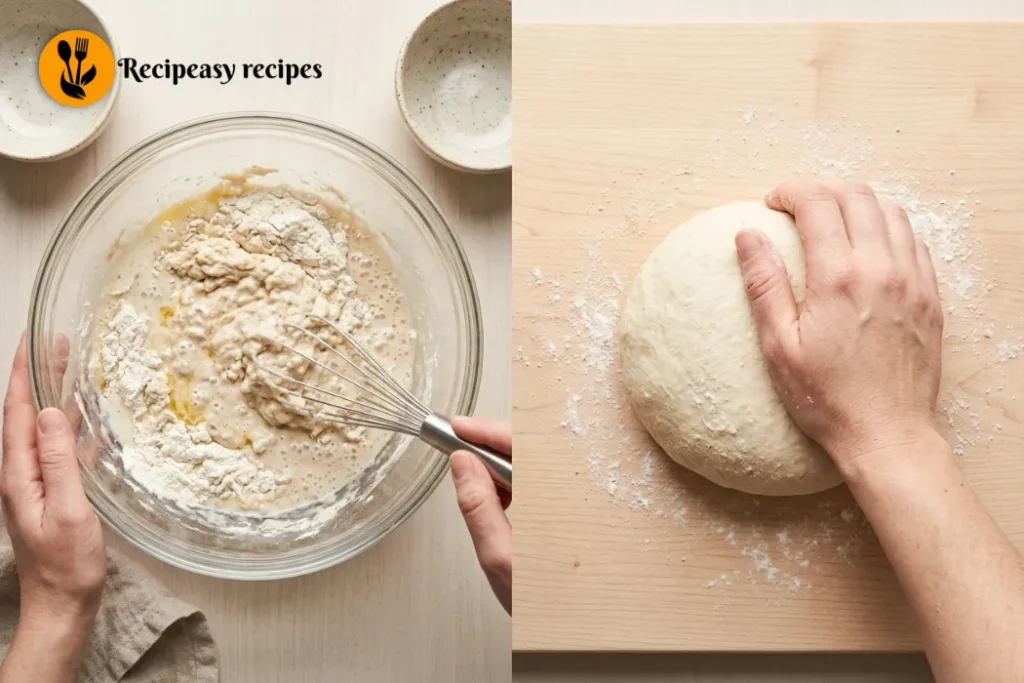
Step 1: Mix the dough.
In a large bowl, whisk together the starter, warm milk, melted butter, and honey. Then stir in the salt, followed by the flour, one cup at a time, until a shaggy dough forms.
Step 2: Knead briefly.
Turn the dough out onto a lightly floured surface. Knead for about 5 minutes, just until it comes together into a smooth, slightly tacky ball.
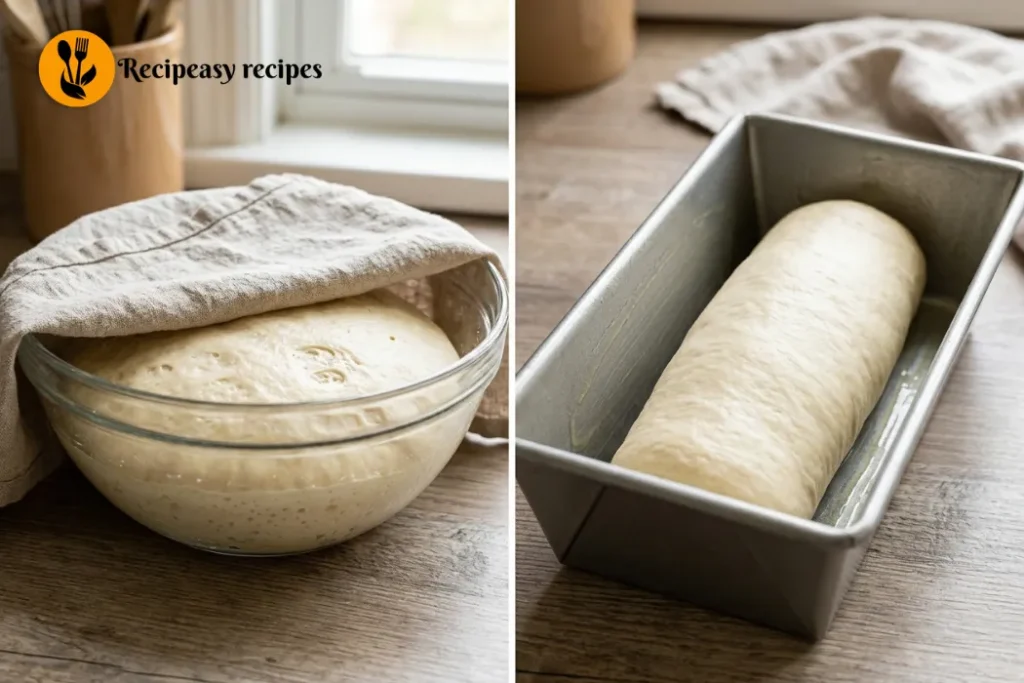
Step 3: Let it bulk rise.
Place the dough in a lightly oiled bowl, cover it, and let it rise at room temperature for 6 to 8 hours, or until it’s noticeably puffy. Since sourdough rises more slowly than yeasted bread, don’t rush this step.
Step 4: Shape the loaf.
Once risen, gently deflate the dough and shape it into a log. Then place it seam-side down into a greased 9×5 inch loaf pan.
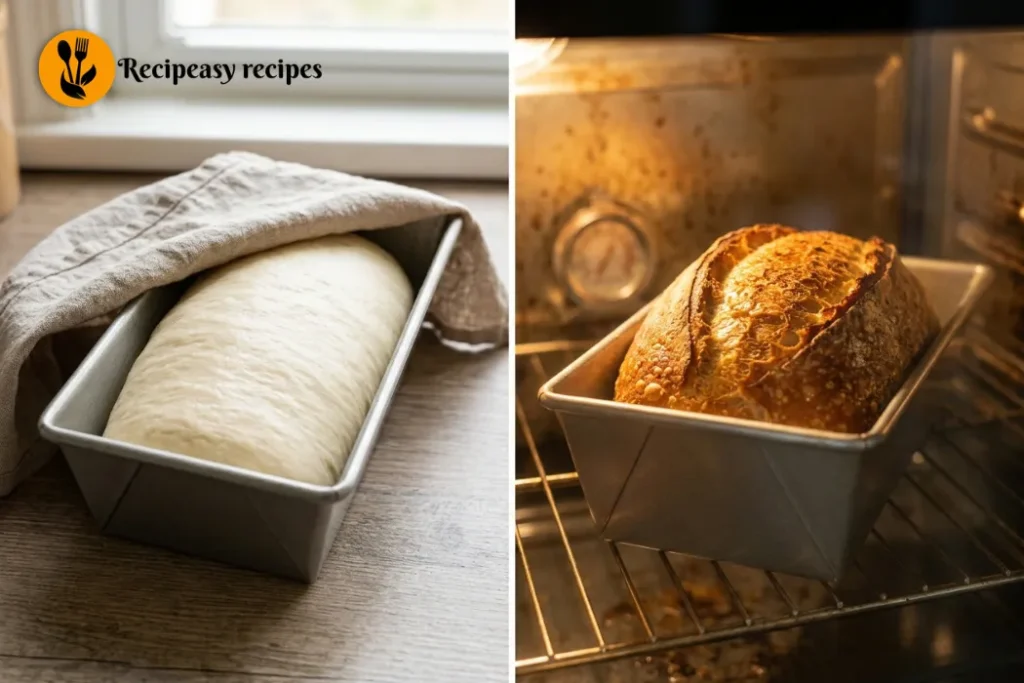
Step 5: Let it rise again.
Cover the pan loosely and let the dough rise until it just crowns the top of the pan, about 2 to 4 hours depending on the warmth of your kitchen.
Step 6: Bake.
Preheat your oven to 375°F. Bake the loaf for 35 to 40 minutes, until it’s golden brown and sounds hollow when tapped on the bottom.
Step 7: Cool before slicing.
Let the bread cool in the pan for about 10 minutes, then transfer it to a wire rack. Try to wait until it’s fully cooled before slicing, since warm bread can compress under the knife.
Tips for the Best Loaf
Since sourdough starters vary in strength, your rise times may run longer or shorter than what’s listed here. So keep an eye on the dough’s appearance rather than the clock.
Also, don’t skip greasing the pan well. A soft, buttery dough like this can stick more than a lean, rustic loaf would.
For an easy sourdough bread recipe that fits into a busy schedule, mix the dough in the evening and let it bulk rise overnight at room temperature. Then shape it in the morning and bake once it’s crowned the pan.
Additionally, if your kitchen runs cold, place the covered dough near a warm oven or on top of the fridge to help it rise a little faster.
Using Sourdough Discard Instead
If you’d rather not use an active starter, this recipe can also work with sourdough discard bread methods, though you’ll need to add a small amount of instant yeast to help it rise, since discard alone won’t have enough lift on its own. Simply sprinkle in about 1 teaspoon of instant yeast along with the flour, and the rise times will shorten considerably.
Storing Your Bread
Once completely cooled, store the loaf in a bread bag or airtight container at room temperature for up to 4 days.
For longer storage, slice the bread first, then freeze it in a freezer bag for up to 3 months. That way, you can pull out just a slice or two at a time whenever you need it.
What to Serve With It
This bread works well for just about anything. Try it as a base for a classic sandwich, toasted with butter and jam, or alongside a bowl of soup for dipping.
It also makes excellent French toast, since the soft crumb soaks up custard beautifully without falling apart.
Common Questions
Can I use all-purpose flour instead of bread flour?
Yes, though the texture will be slightly less chewy. Bread flour has more protein, which gives the loaf better structure for slicing.
Why didn’t my dough rise much?
This usually means your starter wasn’t active enough. Make sure it’s bubbly and has roughly doubled in size after its last feeding before using it.
Can I make this bread dairy-free?
Absolutely. Swap the milk for a plant-based option and use a neutral oil in place of the butter.
Why is my bread dense?
This is often a sign the dough didn’t rise long enough. Since sourdough is slower than yeasted bread, it needs more time, especially in a cooler kitchen.
Final Thoughts
At the end of the day, this Soft Sourdough Sandwich Bread Recipe proves that sourdough baking doesn’t have to be complicated or intimidating. It’s soft, reliable, and turns your sourdough starter into something the whole family will actually reach for. So the next time you’re looking for a way to use your starter, give this loaf a try.