
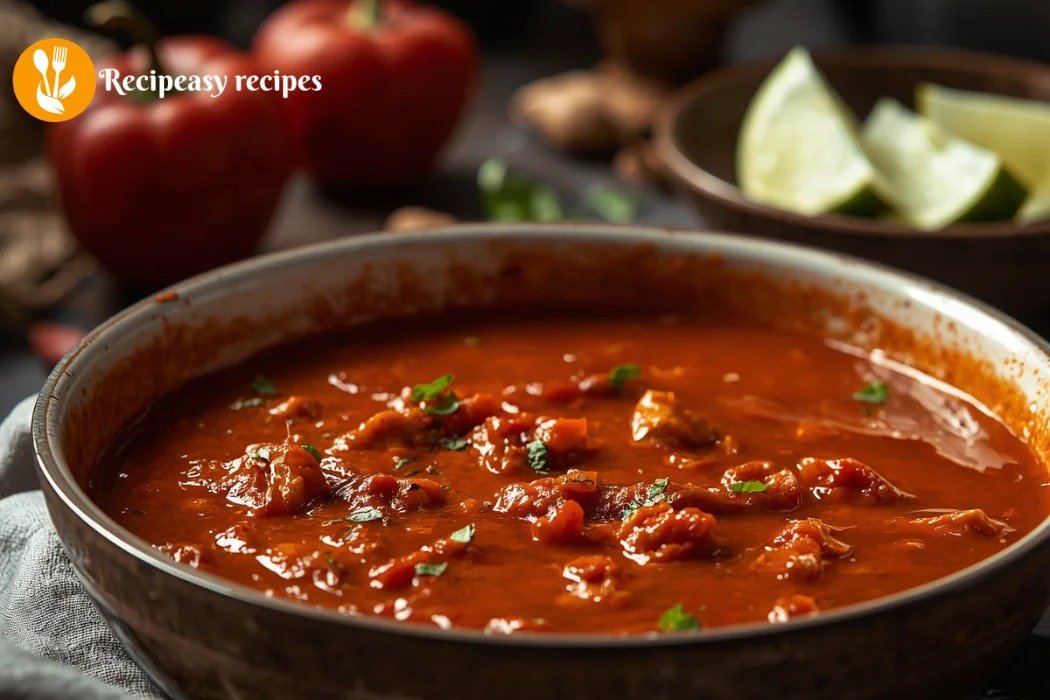
Red Chile That Actually Tastes Like Something
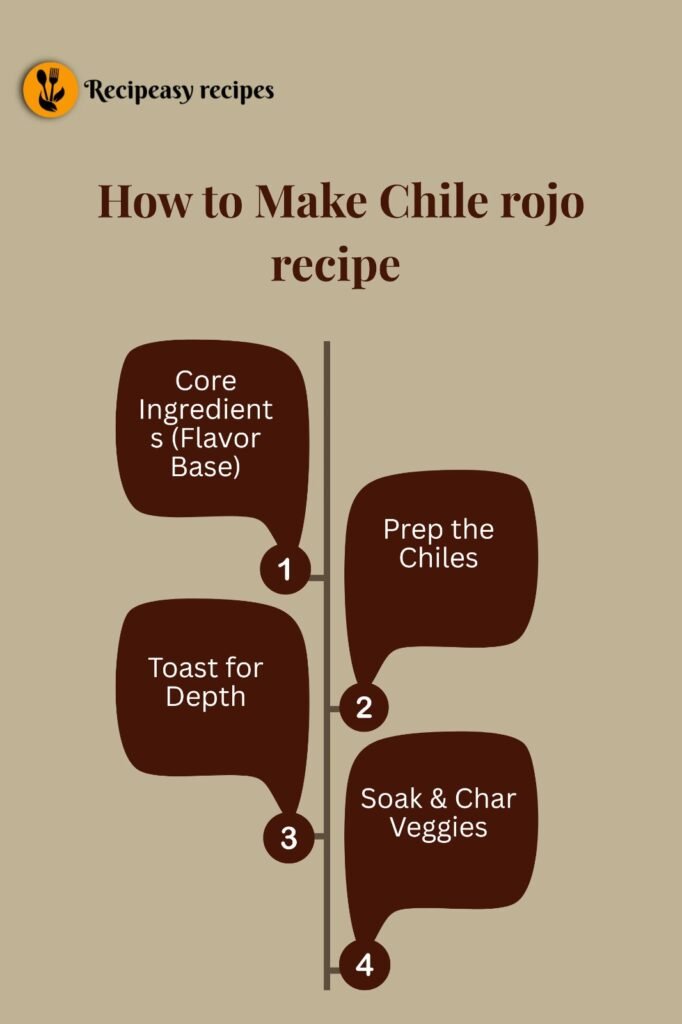
Quick tip before anything else: if you’re using pre-ground chili powder from a small jar that’s been sitting in your cabinet for eight months, this recipe won’t reach its potential. That’s not a criticism I cooked that way for years. But the moment I switched to whole dried chiles and toasted them myself, the difference was so obvious I felt a little embarrassed about all the batches I’d made before.
This chile rojo recipe is built on a few humble ingredients and one simple technique. Once you understand the logic behind it, you can make it with your eyes closed.
Let’s Talk About the Chiles First
The two dried chiles that form the backbone of a good red chile sauce are guajillo and ancho. Guajillo brings a bright, slightly tannic heat with hints of dried fruit. Ancho is darker, earthier, almost chocolatey at the edges. Together they create something that neither could do alone.
For a batch that serves 4-6 people, you’ll want:
5 guajillo chiles 2 ancho chiles 4 Roma tomatoes 4 garlic cloves (unpeeled) Half a white onion 1.5 cups of water or light chicken broth 1 teaspoon cumin Salt to taste 1 tablespoon neutral oil
That’s genuinely it. The power here comes from technique, not from a long ingredient list.
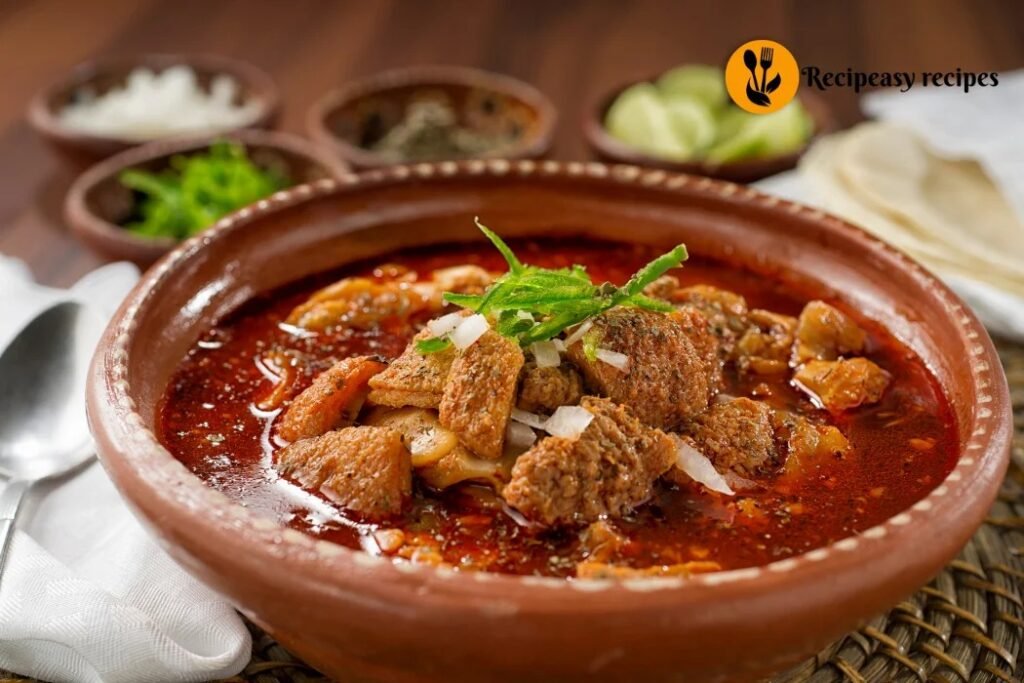
Toasting Changes Everything
Pull the stems off your dried chiles, shake or scrape out the seeds, and open them as flat as you can. Heat a dry comal or heavy skillet over medium heat no oil and press each chile flat against the surface for about 15-20 seconds per side. You’ll smell something deep and smoky, almost like dark chocolate mixed with dried herbs. That’s exactly what you want.
The first time I did this, I left them on too long and the whole kitchen smelled bitter and slightly burnt. The chiles had gone from deep red to almost black on the edges. The resulting sauce tasted acrid no matter how much I tried to fix it. So keep a close eye you just want them to become fragrant and slightly puffed, not charred.
Once toasted, drop them into a bowl and cover with very hot water. Let them soak for 20-25 minutes until completely soft and pliable.
Meanwhile, in that same dry pan, add your tomatoes, the halved onion, and the garlic cloves still in their skins. Let everything blister and char over medium-high heat, turning occasionally. This takes about 12-15 minutes and it’s one of those steps that smells almost better than the finished dish. The tomatoes collapse slightly and get these dark, jammy spots that add sweetness and body to the final sauce.
Blending and the Texture Question
Once your soaked chiles are soft, drain them and add them to a blender. Peel the garlic cloves and toss those in too, along with the tomatoes, onion, cumin, and about a cup of your soaking liquid or broth. Blend on high until completely smooth a full 60 seconds, not just a quick pulse.
Here’s where I used to make a common mistake: I’d blend, taste it straight, and think something was off. And it was because uncooked blended chile sauce tastes raw and flat. It needs to be fried.
Heat your oil in a medium saucepan over medium-high heat until it shimmers. Pour the blended sauce in all at once. It will bubble and pop aggressively for a few seconds, so have a lid nearby and pour carefully. This step called “seasoning” the sauce in some older Mexican cookbooks is what transforms it. The raw edges cook off, the color deepens from bright red-orange to a darker brick red, and the whole thing smells completely different. Richer. More settled.
Let it cook uncovered, stirring occasionally, for about 8 minutes. Then add the remaining broth or soaking liquid, lower the heat, and simmer for another 10 minutes. Season with salt.
What This Sauce Actually Tastes Like
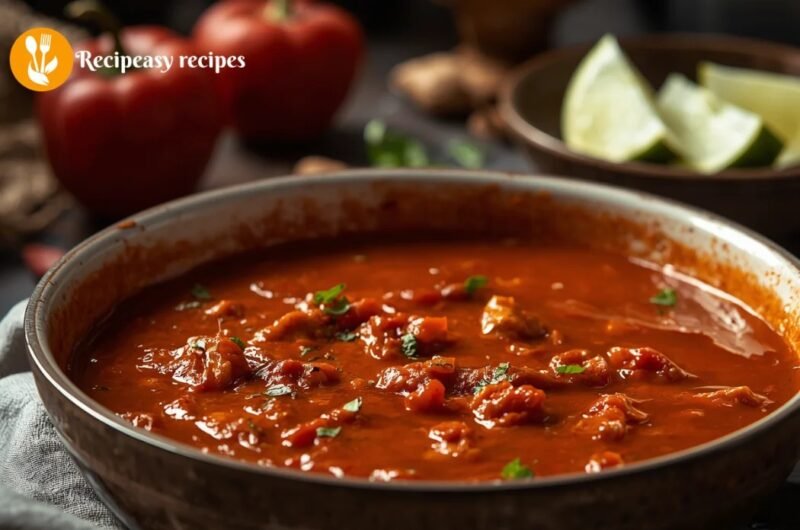
There’s a slight earthiness from the anchos, a gentle fruit-forward heat from the guajillos, and this underlying smokiness that you can’t quite place but definitely notice. The tomatoes round out any sharpness, and the charred onion and garlic add something almost savory and umami-adjacent without being heavy.
It’s not a salsa it’s thicker and more complex than that, meant to be used as a braising liquid or a finishing sauce rather than a dip. That said, I’ve absolutely spooned it over scrambled eggs and had no regrets.
How I Actually Use This
The most traditional way to use chile rojo is for braising meat pork shoulder especially, but also chicken thighs, beef chuck, or even just potatoes and vegetables if you’re keeping it plant-based. You brown the meat first, then either submerge it in the sauce and bake low and slow, or simmer it covered on the stovetop for an hour or more.
Also excellent: enchiladas. Just dip your corn tortillas in the warm sauce before filling and rolling them, then pour more over the top before baking. I made this for the first time for a Sunday family lunch and my uncle asked if I’d gotten the sauce somewhere. That felt like winning.
Storage and a Few Honest Notes
This sauce keeps in the fridge for about a week in a sealed container, and it freezes beautifully for up to three months. I usually make a double batch because the effort is basically the same and future-me is always grateful.
If your sauce tastes too bitter after cooking, a small pinch of sugar fixes it quickly. If it’s too thick, just add broth a splash at a time. And if it’s not spicy enough for your taste, a single dried chile de arbol blended in adds real heat without changing the overall flavor profile too much.
Summary
This chile rojo recipe rewards a little patience and attention, but it’s not fussy. Once you’ve made it two or three times, it becomes one of those things you can pull together without thinking too hard and that’s when it really starts to feel like your own.
FAQs
1. What is a chile rojo recipe made of?
A traditional chile rojo recipe is made with dried chiles like guajillo and ancho, along with tomatoes, garlic, onion, and spices. The key flavor comes from toasting and blending the chiles before cooking the sauce.
2. Why does my chile rojo sauce taste bitter?
Bitterness usually happens when the dried chiles are over-toasted or burned. Toast them lightly just until fragrant, not blackened, to avoid a harsh flavor.
3. Can I make chile rojo recipe without soaking the chiles?
Soaking is important because it softens the chiles and helps them blend smoothly. Skipping this step can result in a gritty texture and uneven flavor.
4. How spicy is this chile rojo recipe?
This chile rojo recipe is mildly spicy with a balanced heat. Guajillo chiles add gentle warmth, while ancho chiles bring depth without much spice. You can add chile de árbol for more heat.
5. How do you use chile rojo sauce?
Chile rojo sauce is commonly used for braising meats like pork or chicken, making enchiladas, or even as a flavorful topping for eggs, vegetables, or rice dishes.
Red Chile That Actually Tastes Like Something
Course: Sauce / Main BaseCuisine: MexicanDifficulty: Easy6
servings10
minutes25
minutes120
kcalThis chile rojo recipe uses toasted guajillo and ancho chiles for a deep, smoky flavor. Learn the simple technique that transforms basic ingredients into a rich, authentic sauce.
Ingredients
5 dried guajillo chiles (stems & seeds removed)
2 dried ancho chiles (stems & seeds removed)
4 Roma tomatoes
4 garlic cloves (unpeeled)
½ white onion
1.5 cups water or light chicken broth
1 teaspoon cumin
Salt to taste
1 tablespoon neutral oil
Directions
- Toast the chiles: Heat a dry skillet over medium heat. Press chiles flat and toast for 15–20 seconds per side until fragrant (do not burn).
- Soak the chiles: Place toasted chiles in a bowl and cover with hot water. Let soak for 20–25 minutes until soft.
- Char the vegetables: In the same skillet, cook tomatoes, onion, and unpeeled garlic over medium-high heat until blistered and slightly charred (about 12–15 minutes).
- Blend everything: Drain chiles. Peel garlic. Add chiles, tomatoes, onion, garlic, cumin, and 1 cup soaking liquid (or broth) to a blender. Blend until completely smooth.
- Cook the sauce: Heat oil in a saucepan over medium-high heat. Carefully pour in the sauce (it may splatter). Cook for about 8 minutes, stirring occasionally.
- Simmer and finish: Add remaining liquid, reduce heat, and simmer for 10 minutes. Season with salt to taste.
Notes
- Don’t over-toast chiles — it causes bitterness
- Always cook the blended sauce (raw flavor disappears after frying)
- Add a pinch of sugar if sauce tastes slightly bitter
- Adjust thickness with broth as needed


One Comment