
Chile Verde Sopita Recipe That Feels Like Comfort in a Bowl
The first time I made a chile verde sopita, I honestly wasn’t sure if I was making a soup or a stew. It kind of lands somewhere beautifully in between, and that’s exactly what makes it so special.
My abuela used to make this on Sunday mornings when the weather turned cold. She never really measured anything a handful of this, a splash of that so when I finally sat down to recreate it in my own kitchen, there was definitely some trial and error involved. But after a few rounds of tweaking, I landed on a version that feels authentic to what I grew up eating, and I’m genuinely excited to share it.
So let me walk you through how this came together for me.
What You’ll Actually Need
The ingredient list here is pretty simple, which is one of the reasons this is such an easy weeknight dish. Nothing fancy. Nothing you need to hunt down at a specialty store.
You’ll need about a pound of pork shoulder or butt, cut into small cubes — don’t go too lean here, the fat adds a lot of flavor. Then grab 4 to 5 tomatillos (husked and rinsed), 2 or 3 Anaheim or Hatch green chiles, one jalapeño if you want a little heat, half a white onion, three garlic cloves, and a handful of fresh cilantro. For the sopita part — the small pasta that makes this a real soup — you’ll want about half a cup of fideo or any thin broken pasta. Also have chicken broth on hand, roughly four cups, and a bit of cumin, salt, and pepper.
One thing I learned the hard way: don’t skip roasting the chiles and tomatillos. I thought I could save time by just tossing them raw into the blender. The flavor was flat. Totally different dish. So go ahead and broil them for about 8 minutes until they’re charred in spots. It makes a massive difference.

Starting with the Meat
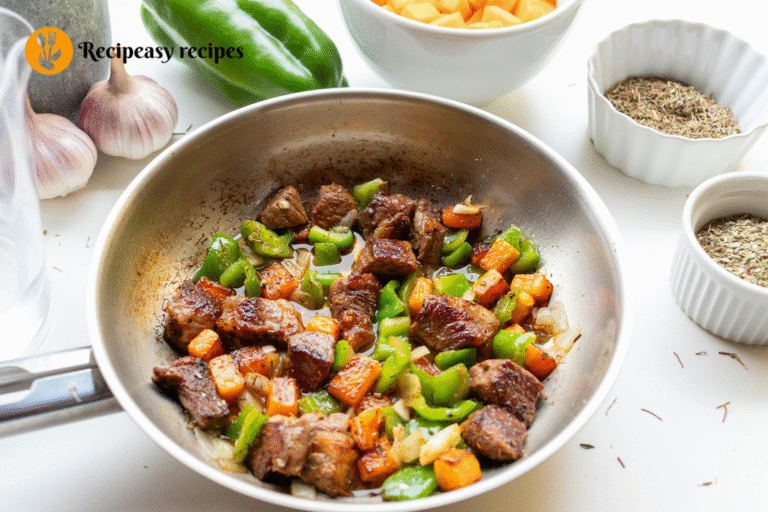
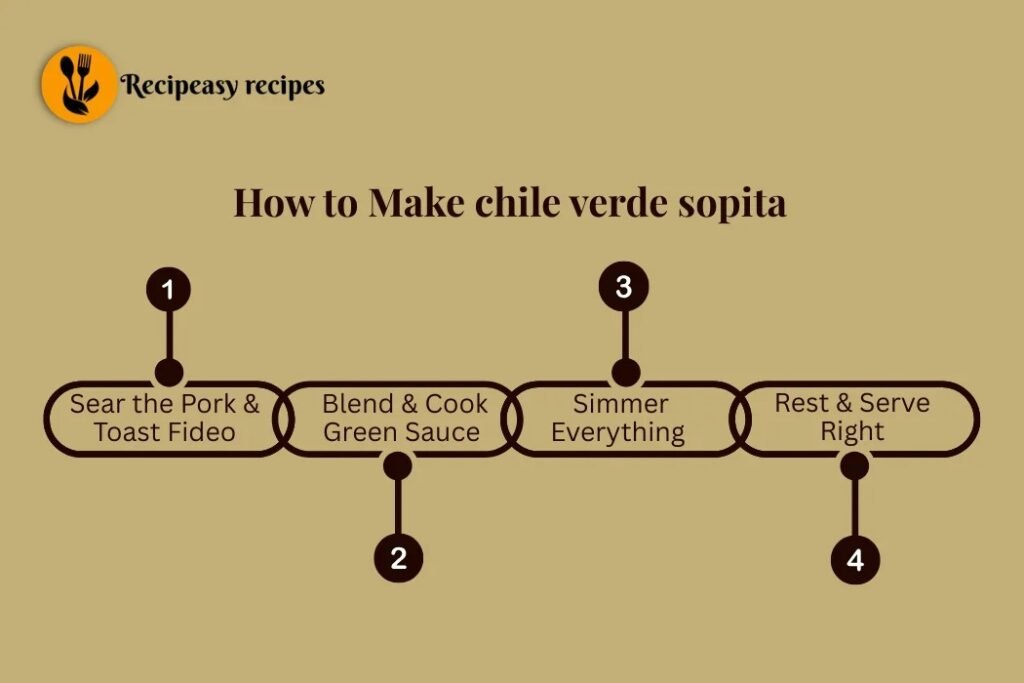
Heat a couple tablespoons of oil in a heavy pot I use my Dutch oven for this over medium-high heat. Season the pork with salt, pepper, and a pinch of cumin, then sear it in batches. Don’t crowd the pan. I made that mistake once and ended up steaming the meat instead of browning it. You want those golden edges.
Once the pork is browned, set it aside and in that same pot, toast the dry fideo for about two minutes, stirring constantly. It’ll turn a light golden color and start smelling nutty. This step is easy to rush, so keep an eye on it it can go from toasted to burnt pretty fast.
Building the Green Sauce
While the meat was resting, I blended the roasted tomatillos, chiles, jalapeño, a quarter of the onion, and two garlic cloves with about half a cup of broth. The smell alone is worth making this recipe. Tangy, smoky, a little sharp from the raw jalapeño it fills the whole kitchen.
Pour that green sauce directly into the pot where you toasted the pasta. It’ll hiss and sputter a bit, which is totally normal. Let it cook for about three to four minutes, stirring it around so the pasta starts absorbing the flavor and the sauce deepens in color.
Then add the pork back in, pour in the rest of the broth, and bring everything to a gentle boil. After that, reduce the heat and let it simmer uncovered for about 20 to 25 minutes. The pasta will swell, the pork will get tender, and the broth will thicken slightly into something that coats a spoon just a little.
A Few Things I Noticed Along the Way
The first time I tested this chile verde sopita recipe, the broth was too thin because I added too much liquid to compensate for the pasta. So now I hold back about half a cup of broth and only add it if things look too thick. The pasta absorbs more than you’d expect.
Also, and this is something I don’t see mentioned often let the soup rest for five minutes before serving. I know you’ll want to dig in immediately, but the flavors really come together in that short resting time. The green sauce mellows slightly, the pork loosens up, and everything just settles.
Taste before serving and adjust the salt. The broth you use will vary in saltiness, so don’t add salt early on wait until the end.
Serving It
I ladle it into deep bowls with a few slices of avocado on top, a squeeze of lime, and extra cilantro. A warm flour tortilla on the side is pretty much mandatory in my house. Sometimes I’ll add a little crumbled queso fresco if I have it, but honestly, it doesn’t need it.
This is the kind of meal that feels like it took way longer than it did. It’s deeply traditional in spirit roasted chiles, slow-simmered pork, toasted pasta but totally doable on a regular weeknight. Once you make it once, you’ll get the feel for it, and then it becomes one of those things you can pull together almost from memory.
Conclusion
That’s kind of the whole beauty of this dish. It’s humble, it’s comforting, and it tastes like someone actually cared when they made it because with a recipe like this chile verde sopita, you really do.

Chile Verde Sopita Recipe That Feels Like Comfort in a Bowl
Course: Soup / Main DishCuisine: MexicanDifficulty: Easy5
servings10
minutes30
minutes350
kcalIngredients
1 lb pork shoulder (cut into small cubes)
4–5 tomatillos (husked & rinsed)
2–3 green chiles (Anaheim or Hatch)
1 jalapeño (optional)
½ white onion
3 garlic cloves
½ cup fideo or thin pasta
4 cups chicken broth
1 teaspoon cumin
Salt & black pepper (to taste)
Fresh cilantro
Oil (for cooking)
Directions
- Roast the vegetables: Broil tomatillos and chiles for about 8 minutes until slightly charred.
- Sear the pork: Heat oil in a pot. Season pork and cook until browned on all sides. Remove and set aside.
- Toast the pasta: In the same pot, add dry fideo and toast for 1–2 minutes until lightly golden.
- Blend the green sauce: Blend roasted tomatillos, chiles, jalapeño, onion, garlic, and ½ cup broth until smooth.
- Build the soup: Pour the sauce into the pot and cook for 3–4 minutes. Add pork back in along with remaining broth.
- Simmer: Bring to a gentle boil, then reduce heat and simmer uncovered for 20–25 minutes until pasta is tender and pork is cooked through.
- Finish and serve: Taste and adjust salt. Let rest for 5 minutes, then serve with cilantro, lime, and optional toppings.
Notes
- Roast tomatillos for deeper flavor (don’t skip)
- Toasting pasta adds a nutty taste
- Add broth gradually — pasta absorbs a lot
- Let the soup rest before serving for better flavor