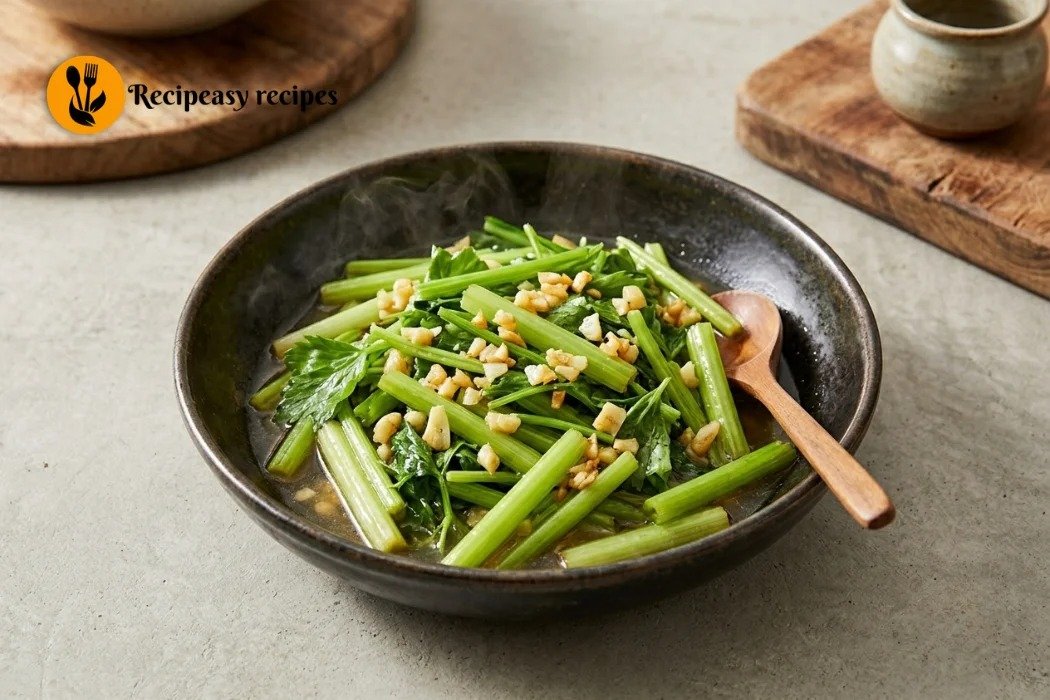
Chinese Celery Recipe ( Soup Ideas for Easy Cooking)
Most people walk right past Chinese celery at the market. Thin stalks, lots of leaves, nothing flashy. But once you cook it, you get it immediately.
This chinese celery recipe is fast, simple, and full of flavor. You only need a handful of ingredients. And it’s ready in about 15 minutes.
Chinese Celery vs Regular Celery – What’s the Difference?
They look similar but they’re pretty different.
Regular celery has thick, wide stalks. Chinese celery (also called leaf celery) has thin hollow stalks and way more leafy tops. The flavor is much stronger – almost herby, like a cross between celery and parsley.
Also, you don’t eat Chinese celery raw. It’s always cooked. And once it hits the pan, it softens quickly and turns slightly sweet.
So if you’ve only had regular celery, this is going to taste different in a really good way.
Where to Find It
Check your nearest Asian grocery store. It usually sits near the herbs – not with the regular vegetables.
Sometimes it’s labeled leaf celery instead of Chinese celery. Either one works. Just look for bright green stalks with fresh, perky leaves. Avoid anything that looks wilted or yellowing.
The Simple Stir Fry (3 Ingredients)
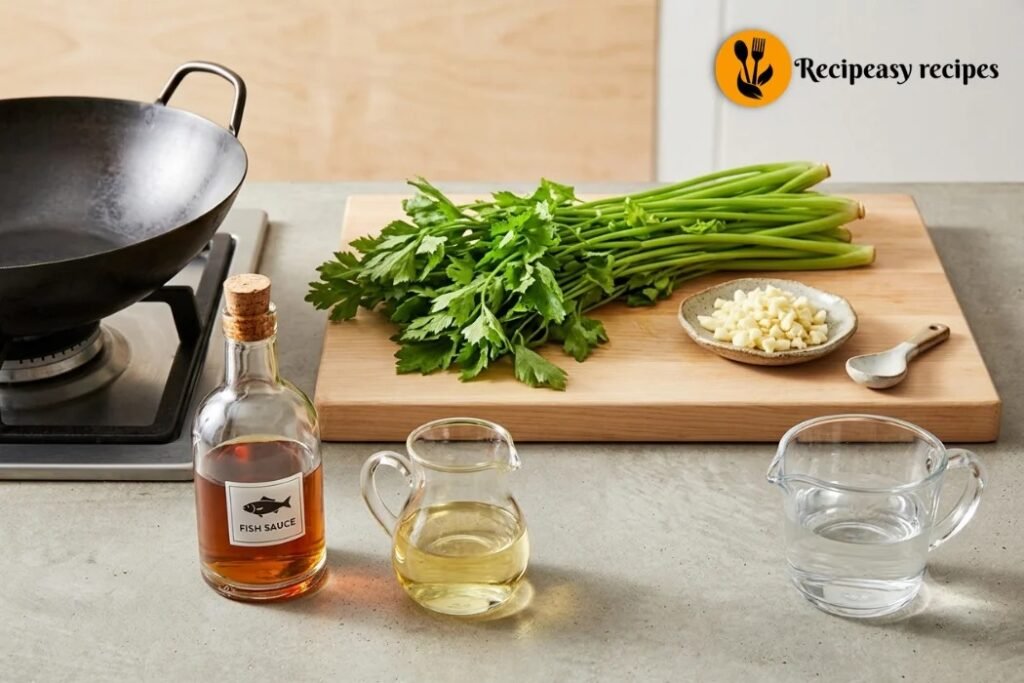
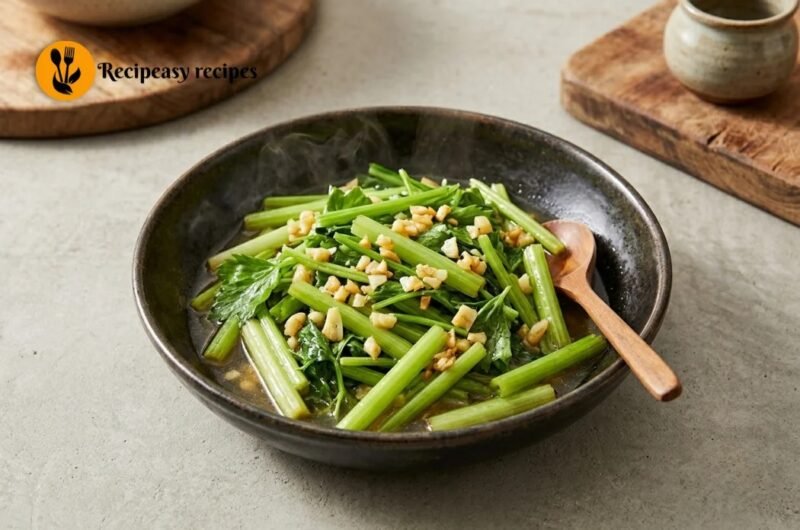
This is the most basic – and honestly one of the best – ways of learning how to cook Chinese celery. Just garlic, fish sauce, and the celery itself.
What you need:
- 1 bunch Chinese celery
- 6–8 garlic cloves, minced
- 1 tablespoon fish sauce
- 1 tablespoon neutral oil
- ¼ cup water
How to make it
First, trim the celery. Pull off any tough outer strings on the stalks. Slice on the diagonal into 2-inch pieces. Keep the leafy tops – you’ll add those at the very end.
Next, heat a pan or wok over medium-high heat. Add the oil. Once hot, add the garlic and stir for about 30 seconds until it smells fragrant and starts turning golden.
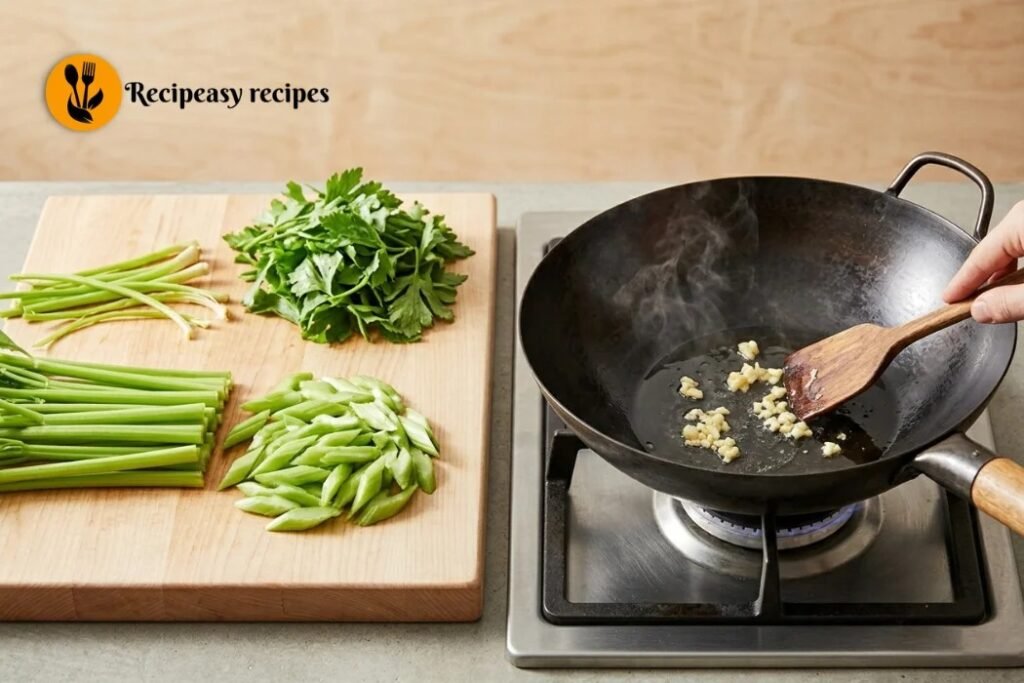
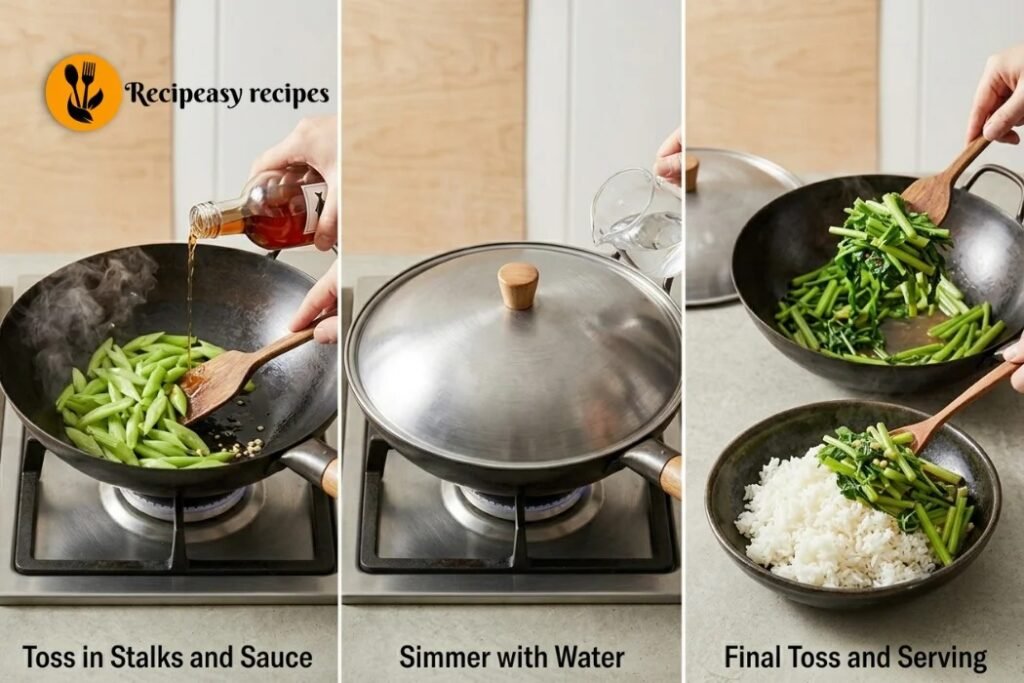
Then add the celery stalks. Pour in the fish sauce. Stir fry for 2 minutes.
Add the water. Turn the heat down to medium. Cook for another 2 minutes. Toss in the leaves. Stir everything together and cook for one more minute.
Remove from heat and serve right away. Best with a bowl of steamed rice.
Want to Add Protein?
This dish is great on its own. But it’s also really easy to bulk it up.
With chicken: Slice boneless chicken thighs into thin strips. Cook them in the pan first until just done, then remove. Make the garlic and celery the same way, add the chicken back at the end. That’s your Chinese celery chicken stir fry simple and satisfying.
With tofu: Press firm tofu until dry, then cube it. Pan-fry until golden on the outside. Set aside. Cook the celery, then fold the tofu in with the sauce at the end. That version is a solid Chinese celery with tofu stir fry hearty, filling, and fully plant-based.
Both options work great without changing the base recipe much at all.
Make It Into a Soup
Sometimes you’re just in the mood for something warm and brothy.
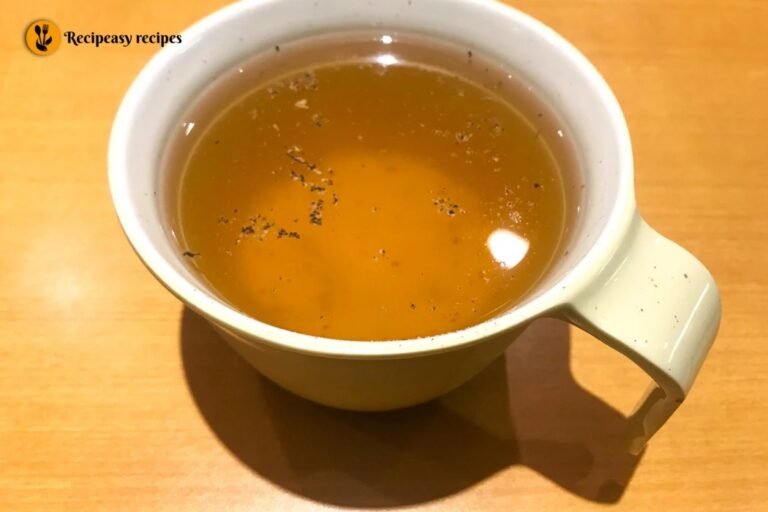
For a quick Chinese celery soup recipe, bring 4 cups of chicken or vegetable broth to a simmer. Add a couple of smashed garlic cloves. Drop in sliced Chinese celery stalks and cook for about 5 minutes. Season with soy sauce, a little white pepper, and a drizzle of sesame oil.
Add some soft tofu or a beaten egg stirred in slowly for extra body. It’s light, clean, and really comforting.
The Chinese Celery Garlic Recipe – With a Sauce
If you want something a little richer than the 3-ingredient version, this one is worth it.
Sauce ingredients:
- 1½ tablespoons soy sauce
- 1 teaspoon oyster sauce
- ½ teaspoon sugar
- 1 teaspoon sesame oil
- 2 teaspoons cornstarch
- 3 tablespoons water
Mix the sauce ingredients together in a small bowl.
Cook the garlic in oil as usual. Add the celery and stir fry for 2 minutes. Give the sauce a stir (cornstarch sinks), then pour it in. Toss everything together until the sauce thickens and coats the celery. Done.
It comes out glossy, savory, and a little sweet. Really good over rice or noodles.
Tips That Actually Help
Don’t overcook it. Chinese celery goes from crisp to mushy fast. Four to five minutes total in the pan is usually enough. Keep the heat up and keep it moving.
Use the leaves. They’re packed with flavor and cook in just one minute. Tossing them in at the very end is the move.
Fish sauce vs soy sauce. Fish sauce gives a deeper, more savory flavor. But soy sauce works great too – especially if you’re keeping things vegetarian. The dish tastes different but still really good.
More garlic is never wrong. Seriously. This is a Chinese celery garlic recipe at heart, so don’t be shy.
Why It’s Worth Cooking Regularly
This vegetable is cheap, quick to prep, and genuinely nutritious. That makes it a great fit as part of asian celery recipes healthy home cooks can rotate into their week without much effort.
Beyond the health angle – it’s just delicious. The strong herby flavor pairs well with almost anything else on the table. Pork, fish, tofu, egg – it goes with all of it.
Give It a Try
This chinese celery recipe is one of those dishes that seems too simple to be this good. But it really is. Three ingredients, fifteen minutes, and you’ve got something that tastes like it came from a real Chinese kitchen.
Start with the basic garlic and fish sauce version. Once you love it – and you will – try it with chicken, tofu, or in a soup.
Chinese Celery Recipe: Easy Stir-Fry, Tofu & Soup Variations You’ll Love
Course: Main dish / Side dish / SoupCuisine: Asian / Chinese-inspiredDifficulty: Easy4
servings10
minutes15
minutes300
kcalDiscover a flavorful Chinese celery recipe with easy stir-fry, chicken, tofu, and soup variations. Learn how to cook Chinese celery perfectly every time at home.
Ingredients
Basic Stir-Fry Version
2 cups Chinese celery (stalks + leaves) Chinese celery
4–5 garlic cloves (sliced)
2 tbsp neutral oil
1 tbsp soy sauce
1 tsp sesame oil
Pinch of sugar
Optional Add-ons
Chicken thighs (sliced) OR firm tofu
1 tsp cornstarch (for chicken marinade)
Splash of Shaoxing wine (optional)
Chili oil or black vinegar (optional)
Directions
- Prepare the Celery: Wash and cut Chinese celery into 2-inch diagonal pieces. Keep leaves separate for later use.
- Heat the Pan: Heat oil in a wok or pan over medium-high heat until shimmering.
- Cook Garlic: Add sliced garlic and sauté until lightly golden and fragrant (about 30 seconds).
- Stir-Fry Celery: Add Chinese celery and cook on high heat for 2–3 minutes, tossing continuously to keep it crisp.
- Season: Add soy sauce, pinch of sugar, and sesame oil. Stir well.
- Finish with Leaves: Add celery leaves at the end and toss lightly. Remove from heat immediately.
Notes
- Use high heat to avoid steaming
- Don’t overcook celery (keep crunch)
- Cook in batches if needed for best texture
- Always include leaves for extra flavor