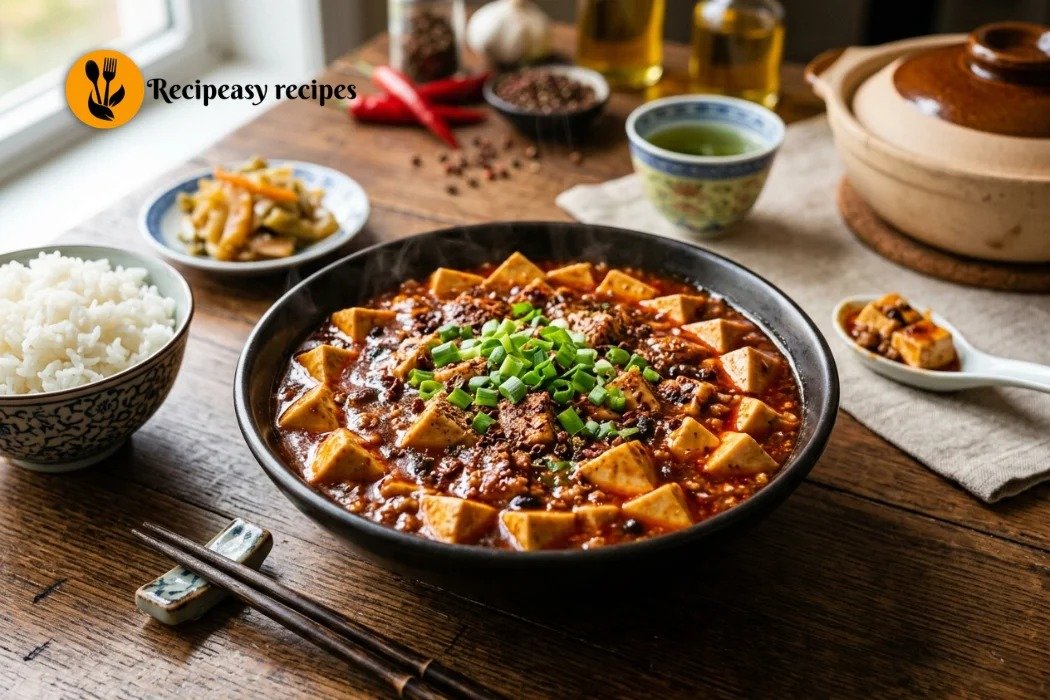
Mapo Tofu Recipe: Authentic Sichuan Flavor in 25 Minutes
Mapo tofu is one of those dishes that grabs you from the first bite. It’s spicy, rich, a little numbing, and honestly hard to stop eating. It comes from Sichuan, a region in China known for bold flavors and fiery food. And once you make it at home, you’ll wonder why you waited so long.
The good news? It’s not as complicated as it looks. So let’s get into it.
What Makes This Dish Special
At its core, this is a Sichuan mapo tofu recipe – soft tofu cooked in a deeply savory sauce made with fermented chili bean paste, ground pork, and Sichuan peppercorns. The peppercorns give your tongue a tingly, almost buzzing feeling. It sounds strange, but it’s actually amazing.
Together, the heat and the numbness create something you really can’t get anywhere else. That combination is what makes traditional Sichuan cuisine so unique and so addicting.
What You’ll Need
Here’s everything to gather before you start cooking.
For the dish:
- 10 oz soft tofu, cut into 1-inch cubes
- 2 oz ground pork
- 1 tablespoon doubanjiang (fermented chili bean paste – Pixian brand if you can find it)
- 2 teaspoons douchi (fermented black soybeans)
- 2 teaspoons Sichuan chili flakes
- ½ teaspoon Sichuan peppercorns, roughly ground
- 1 teaspoon fresh ginger, minced
- 1 cup hot water
- Neutral cooking oil (like vegetable or canola)
- Salt to taste
For the cornstarch slurry:
- 1 tablespoon cornstarch
- 3 tablespoons cold water
To serve:
- 1 green onion, thinly sliced
- Steamed white rice
A Quick Word on Key Ingredients
Doubanjiang is the heart of this dish. It’s a thick, salty, spicy paste made from fermented broad beans and chili. You can find it at most Asian grocery stores. Don’t skip it – there’s really no good substitute. This is what makes it a true doubanjiang tofu recipe.
Douchi are small fermented black soybeans. They add a deep, salty, almost smoky flavor. They’re not the same as regular black beans, so look for them at a Chinese grocery store.
Sichuan peppercorns are the ingredient that makes your lips tingle. They’re not spicy like chili – they just create that unique numbing feeling. Red ones are easier to find and work perfectly here.
How to Make It
Step 1: Blanch the tofu
Bring a pot of water to a boil and add a good pinch of salt. Gently drop in the tofu cubes and let them sit in the boiling water for about 2 minutes. Then drain and set aside. This step helps the tofu hold its shape and mild flavor while it soaks up the sauce later.
Step 2: Cook the pork
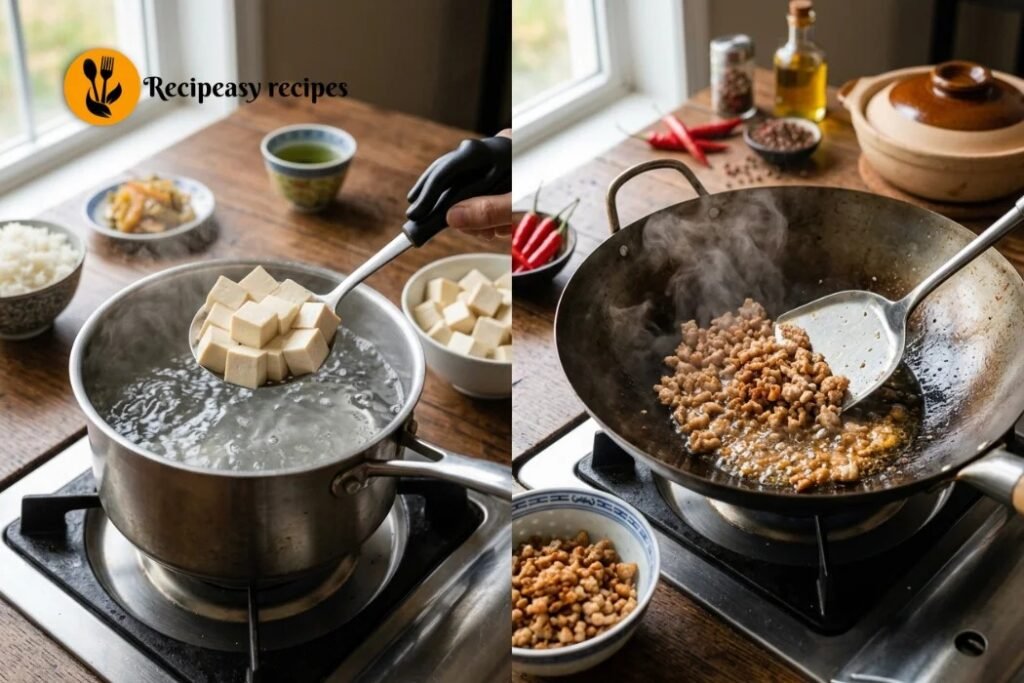
Heat a wok or large pan over medium-high heat. Add about 3 tablespoons of oil. Once it’s hot, add the ground pork and break it apart right away. Cook until the pieces turn golden and slightly crispy on the edges. Remove the pork and set it aside, but leave the oil in the pan.
Step 3: Build the sauce
Add 2 more tablespoons of oil to the same pan. Once it’s nearly smoking, add the doubanjiang and douchi. Stir constantly for about 1 minute – you’ll see the oil turn a deep, beautiful red. Then add the chili flakes, ground peppercorns, and ginger. Stir for another 15 seconds until everything smells amazing.
Step 4: Add water and tofu
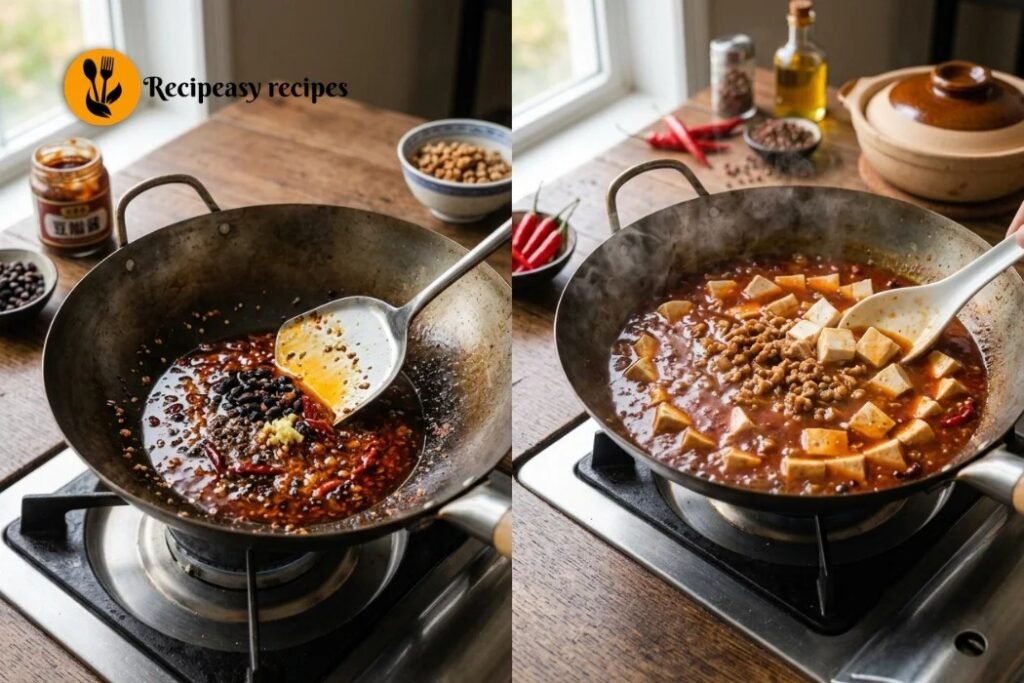
Pour in the hot water. Gently add the tofu cubes and use a spoon to nudge them carefully from the sides – don’t stir or they’ll break. Let everything simmer on medium-low heat for about 3 minutes.
Step 5: Add pork and thicken
Stir the pork back in. Mix your cornstarch and cold water together in a small bowl. Slowly pour in about a third of the slurry while stirring gently. Wait 30 seconds and check the texture. It should look like a thin, glossy gravy. Add more slurry if you want it thicker. Taste and add salt if needed.
Step 6: Serve
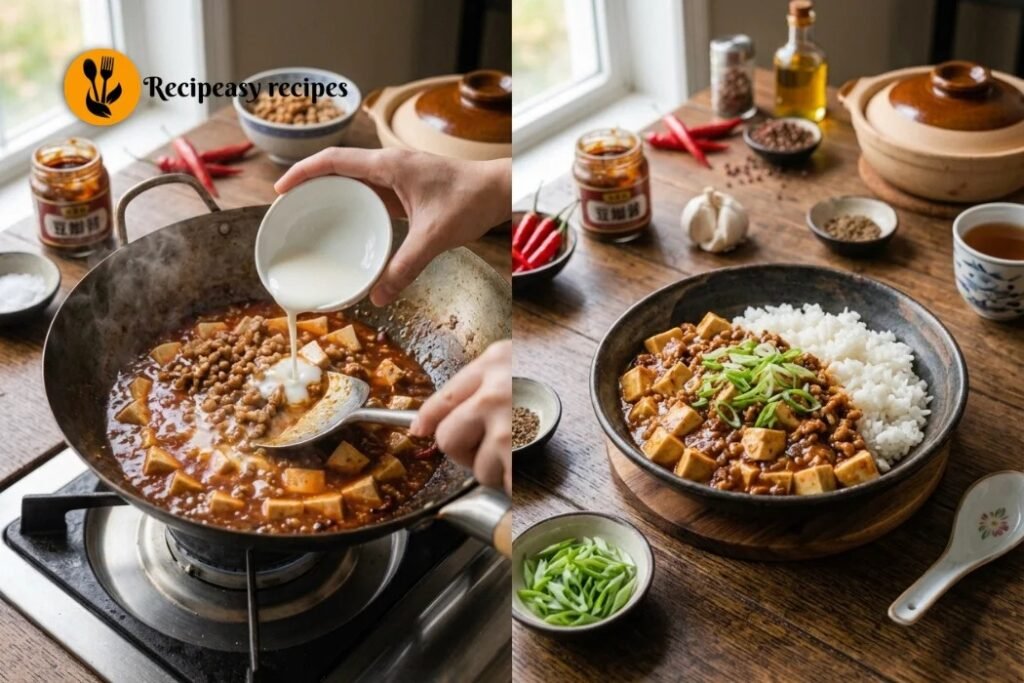
Spoon the mapo tofu over steamed rice. Top with sliced green onions and an extra pinch of Sichuan peppercorn powder if you like. Eat right away while it’s hot.
Tips That Actually Help
Use soft tofu, not silken. Silken tofu breaks apart too easily. Soft or medium-firm tofu holds up much better in the sauce.
Don’t rush the doubanjiang. Cooking it in hot oil for a full minute is what brings out the deep red color and rich flavor. If you rush it or burn it, the whole dish suffers.
Add the cornstarch slurry slowly. Pour it in a little at a time. The tofu releases water as it cooks, so the sauce changes as it sits. Go slow, and you’ll get the texture just right.
Cook the pork separately. Frying it first and adding it back at the end keeps it a little crispy and adds a nice texture contrast against the soft tofu.
Make it vegetarian. Simply leave out the pork. The sauce alone is incredibly flavorful. This easy homemade mapo tofu version is still deeply satisfying without any meat.
Is This an Authentic Recipe?
Mostly, yes. The core ingredients – doubanjiang, douchi, Sichuan peppercorns, soft tofu, and ground pork – are all true to the original. This is what makes it an authentic Chinese mapo tofu as closely as you can get at home. Some traditional versions are more elaborate, but this one gets you 95% of the way there in under 30 minutes.
Sichuan mapo tofu was originally created in the Qing Dynasty by a woman nicknamed “pockmarked grandma” – that’s actually what “mapo” means. Her dish became so famous that it spread across all of China and eventually the world.
Why It Works as a Weeknight Dinner
This ground pork tofu recipe comes together in about 25 minutes from start to finish. Most of the ingredients last a long time in your fridge or pantry, so once you stock up, you can make it anytime. It’s also incredibly satisfying – rich, warming, and filling without being heavy.
The spicy tofu stir-fry base is flexible, too. You can dial up or dial down the heat by adjusting the chili flakes or peppercorns. Got guests who can’t handle spice? Use less. Cooking for someone who loves heat? Add more.
Final Thoughts
Mapo tofu is one of the best dishes you can learn to make at home. It’s bold and complex in flavor, but the process itself is simple. You don’t need any fancy skills – just good ingredients and a little patience with the sauce.
Try it once, and it’ll probably end up in your regular dinner rotation. That’s just what it does.
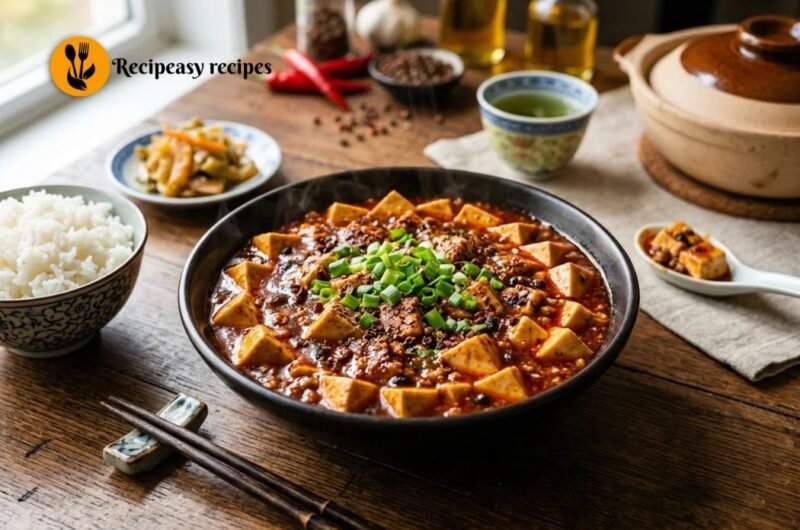
Mapo Tofu Recipe: Authentic Sichuan Flavor in 25 Minutes
Course: Main, DinnerCuisine: Chinese, SichuanDifficulty: Easy2
servings10
minutes15
minutes340
kcalIngredients
For the Mapo Tofu:
10 oz soft tofu, cut into 1-inch cubes
2 oz ground pork
1 tbsp doubanjiang (fermented chili bean paste)
2 tsp douchi (fermented black soybeans)
2 tsp Sichuan chili flakes
½ tsp Sichuan peppercorns, roughly ground
1 tsp fresh ginger, minced
1 cup hot water
5 tbsp neutral cooking oil, divided
Salt, to taste
For the Cornstarch Slurry:
1 tbsp cornstarch
3 tbsp cold water
For Serving:
1 green onion, thinly sliced
Steamed white rice
Directions
- Bring a pot of salted water to a boil. Add the tofu cubes and blanch for 2 minutes. Drain and set aside.
- Heat 3 tbsp oil in a wok or large skillet over medium-high heat. Cook the ground pork until browned and slightly crispy. Remove and set aside.
- Add the remaining 2 tbsp oil to the pan. Stir-fry the doubanjiang and douchi for 1 minute until the oil turns red.
- Add the chili flakes, Sichuan peppercorns, and ginger. Cook for 15 seconds until fragrant.
- Pour in the hot water and gently add the tofu. Simmer on medium-low heat for 3 minutes.
- Return the pork to the pan and stir gently.
- Mix the cornstarch and water. Slowly add the slurry until the sauce becomes glossy and lightly thickened.
- Taste and adjust salt if needed.
- Serve hot over steamed rice and garnish with sliced green onions.
Notes
- Use soft or medium-soft tofu for the best texture. Silken tofu can break apart too easily during cooking.
- For a vegetarian version, simply omit the ground pork.
- Adjust the amount of Sichuan peppercorns and chili flakes to make the dish milder or spicier.
- Blanching the tofu helps it stay intact and absorb more flavor.
- Add the cornstarch slurry gradually to control the thickness of the sauce.
- Doubanjiang is the key ingredient for authentic Mapo Tofu flavor and color. Avoid substituting it if possible.