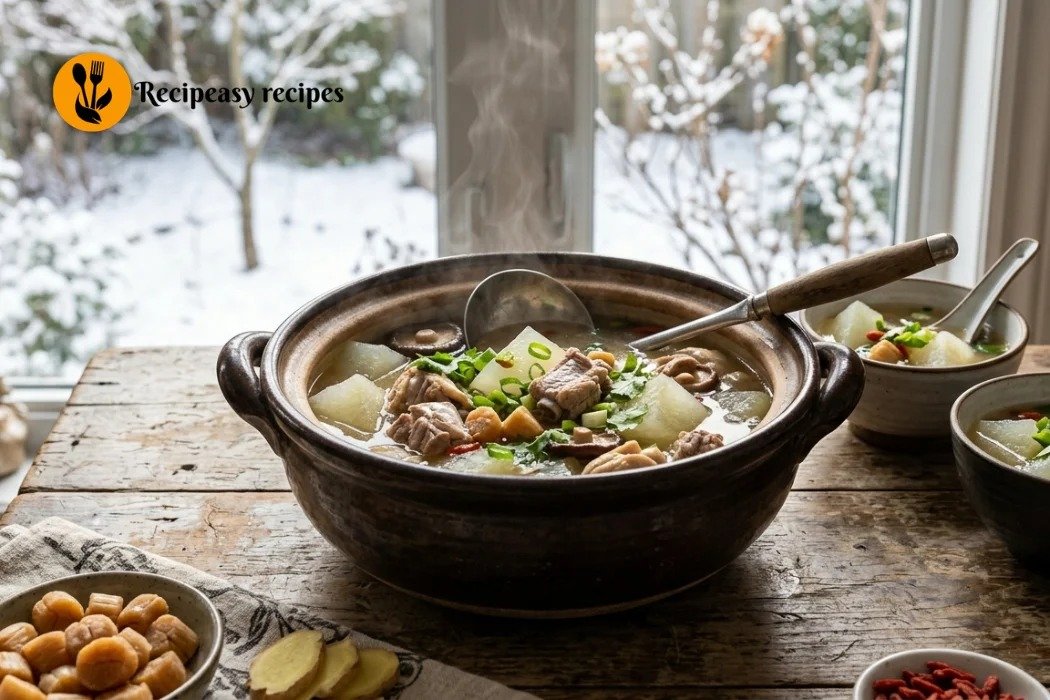
Winter Melon Soup (Easy Cantonese Recipe with Pork Bones)
Some soups feel like a hug. Winter melon soup is one of those. It is light, clear, and gently savory. And once you taste it, you will understand why so many Chinese families make it on repeat.
This recipe uses pork bones as the base. The result is a broth that is clean but full of flavor. The winter melon turns soft and almost silky as it soaks everything up. It is simple food done really well.
What Is Winter Melon Anyway?
Winter melon is a large green gourd. Inside, the flesh is white and mild. It does not really taste like much on its own – and that is exactly the point. It absorbs the flavor of whatever you cook it in, which makes it perfect for a slow-simmered broth.
You can find it at most Asian grocery stores. Sometimes it is sold whole, but usually you will see it cut into large wedges wrapped in plastic. Either works fine for this recipe.
What Goes Into It
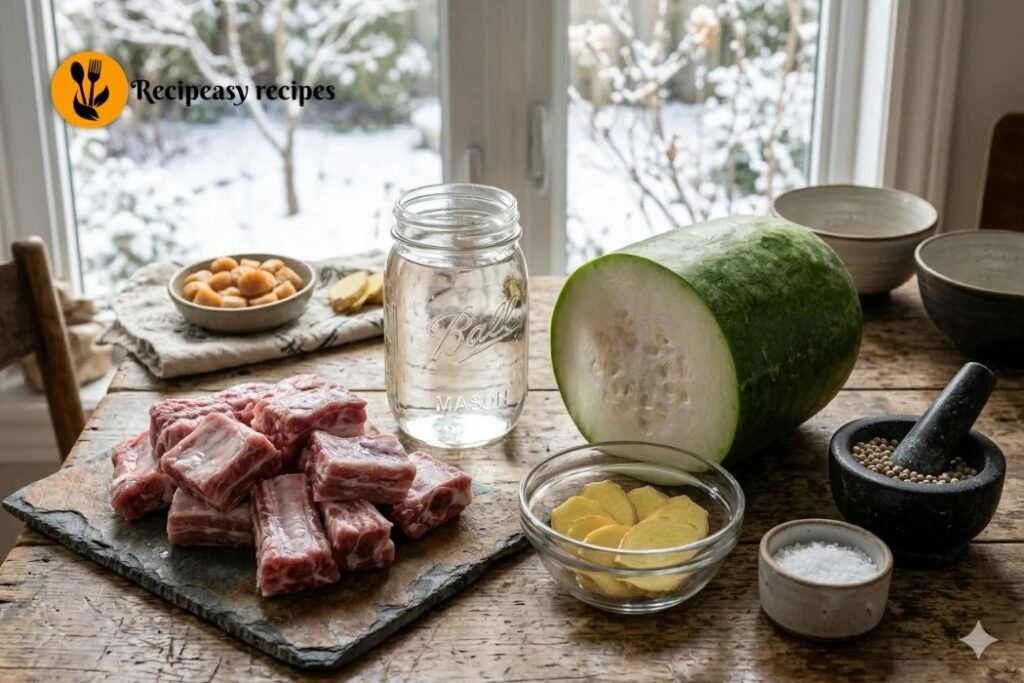
This winter melon soup recipe keeps things simple. Here is everything you need for about 4 servings:
For the soup:
- 500g (about 1 lb) pork bones or pork ribs
- 600g (about 1⅓ lb) winter melon
- 6 to 8 cups of water
- 3 slices of fresh ginger
- Salt and white pepper, to taste
Optional add-ins:
- A small handful of dried fox nuts (about ¼ cup) – rehydrate for 20 minutes first
- A small handful of dried pearl barley (also called Job’s tears) – rehydrate for 20 minutes
- 2 to 3 dried mandarin peel pieces – add a subtle citrus note to the broth
These optional ingredients are common in Cantonese winter melon soup. They add extra texture and are believed to be good for digestion. But even without them, the soup is still delicious.
How to Make It
Blanch the pork first.
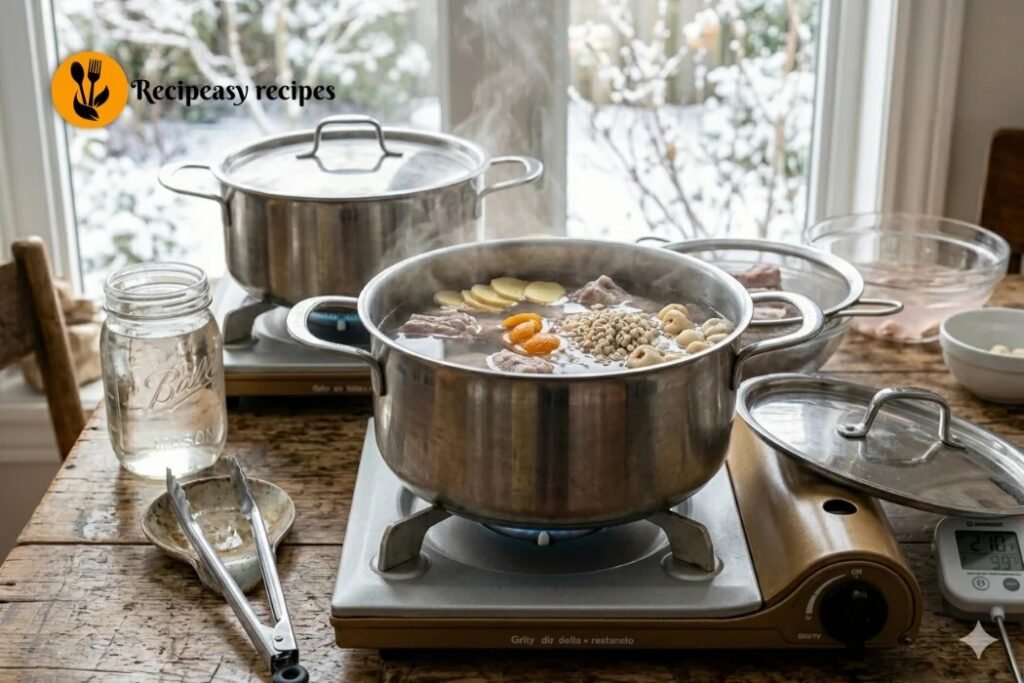
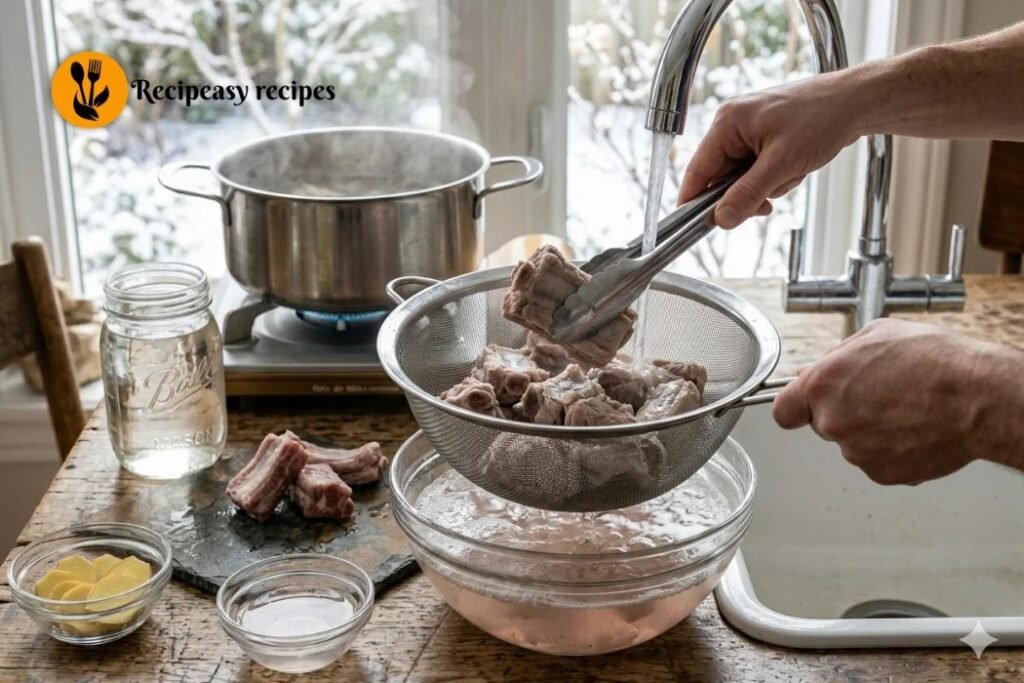
Bring a pot of water to a boil. Add the pork bones and let them cook for about 3 to 5 minutes. Then drain and rinse the bones under cold water. This step pulls out blood and impurities so your broth stays clean and clear. Do not skip it.
Build the broth
Add the cleaned pork bones to a fresh pot with 6 to 8 cups of water. Drop in the ginger slices. If you are using the dried fox nuts, pearl barley, or mandarin peel, add those in now too.
Bring everything to a boil over high heat. Then lower the heat to a gentle simmer, cover the pot, and let it go for about 45 minutes to 1 hour. The longer it simmers, the better the broth.
Prepare the winter melon.
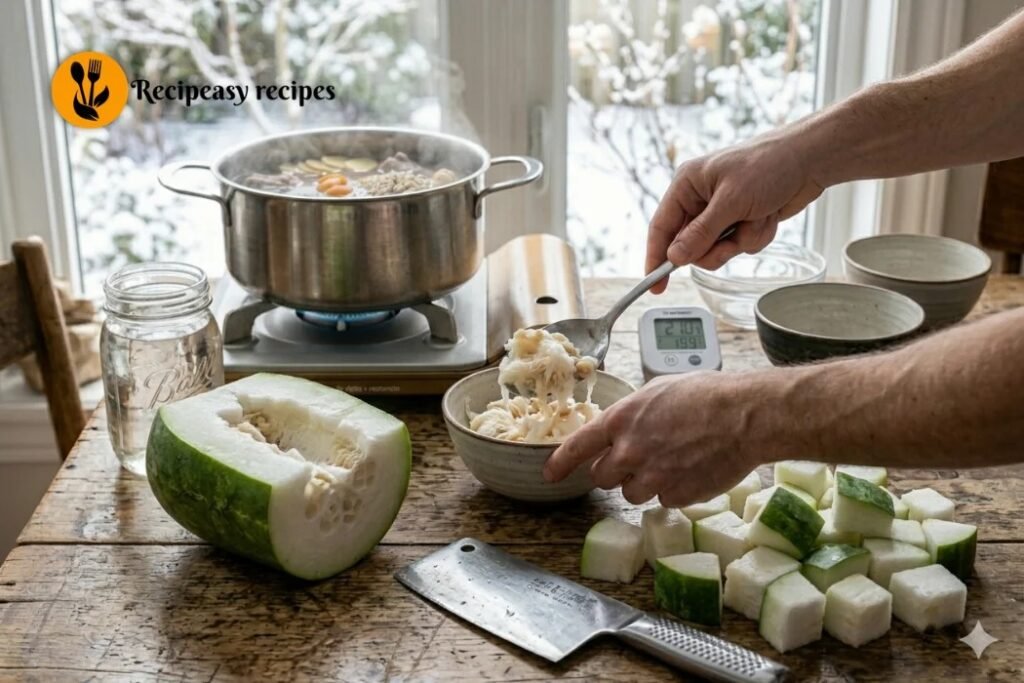
While the broth is simmering, peel the winter melon and scoop out the seeds. Cut it into thick chunks – about 2 inches or so. Bigger pieces hold up better during cooking.
Leave the skin on if you prefer. Many families do this because the skin helps the melon hold its shape while still softening nicely inside.
Add the melon and finish.
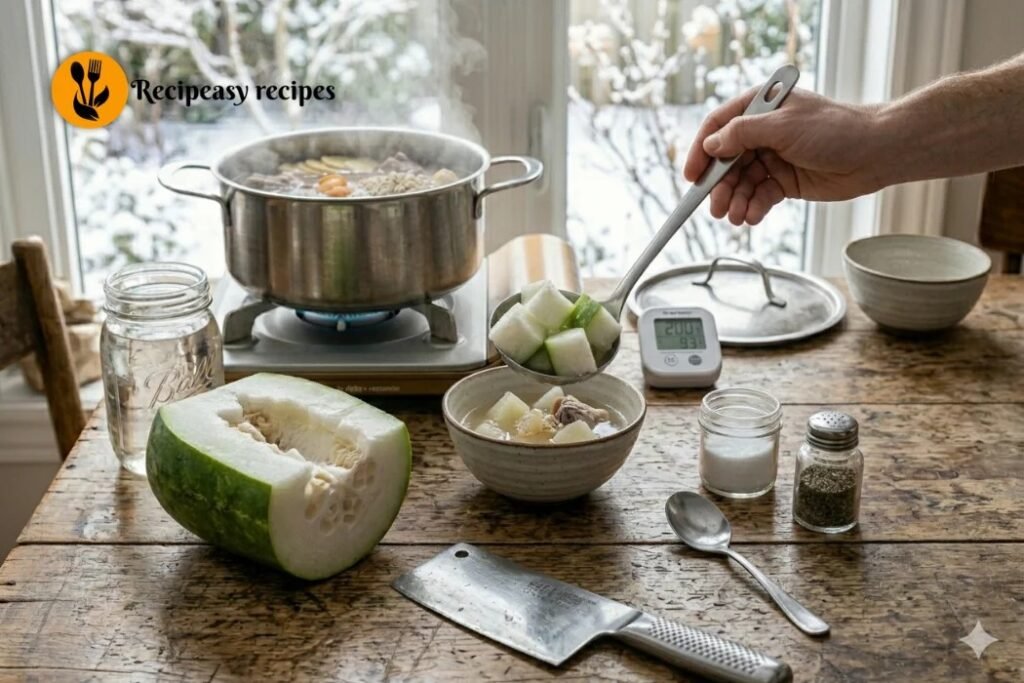
After the broth has simmered for at least 45 minutes, add the winter melon chunks. Lower the heat a little more and let the soup simmer for another 30 to 40 minutes with the lid on. The melon is ready when it looks slightly translucent and feels tender when you poke it.
Season with salt and white pepper. Taste and adjust as needed. Serve hot.
Pork or Chicken – Both Work
This winter melon and pork soup version is the most classic. But if you prefer a lighter broth, swap the pork bones for a whole chicken leg or some chicken bones. Winter melon chicken soup has a slightly sweeter, cleaner taste. The method is exactly the same – swap the protein.
A Few Useful Tips
Skim the broth as it cooks. In the first 20 minutes or so, some foam will rise to the top. Skim it off with a spoon. This keeps the broth clear and clean-tasting.
Do not overcook the melon. It can get mushy if left too long. Once it looks translucent and feels soft, it is done.
Taste before adding salt. The pork bones release natural salts as they cook. You might need less salt than you think.
Store leftovers in the fridge. The soup keeps well for 2 to 3 days. Actually, it often tastes even better the next day once the flavors have had more time to develop.
Why People Love This Soup
In traditional winter melon soup, the goal is never to impress. It is to nourish. The broth is gentle on the stomach, hydrating, and incredibly satisfying without feeling heavy. It pairs perfectly with a bowl of plain rice and a simple side dish.
This is the kind of homemade winter melon soup that feels like home cooking at its best – humble ingredients, a little patience, and a result that always delivers.
So the next time you spot winter melon at the store, grab a piece. You now know exactly what to do with it.
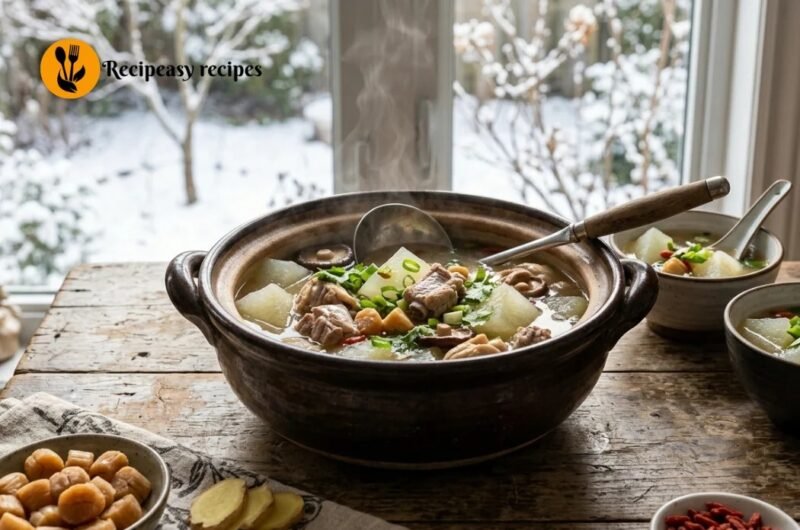
Winter Melon Soup (Easy Cantonese Recipe with Pork Bones)
Course: Soups, MainCuisine: Chinese, Cantonese4
servings15
minutes1
hour30
minutes180
kcalThis Winter Melon Soup is a classic Cantonese comfort food made with pork bones, fresh winter melon, ginger, and a clear savory broth. Light yet satisfying, it is perfect for family dinners, meal prep, or a nourishing homemade meal.
Ingredients
For the Soup:
500g (1 lb) pork bones or pork ribs
600g (1⅓ lb) winter melon
6–8 cups water
3 slices fresh ginger
Salt, to taste
White pepper, to taste
Optional Add-Ins:
¼ cup dried fox nuts, rehydrated
¼ cup dried pearl barley (Job’s tears), rehydrated
2–3 pieces dried mandarin peel
Directions
- Bring a pot of water to a boil and blanch the pork bones for 3–5 minutes.
- Drain and rinse the bones under cold water.
- Place the cleaned bones in a fresh pot with 6–8 cups of water.
- Add ginger and any optional ingredients if using.
- Bring to a boil, then reduce heat to a gentle simmer.
- Cover and cook for 45–60 minutes.
- Peel the winter melon, remove the seeds, and cut into large chunks.
- Add the winter melon to the broth.
- Simmer for another 30–40 minutes until the melon becomes tender and slightly translucent.
- Season with salt and white pepper.
- Serve hot and enjoy.
Notes
- Blanching the pork bones helps create a clearer broth.
- Larger winter melon chunks hold their shape better during cooking.
- Winter melon skin can be left on for extra texture if desired.
- The soup often tastes even better the next day.
- For a lighter version, substitute pork bones with chicken.